Funny Birthday Card Messages: Jokes That Work With the Picture
Choose a joke that fits your relationship, then see how a card’s picture and your inside message can play off each other.
Published
A funny birthday card makes the recipient laugh, and it also shows how well you know them. That is why “Happy birthday, old man” can feel hilarious between two people and painfully awkward between two others. The words are only half the joke; the relationship supplies the rest.
So before hunting for the funniest possible line, think about what kind of funny this person actually enjoys. Some people love puns. Some like being affectionately called out on a habit everyone knows about, and some enjoy an elaborate, ridiculous scenario. Others would rather receive one dry sentence with almost no visible enthusiasm. Whichever it is, the joke should make the person feel more recognizable, not smaller.
If you are still deciding between funny and another tone, the broader birthday card messages guide compares short and sweet, heartfelt, uplifting, playful, and funny wishes.
Choose the kind of funny you want
The four kinds of humor below need different amounts of shared history, so start with the one that suits the person and your relationship.
A small smile: wordplay and visual puns
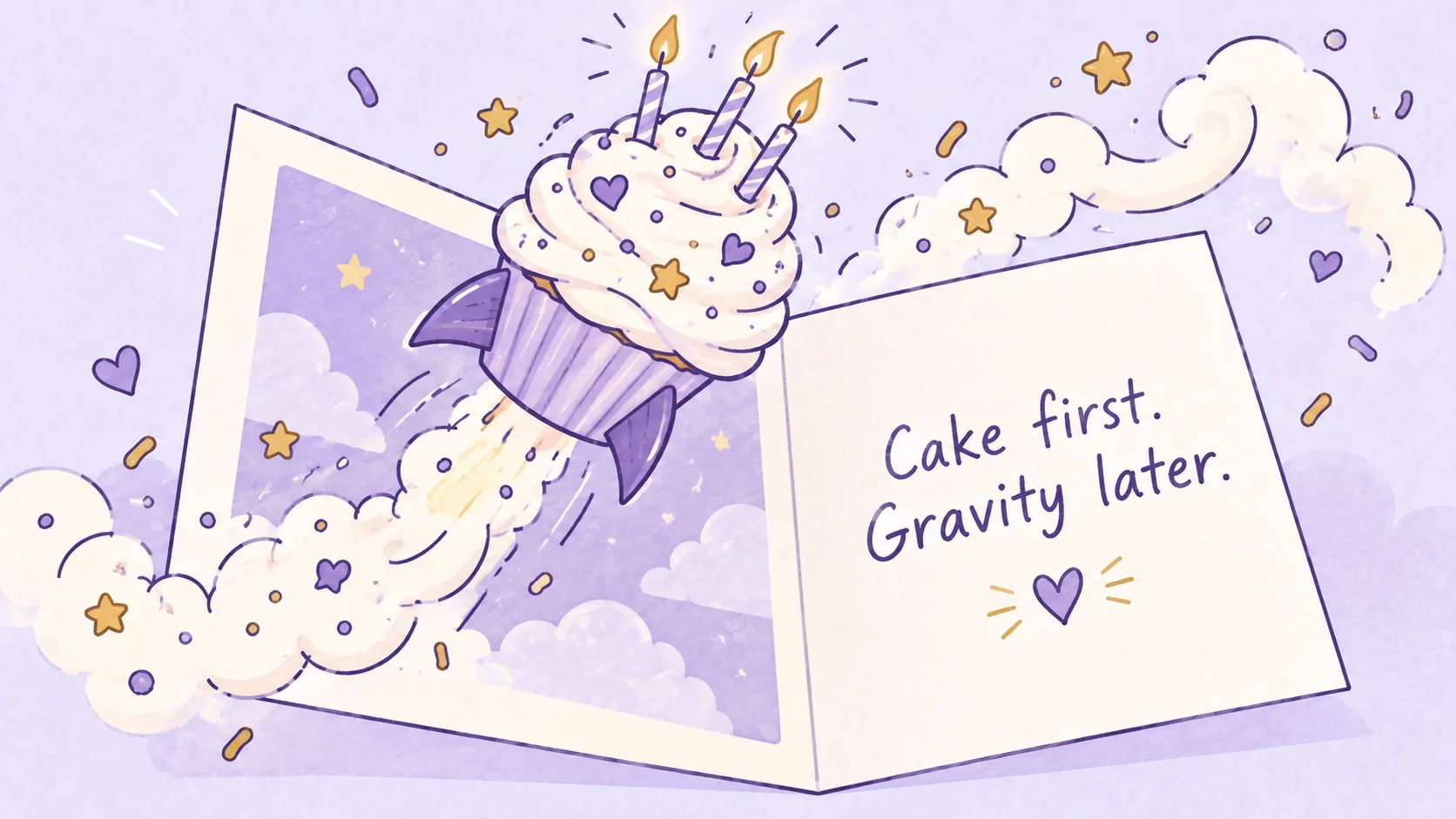
Some birthday jokes are barely jokes at all. A word bends slightly, the picture completes the thought, and the recipient gets a small reward for noticing. That is the appeal of a pun.
A strawberry illustration can turn “very” into “berry,” and a bee can make “honey” do double duty. An otter, a pear, a llama, or almost any object with the right sound can become part of the sentence. Puns need very little personal history, so they are one of the easiest kinds of funny birthday message to use with friends, children, newer relationships, or anyone who prefers cute to sharp.
Short funny birthday wishes in this style might say:
None of these says anything profound about your relationship, and they do not need to. Their job is to make the greeting feel playful. The picture matters because the words often look ordinary without it: “berry good” is a weak joke on its own, but beside a giant strawberry the card supplies the missing half.
Inside the card, you do not need to keep punning for three paragraphs. One callback is usually enough:
The cover earns the small smile, and the inside brings the message back to Maya.
A knowing laugh: affectionate teasing
Teasing depends much more on familiarity. Maybe your dad always falls asleep halfway through a movie but insists he was still watching, or your friend packs for a weekend as though they are relocating permanently. Your sister might correct your driving from the passenger seat. Someone else announces “I’m leaving now” when everyone knows they have not even found their shoes.
These habits make good birthday jokes because the “flaw” is only the surface. Underneath, the joke says: I have seen you do this a hundred times, and I know exactly who you are. That is why affectionate teasing can feel more intimate than a sentimental sentence.
A funny birthday card for a friend or family member might say:
The best subjects are habits that are already safe territory between you. If you have joked about one together before, you probably know the tone. If it secretly annoys you and they do not know that, a birthday card is not the place to reveal the grievance.
The inside can then take the same joke somewhere more personal:
That works because the teasing turns into a shared memory. Instead of “Dad talks too much,” the joke becomes “this is one of the very specific ways you have been Dad to me.”
A surprise laugh: exaggeration, impossible scenarios, and role-play
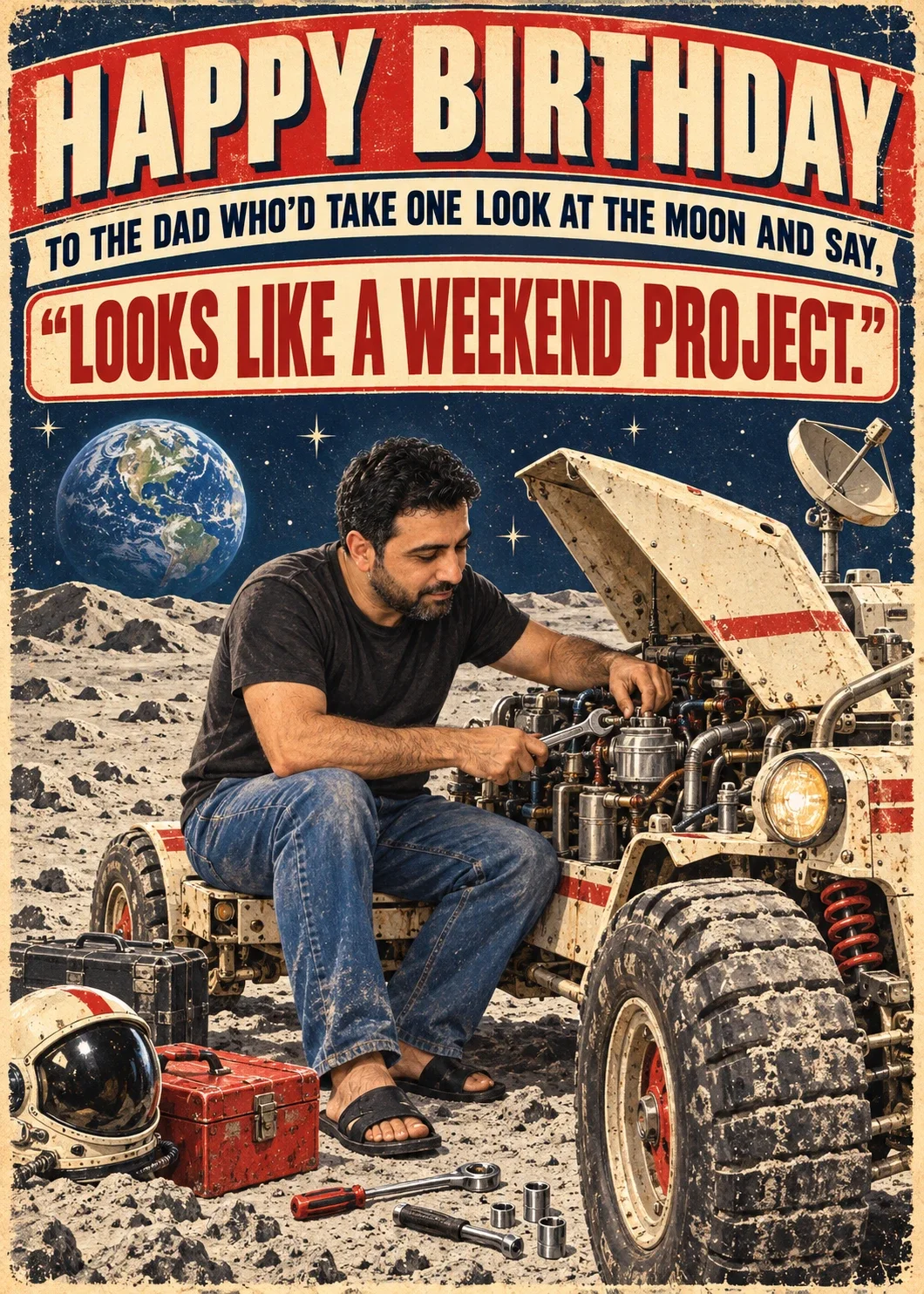
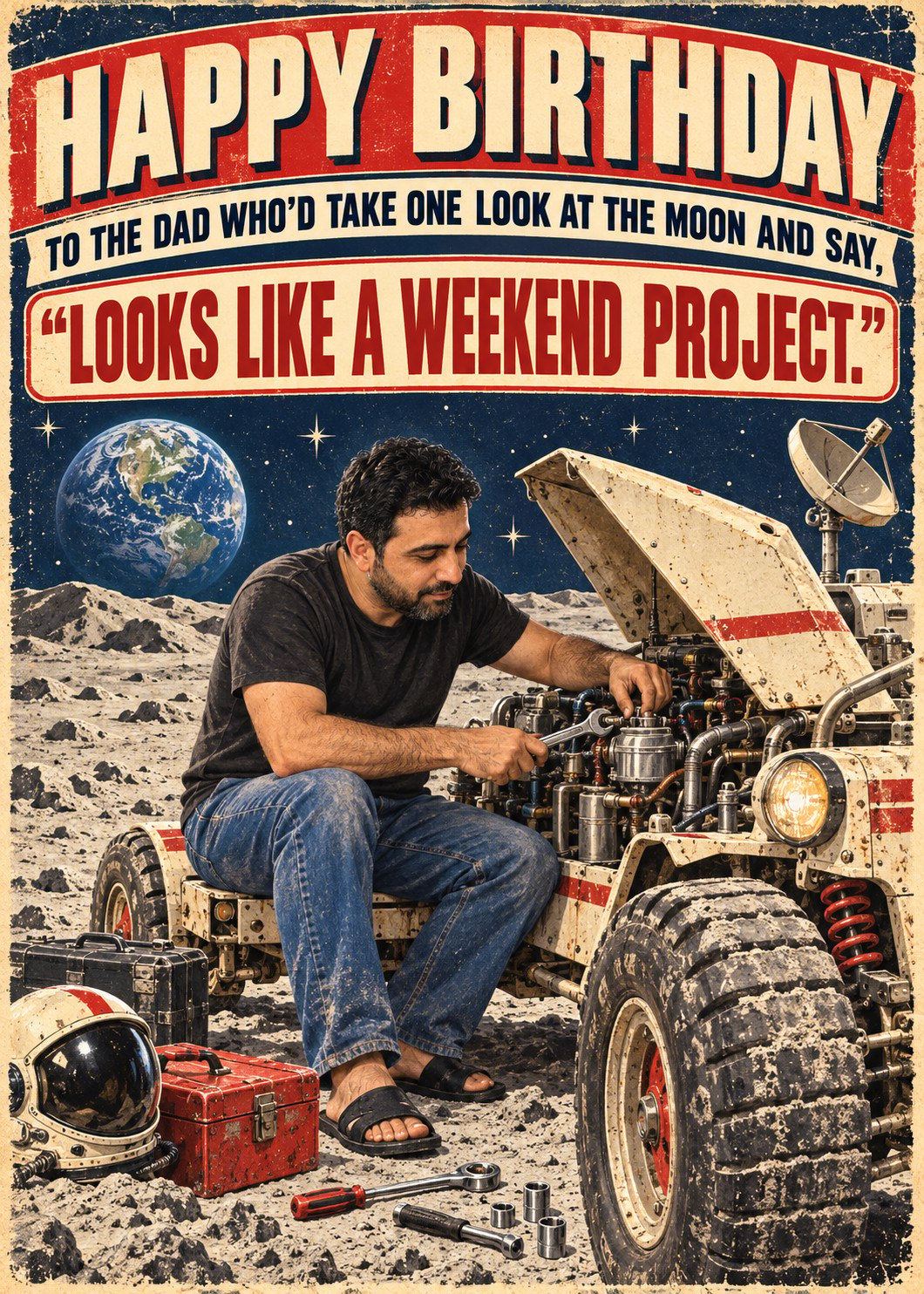
Sometimes the funniest move is to take something true and make it absurdly bigger. If your dad can fix anything, “Thanks for always fixing things” is true but flat. Put him on the Moon fixing a rover instead.
A friend who is always getting you into trouble can become your partner on a wanted poster. Someone who believes they are an excellent cook can run an impossibly dramatic restaurant, and a sibling who treats every minor inconvenience like a crisis deserves a movie-poster disaster scene. This kind of humor borrows from storytelling: hyperbole, metaphor, role-play, and an impossible situation treated as completely normal. The real trait stays recognizable while the fictional world exaggerates it.
Dad’s Birthday on the Moon works this way. The card shows Dad in a T-shirt, jeans, and sandals, calmly repairing a lunar rover as though he were in his own garage. Above him, this version of the cover reads:
HAPPY BIRTHDAY
TO THE DAD WHO’D TAKE ONE LOOK AT THE MOON AND SAY,
“LOOKS LIKE A WEEKEND PROJECT.”
The first two lines stay the same on every card; the quoted punchline is one of five you can choose. The exaggeration carries a sincere compliment: he is so capable that even the Moon is just another thing that needs fixing.
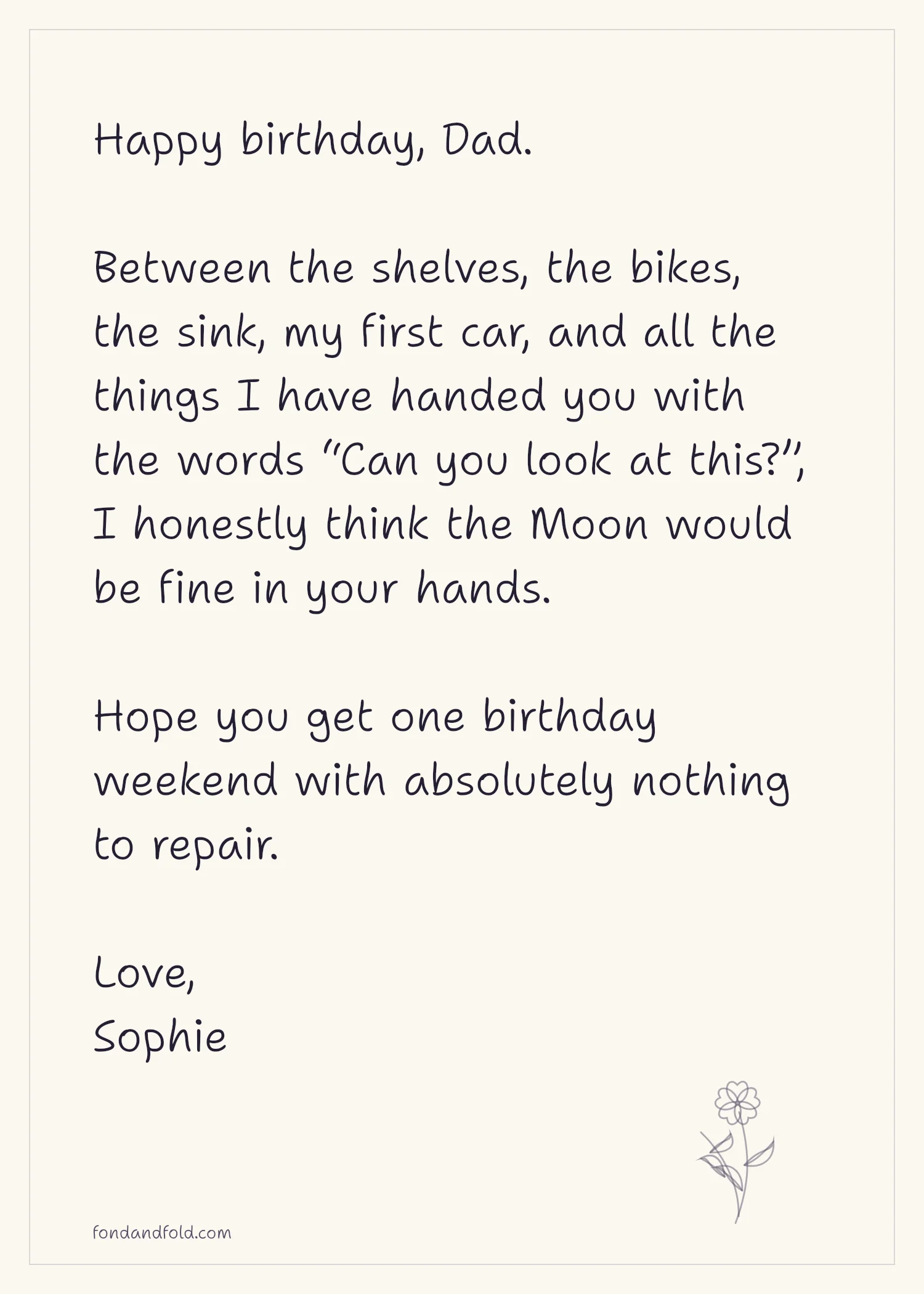
The inside can bring that impossible scenario back to real life:
That is more personal than another repair joke. The cover makes Dad the hero of an absurd world, and the inside explains why the joke belongs to this particular dad.
The same method can tell a small story. Instead of one punchline, build a miniature scene:
Or turn the relationship itself into the premise:
A message like this feels like stepping into a small fictional world together. The laugh often comes from surprise: you have never seen yourselves described that way, yet it fits.
A straight-faced laugh: dry humor and understatement
Dry humor works in almost the opposite direction. Nothing is exaggerated and nobody explains the joke. The words treat the birthday as an administrative event that has simply been noted for the record, which can make one tiny sentence funnier than a paragraph of jokes:
This tone suits adults who already enjoy deadpan humor. The subject hardly matters; the joke is in the delivery, a sentence that refuses to sound as excited as a birthday card is supposed to.
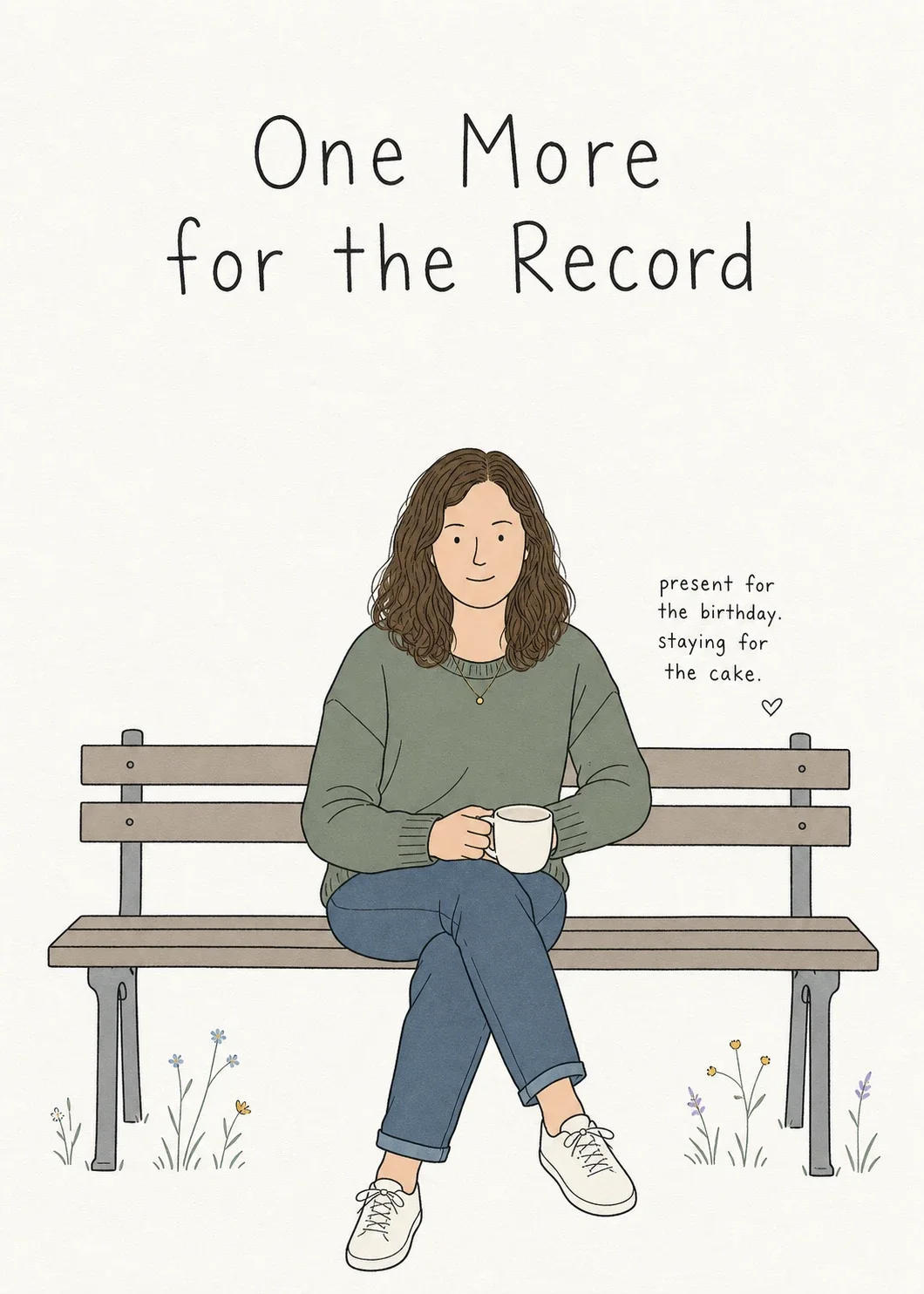
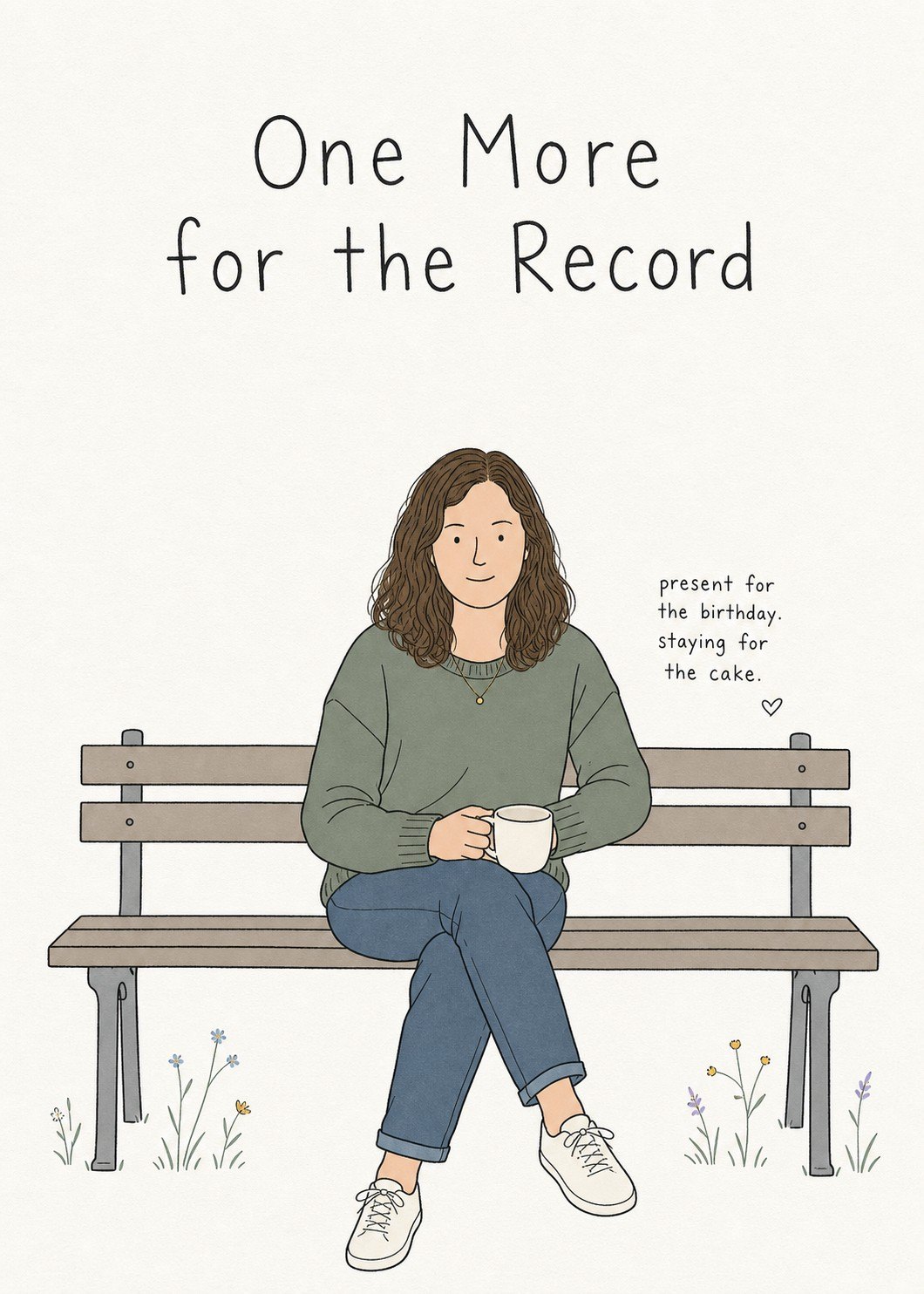
Birthday on the Bench leans on that restraint, with a quiet line-art portrait on a park bench, plenty of empty space, and a small handwritten aside. Its cover options include “An Annual Occasion” and “present for the birthday. staying for the cake.” This version reads:
One More for the Record
present for the birthday. staying for the cake.
It is funny because it barely seems to be trying. This is also the kind of humor that depends most on the recipient. To someone who loves dry humor, restraint is the joke; to someone who expects warmth and enthusiasm, the same sentence can simply look cold.
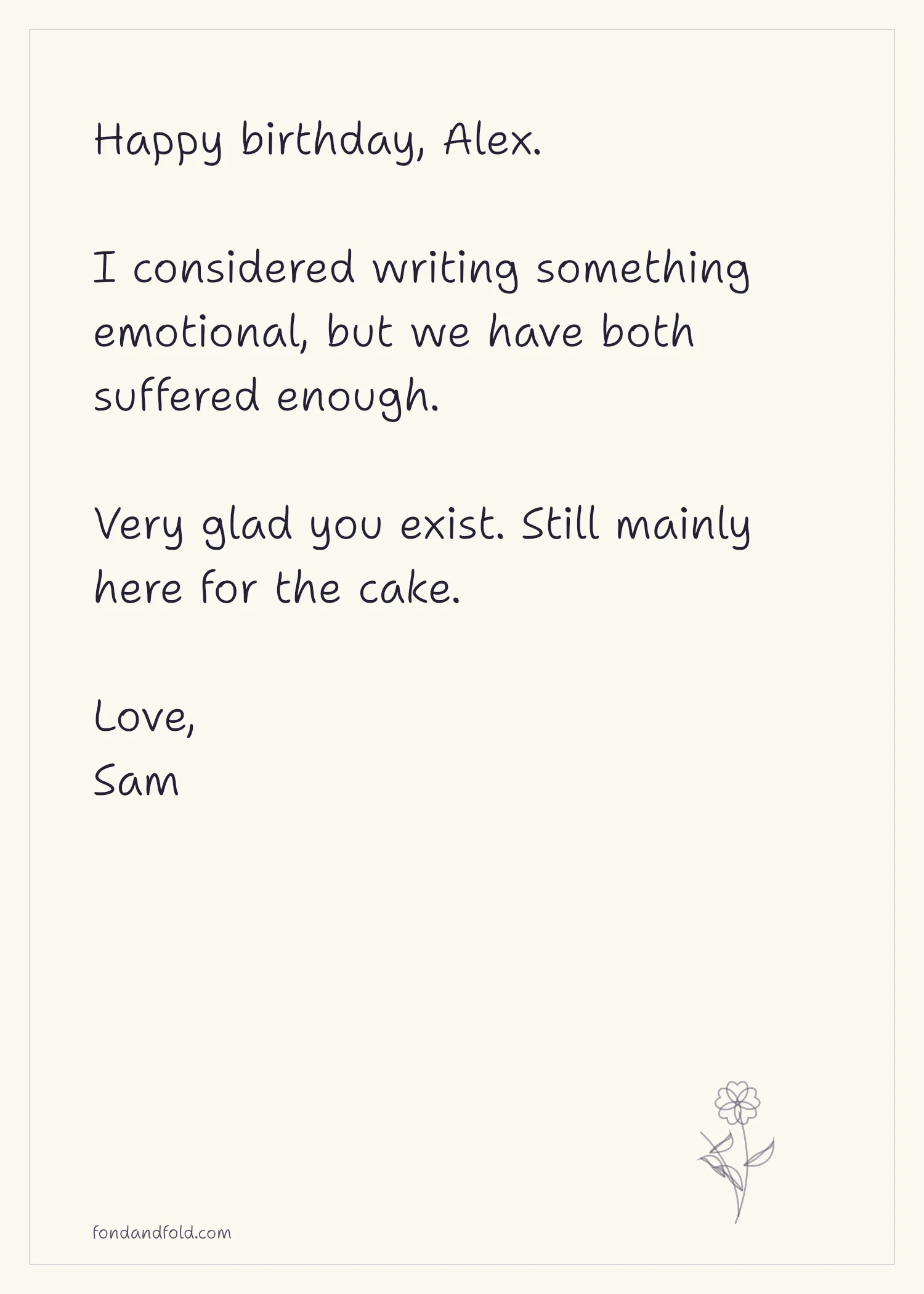
The inside does not have to abandon the tone, but it should leave enough warmth to make the intention clear:
The joke stays dry, and the affection is still clear.
Take the joke inside the card
A cover only needs one idea. The inside has a different job: it takes that idea and shows the card was written for this person, rather than for “a funny friend” in general. The best material is usually already somewhere in the relationship.
A habit gives you something everyone recognizes: falling asleep on the sofa, ordering the same meal, overpacking, correcting the GPS, checking the weather six times. A shared memory gives you a specific episode, like the holiday where everything went wrong, the first driving lesson, the birthday cake that collapsed, or the time you both missed the train. Something you always do together gives the joke a recurring world, whether that is Sunday coffee, bad movies, road trips, pub quizzes, long voice notes, or cooking experiments.
A recognizable trait gives you something to exaggerate: fixing everything, knowing everyone, planning everything, always being early, or turning every small event into a celebration. Sometimes the relationship supplies the whole scene. You might be partners in crime, rival chefs, terrible travel planners, or two people who should probably not be left unsupervised near a karaoke machine.
You do not need all of these in one card. Pick one. For example, instead of “Hope you have an amazing birthday!” you might write:
Then, inside:
Or, instead of another generic dad joke:
A joke gets better the harder it would be to send to anyone else.
Let the picture carry some of the joke
A funny card does not have to explain everything in words. Sometimes the picture is the setup and the line is the punchline; sometimes the words sound completely ordinary until the illustration makes them ridiculous. That is how a picture card can carry jokes that would take too long to explain in a text message.
On Dad’s Birthday on the Moon, “Looks like a weekend project” is not especially funny by itself. Put it above a dad calmly repairing a lunar rover in sandals, and the picture supplies the exaggeration. On Birthday on the Bench, the opposite happens. The picture is quiet and almost serious, which makes “present for the birthday. staying for the cake.” feel even drier.
The picture and the words do not need to tell the same joke twice. Let one set up what the other finishes, then let the inside move one step closer to the relationship.
Keep the person bigger than the joke
There is a useful difference between teasing someone and reducing them to the thing you are teasing. A good birthday joke says, in effect, “I know this about you, and I like you enough to play with it.” It should not leave the recipient wondering whether you have finally decided to tell them what bothers you.
Habits and shared situations are usually safer than insecurities. Competence can be exaggerated into admiration, and a recurring bit you already share can be pushed a little further. Appearance, health, painful relationships, money, or anything else the person may genuinely feel vulnerable about needs much more care and is usually a poor default. Even age jokes are not automatically harmless just because birthdays involve age. Some people love them; others have heard the same joke on every birthday for twenty years.
The more personal the joke, the more one question matters: would they tell this joke about themselves? If the answer is yes, you are probably in the right territory.
Put the joke together
A funny birthday message does not need to be the funniest thing the recipient reads all year. A pun earns a small smile, and a familiar habit gets the laugh that says “that is absolutely me.” An impossible scenario makes the card surprising, while a dry line works because the recipient knows how little enthusiasm is part of the joke.
The most personal funny cards usually work in two layers: the cover establishes the comic idea, and the inside gives it evidence from your actual relationship.
A funny birthday card is a small act of recognition. The pun, the tease, the impossible scene, or the deadpan line lands because it shows you have been paying attention: to the habit they keep, the trouble you get into together, the tone the two of you already share. You do not need to write like a comedian. You only need to recognize what is already funny between you.
That is why Fond & Fold’s funny cards start with a complete visual premise, so you do not have to invent one from nothing. Dad’s Birthday on the Moon turns a practical dad into a lunar mechanic, and Birthday on the Bench gives dry humor enough empty space to stay dry. The person on the cover is illustrated from their own photo, so the joke is about them from the first glance, and the inside is left for the part only you could write.
We hope they laugh at the cover first, then read the inside and realize how well you know them.
The best birthday joke often sounds less like “this is funny” and more like “this is so you.”