Gifts for Someone Who Has Everything: What to Choose and When
Compare gifts by what they enjoy, what they already own, and how much time or space a new gift would ask of them.
Published
There is a mildly suspicious way to begin a gift guide: with Dale Carnegie’s How to Win Friends and Influence People. Don’t worry. Nobody here is about to weaponize human nature so that someone is psychologically incapable of disliking your present.
Carnegie’s emphasis on sincere appreciation does point somewhere useful, though. People may have the money to buy what they want, a successful career, a full home, or more gadgets than they know what to do with. What they still respond to is being seen and valued by another person.
For gift giving, that comes down to three ideas: respect, understanding, and recognition. Respect says, you mattered enough for me to put thought into this. Understanding says, I know what you actually like, use, remember, or care about. Recognition says, I see this part of who you are, and I know it matters to you. The rest of this guide turns those ideas into actual things you can give.
Start with what “has everything” means for this person
The phrase can describe several different situations, and each one points somewhere else.
Some people genuinely enjoy receiving gifts and simply have the means to buy most ordinary things for themselves. For them, the question is whether your present tells them anything they did not already know. The more generic the object, the more easily it disappears into everything else they own.
Others say they “don’t want anything” because they do not want more objects taking up space. They may still enjoy something consumable, something personalized, time together, or a gesture that leaves very little physical footprint.
And some people explicitly ask not to receive gifts. In that case, respecting the request can itself be part of the gift. A thoughtful note, a meal together, or making the occasion feel good without putting another object in their hands may be exactly right.
Once you know which situation you are dealing with, the problem gets much easier. You are no longer shopping for “someone who has everything.” You are choosing for one person with a particular relationship to gifts, and the best clues are usually already in their life: what they enjoy, what shaped them, and what your own time or effort could add.
Build on what they enjoy and use every day

The most visible place to start is what the person does for pleasure. If someone loves golf, the useful insight is not “buy something with a golf ball printed on it.” It is that golf takes up enough of their life to be worth a closer look. If you understand their setup, you might choose a particularly good accessory or something they regularly use up. The same goes for coffee, tea, cooking, gardening, books, music, or any other hobby: look for something distinctive within that world rather than introducing an unrelated object.
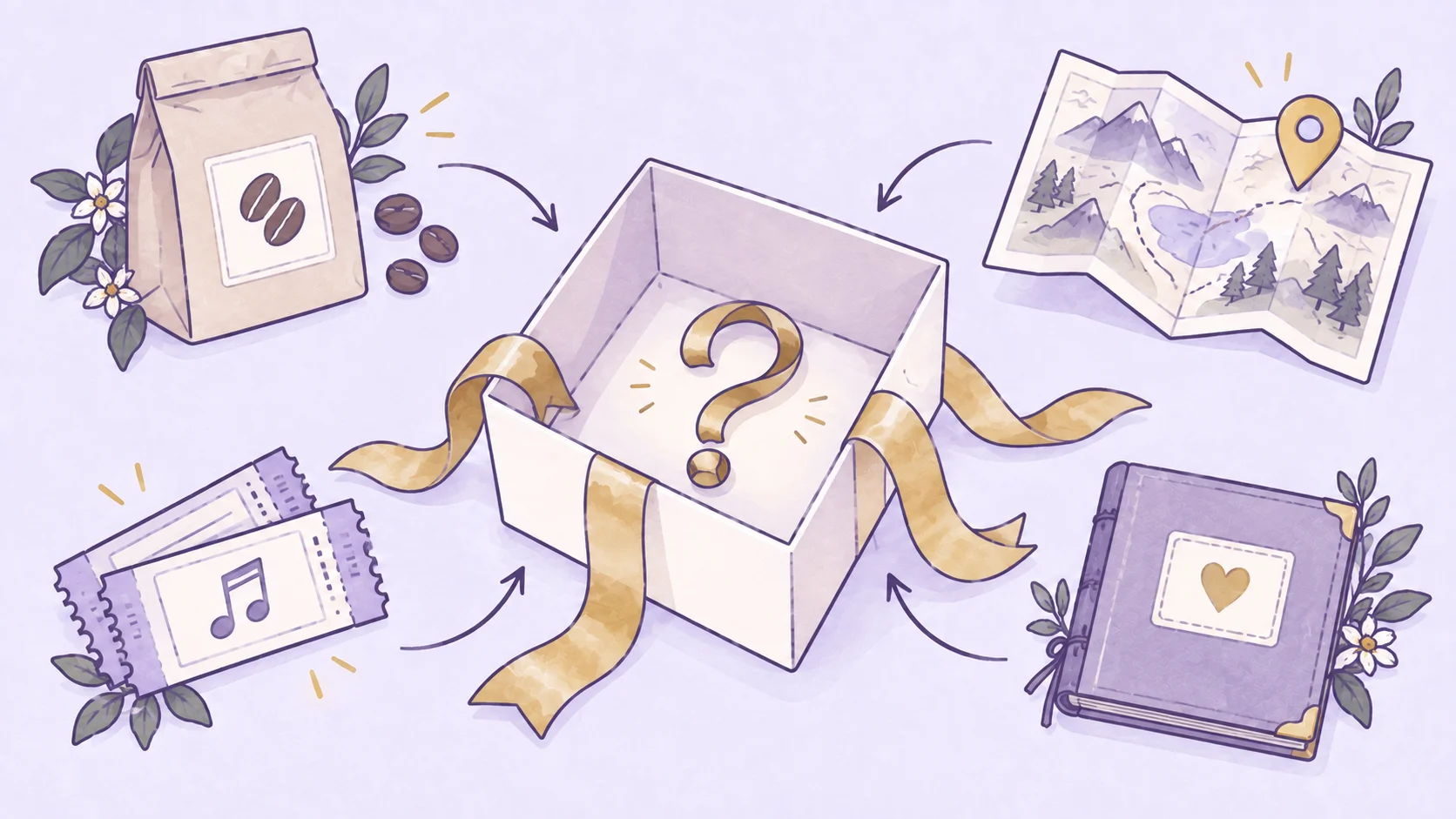
For someone who already owns excellent equipment, moving sideways is often more interesting than trying to upgrade the main tool. A person serious about coffee might enjoy a small batch from an unusual origin. Someone who cooks may appreciate an ingredient they would not normally find locally. Someone devoted to a particular sport may value something connected to the experience around it more than another piece of core equipment. This is understanding in its simplest form: I know what gives you pleasure, so I started there.
Novelty can work within the same world. Someone who can buy almost anything may still enjoy being first to try something genuinely new. If you know they follow a particular area of technology, design, food, publishing, or another field closely, a newly released object or format they have been excited about gives them the pleasure of discovery. It works because you know this is exactly the kind of new thing they would want to try.
Then look at what they use every day. A person who owns plenty may appreciate a better version of something in their routine more than another decorative object. An electric toothbrush, a useful activity or health watch, a well-designed travel item, or a better everyday tool can work because it becomes part of their day instead of competing for attention on a shelf. Practical upgrades are underrated, and this kind of gift says, I notice how you actually live.
Recognize what shaped them and what they keep

Hobbies show what someone enjoys now. Personal history and collections show something that has lasted longer: where they come from and what they choose to keep.
A hometown, a university, a city where someone spent an important period of life, a cultural tradition, or a place they return to again and again can all lead to a gift with emotional weight. That might be an old map of a neighborhood they still talk about, a well-made object connected to a regional craft, an archival photograph, a book associated with a place or period they care about, or a contribution made in their honor to an institution they already value. Nostalgia is not automatically good, but memory and identity can make an otherwise ordinary object feel unusually specific.
Someone who has spent years talking about their university is telling you something about how they see themselves. So is someone who still describes one city as “home” twenty years after leaving it. A gift that acknowledges that connection can feel surprisingly personal because it says, I remember this matters to you.
Collections are another gift map people quietly draw for you themselves. If someone collects records, books, postcards, mugs from places they have visited, small artworks, watches, stationery, or anything else with a clear pattern, you already know what kind of object is allowed to earn space in their home. Adding to the collection can be more satisfying than inventing a completely new category for them.
The best addition has a story: a version from a place you visited together, an edition connected to their history, an unusual variation, or a piece that fills a gap you know they care about. That is recognition again, because the gift acknowledges the role this interest plays in who they are.
Give time, effort, or something to share

Some gifts take part of their value from the time you put into them. Money is often the easiest resource to spend. Attention, effort, and thought are harder to replace.
You might bake the cake they actually love instead of ordering a generic one. You might cook a meal, edit photographs from a shared trip into a small album, organize old family pictures, make something by hand, or put together a set of objects around an inside story the two of you share. These gifts work because the effort shows in the result: nobody else could have produced exactly the same thing by clicking Buy Now.
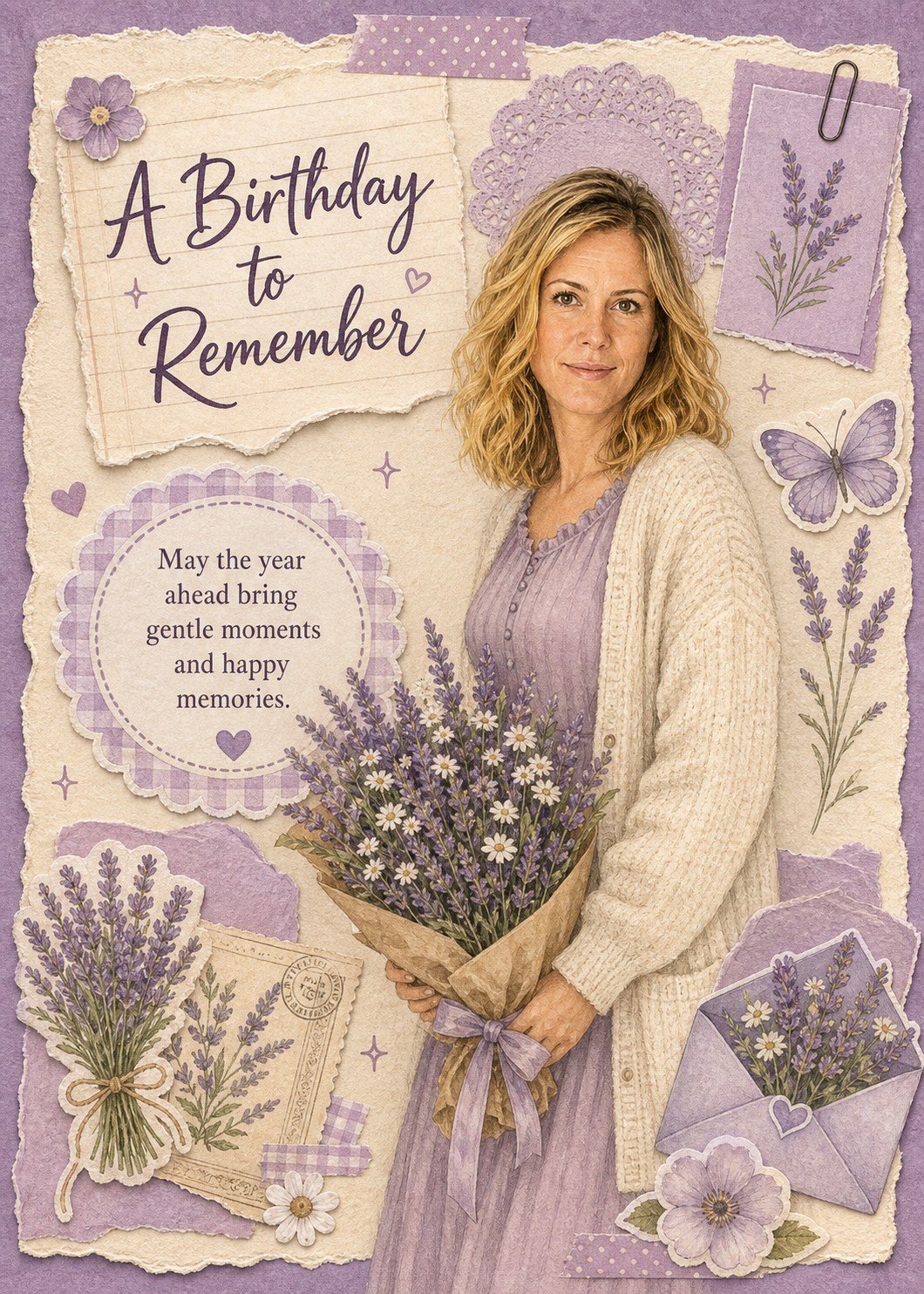
A personalized gift belongs here too. A photo can become a keepsake, an illustration, a framed piece, or a personalized greeting card. The object may be small, but choosing it says a standard version was not quite enough. For a birthday, a Fond & Fold card turns the recipient’s photo into part of a finished illustrated design, while the inside message carries the memory, joke, or reason that makes it specific to your relationship. It can be the gift when you deliberately want something light, or it can sit beside something else as the personal layer.
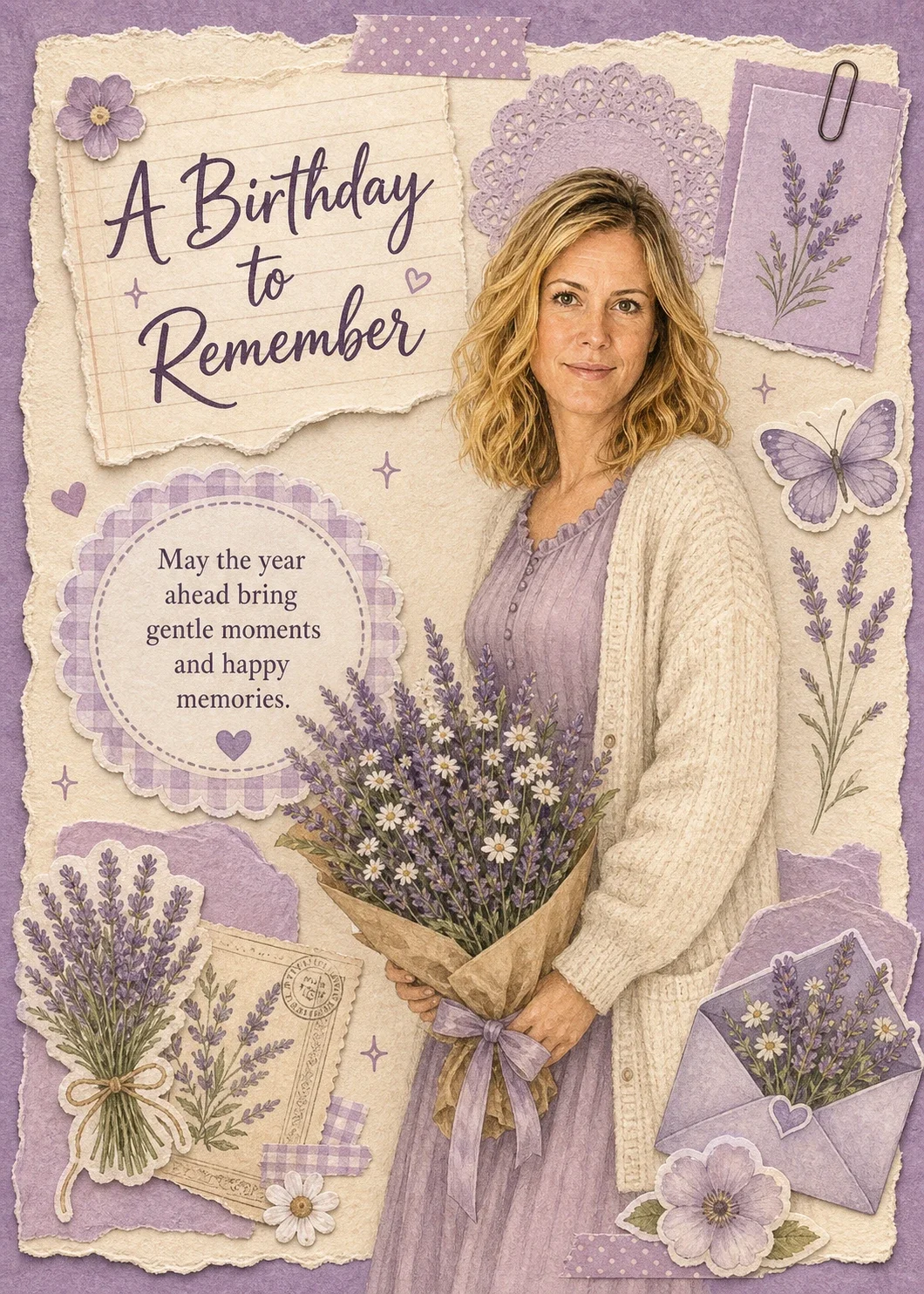
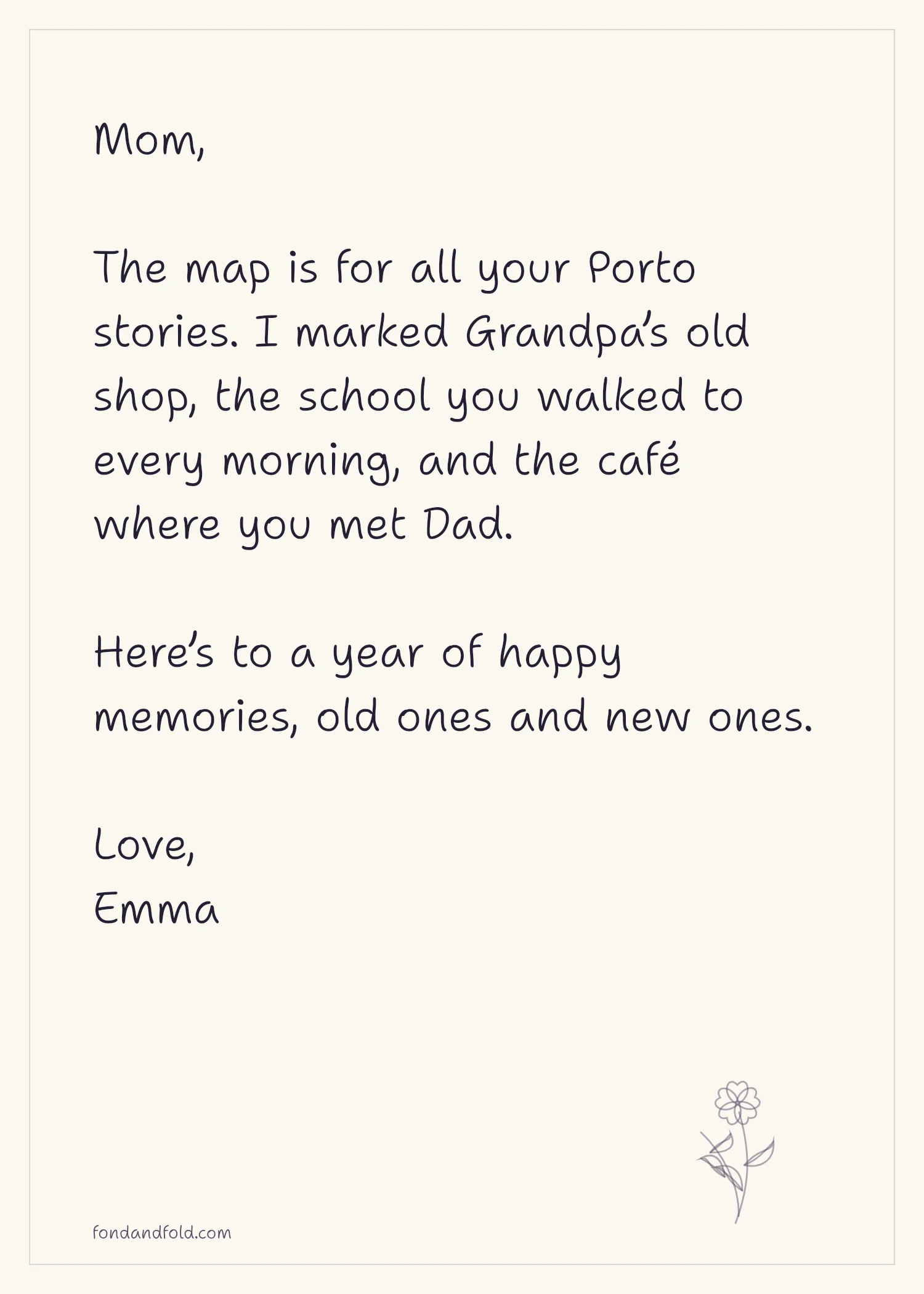
Take the old map from earlier. For a mother who still calls Porto home, the map is the main gift, and a card such as Lavender Birthday Journal can say why it was chosen. On this version, the cover puts her among lavender and daisies with one of its preset lines:
A Birthday to Remember
May the year ahead bring gentle moments and happy memories.
The inside then connects those memories to the map:
Experiences can be wonderful too, as long as the experience itself suits the person. A meal, class, short trip, concert, tasting, game, or activity creates a memory instead of adding another possession. For a partner or close family member, it does not even need a formal booking. A handwritten “your choice of date” voucher, a promise to plan the weekend they keep talking about, or a funny homemade coupon can be part gift and part future plan.
That last kind is especially good when it gives the relationship something new to refer back to. A “wish granted” coupon, a silly favor voucher, or another private little contract can turn into a recurring joke between two people. Sometimes the best gift gives the relationship something new to do.
Compare the directions, not just the price
Each of these directions asks for a different kind of knowledge and effort, which is more useful to compare than whether one gift costs more than another:
| Gift direction | What it can say | How well you need to know them | Preparation | Physical footprint |
|---|---|---|---|---|
| A favorite consumable, such as specialty coffee, tea, baked goods, or a pantry item | I know your taste | Medium | Low to medium | Temporary |
| A hobby or collection addition | I know what you care about | High | Medium | Low to medium |
| Something tied to a place, history, or identity | I remember what shaped you | High | Medium to high | Usually low |
| A handmade or personalized gift | You were worth time and thought | High | Medium to high | Low to medium |
| A practical everyday upgrade | I notice how you live | Medium | Low to medium | Medium |
| An experience or future plan | I want to create time or a memory with you | Medium to high | Medium | None or very low |
| A personal note, card, or deliberately small gesture | I wanted to say something that belongs to us | High | Low to medium | Very low |
The pattern is fairly simple: the more a gift depends on genuine knowledge of the person, the harder it is for it to feel interchangeable. That is why “unique gifts for someone who has everything” does not have to mean rare, expensive, or impossible to find. Uniquely relevant can matter more than objectively rare, and a mass-produced object tied perfectly to one person’s life can feel more personal than a one-of-a-kind piece with no real connection to them.
The table becomes useful once you read it against a real person. Here is how it changes the choice for three people who could all be described as having everything.
The enthusiast who already owns the gear. Imagine someone who loves photography and already has every piece of equipment they actually want. Another camera accessory chosen at random is unlikely to impress them. But perhaps they collect old photography books, have talked about one photographer for years, or have thousands of family photographs sitting unorganized on a drive. A carefully sourced book, a beautifully printed selection of their own work, or time spent helping turn those images into something they can enjoy fits far better. The hobby still guides you; you just stop competing with their equipment shelf.
The person whose calendar is always full. A big fixed-date event might look impressive, but a flexible plan can feel much more generous. A meal you arrange together later, something consumable they can enjoy whenever they want, or a small personal object that does not ask for another appointment all fit their life instead of demanding space in it.
The person who says they don’t need anything. Here a shared meal, a handmade favorite dessert, a small personalized photo keepsake, a card with a genuine note, or time spent doing something they already love can be more satisfying than another “special object.” Their lack of interest in more possessions is useful information, not a problem you have to overcome.
In each case, the answer comes from the same question: what do I know about this person that should change my decision?
The gift is not finished when you choose it

Presentation is part of the gift, because it is part of how you show that the occasion matters. A gift does not need extravagant packaging, but it should look intentional. Good paper, a proper box, a ribbon, tissue, or simply a neat, well-considered wrap creates a sense of ceremony and tells the recipient you prepared something for them. This matters even more when the gift itself is modest, since careful presentation can turn something simple into a moment.
A card or written note adds another layer. Especially for a parent, grandparent, mentor, senior colleague, or another important relationship, handwriting can carry a kind of weight the object itself cannot. A few sentences about why you chose the gift, what you appreciate about the person, or what memory it brought back can make the gesture feel complete.
For people you are very close to, the note can be more personal. A shared memory, a private nickname, a phrase only the two of you use, or one sentence explaining exactly why this gift made you think of them turns the note into part of the present rather than an accessory to it.
If the gift is for a birthday and you are not sure what tone the note should take, the birthday card messages guide compares short and sweet, heartfelt, uplifting, playful, and funny wishes.
The way the gift arrives matters too. Some gifts are nicest handed over in person, and some are better waiting at home. Some people would love a delivery at the office; others would rather not become the center of attention in front of everyone they work with. The best setting is the one that lets the recipient enjoy the gesture naturally.
Together, what you chose, how you prepared it, what you wrote, and how you gave it create the sense of occasion. A thoughtful gift is rarely only the object in the box.
When someone has everything, you do not have to outspend them or discover something they somehow failed to buy for themselves. The better opportunity is to give them evidence that you paid attention. Their hobbies tell you what they enjoy. Their collections tell you what they choose to keep. Their history tells you what shaped them. Their routines tell you what they use. Your shared memories tell you what belongs to the relationship.
This is also why Fond & Fold is built around finished designs rather than a blank canvas. When a personalized visual gesture is the right kind of gift, you can choose a design that already has its own mood and a small set of cover messages, then let the recipient’s photo become part of the illustration. The inside stays open for your own words, because that is the part a template cannot know: why this person matters to you, what you remember, or what made you choose this card for them. It is a light gift on its own, and beside a larger one it can give that gift a more personal voice.
Ideally, the recipient does not come away thinking about how difficult they were to shop for. They see that you remembered something, noticed something, or spent time on something because it belonged to them. Respect, understanding, and recognition are three ways of arriving at the same feeling: you saw me, and you chose this with me in mind.
When someone has everything, give them evidence that you know who they are.