What to Write in a New Year Card: Look Back, Then Look Ahead
Name one thing from the year that's ending, add one wish for the year ahead, and the card says more than "Happy New Year."
Published
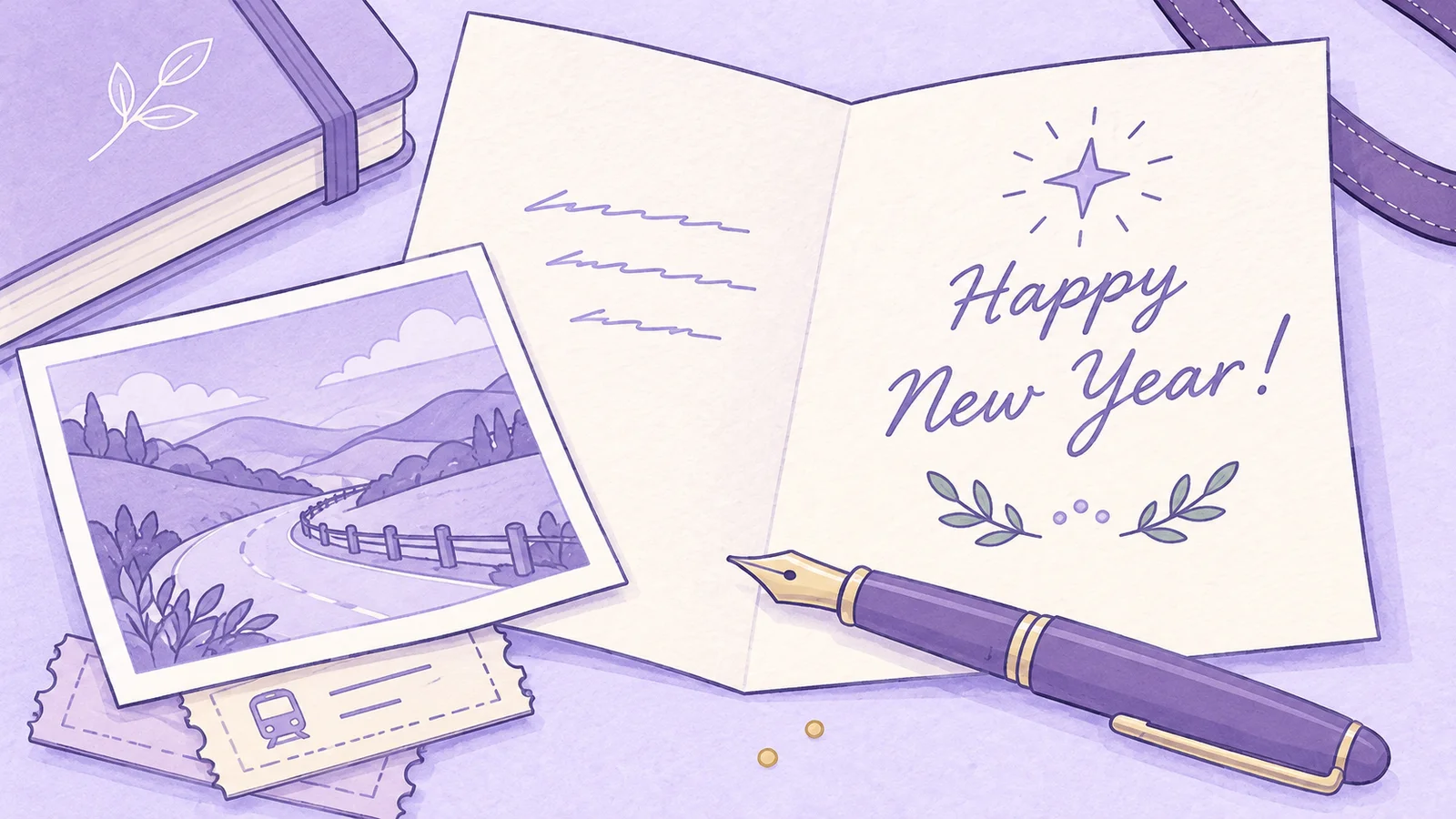
You might send a New Year card to someone you see every day, a friend you haven’t spoken to in months, or a relative who lives far away. You know you want to wish them well. Then you write “Happy New Year” and find yourself staring at the empty space underneath.
Some people reach January with good news and plans they can’t wait to get started on. Others are grateful they got through December. And sometimes what you remember most about the year is who kept you company on ordinary days.
To get past that first line, think about who you’re writing to, what you remember about your year together, and how you’d like the greeting to feel.
Start With the Person and Your Relationship
Before choosing your words, think about who will read them and what your relationship has been like over the past year.
Writing to a partner isn't quite the same as writing to a longtime friend. With a partner, you may want to celebrate what you've built together or look forward to the life you're still creating. With a friend, the message might center on a shared experience, an old memory, or simply how much you value staying connected. A professional New Year greeting, meanwhile, usually calls for more restraint and a specific acknowledgment of your working relationship.
The relationship matters, but so does its present state. A friend you talk to every week will recognize references to your everyday conversations. Someone you haven't seen in several years may appreciate a familiar memory and a gentle invitation to reconnect.
Here are a few useful starting points:
| Recipient and relationship | What you might focus on | A useful starting thought |
|---|---|---|
| Partner or spouse | Shared life and future plans | What have we enjoyed together, and what are we looking forward to? |
| Close friend or old friend | Memories and connection | What makes this friendship special, even if we haven't seen much of each other? |
| Parents, relatives, or family friends | Care, support, and togetherness | What have we appreciated about each other this year? |
| Coworker, manager, or client | Contribution, collaboration, and progress | What did I genuinely value about working with this person? |
Also consider who the message is coming from. A personal card might say "I'm grateful for everything you've done for me," while a card sent by the whole family would naturally use "we" and refer to experiences you shared together.
You can find the words later. For now, ask yourself what you’d say to this person that you wouldn’t say to everyone on your list.
Find a Personal Anchor From the Past Year
What comes to mind first when you think of this person and the past year?
That’s a good place to look for a personal anchor. It could be something you did together, a change you noticed in them, or a kindness you still remember.
A detail as small as who stayed to help with the dishes can tell someone more than a list of the year’s milestones.
A moment you shared might be a trip, a birthday celebration, a memorable dinner, or an afternoon when you talked longer than either of you expected. Recalling that moment reminds the recipient that it mattered to you.
Something you noticed about them can be equally meaningful. Maybe a friend started a new job, someone in your family took on an unfamiliar responsibility, or your partner made progress toward a goal they've worked on for years. You can acknowledge the effort behind that change, whether or not it came with a dramatic achievement.
Support you received or gave may be the most important part of your shared year. A colleague helped with a demanding project, a parent checked in when you needed encouragement, or a friend listened at just the right moment. Naming that support gives your gratitude a reason.
A connection that has lasted is worth remembering too. Not every year contains a new adventure. You may have spent months apart, missed several chances to meet, or simply continued a friendship through occasional messages. The fact that the relationship still matters can be enough.
For instance, instead of writing "Thanks for being a great friend," you could recall the long phone conversations that kept you close while living in different cities. Instead of telling a coworker "It was great working with you," mention the project where their patience or good judgment made a difference.
That detail tells the reader exactly what you’re thanking them for.

If the year has been quiet, don't invent an achievement or exaggerate a memory. And if you haven't spent much time with someone recently, you can look further back. A childhood memory or a trip from several years ago can be a lovely way to begin a New Year greeting to an old friend.
The most useful personal anchor is one that leads naturally to something you want to say about the year ahead.
Choose the Emotional Tone
Think about how January is likely to feel for the person opening your card.
Fireworks and midnight parties might suit a friend who has good news. Someone coming off a hard December might appreciate a quieter wish.
Here’s how the same occasion can sound in three different cards.
Celebratory and optimistic is a good choice when there's something worth celebrating or the recipient is excited about the future. It works well for a partner looking forward to new adventures, a friend who achieved an important goal, or a colleague beginning an exciting chapter. Words such as celebrate, adventure, exciting, and cheers give this kind of message its lively feeling.
You might write:
Warm and hopeful is often the most versatile choice. It works for family, close friends, and people you care about even when there isn't a particular achievement or milestone to celebrate. Rather than focusing on success, it expresses appreciation for the relationship and hope for more good moments together.
For example:
Gentle and reflective can be more appropriate when the past year has been exhausting, disappointing, or painful for someone you care about. A loud celebration or a promise that the next year will be their "best year ever" may not feel right. A gentler message can acknowledge their experience without forcing them to revisit every difficult moment.
You might write:
Someone who’s worn out can receive that wish without having to put on a cheerful face.
These three tones aren't tied to particular relationships. A message to your partner can be quiet and reflective, while a family card can be joyful and full of energy. What matters is whether the words fit the experience you're referring to and the person who will receive them.
Look Back, Then Look Ahead
Try putting the memory and the wish in the same note.
Open with a greeting, recall something you shared, and say what you hope the next year brings. Sign off the way you usually would.
You don't need to give each part a separate paragraph. In a short card, the entire message might be only three or four sentences.
You might start with “Happy New Year! Wishing you a wonderful year ahead.” Say you finally caught up with an old friend this fall. What do you remember about that afternoon? You could write something like this.
Maya will know exactly which afternoon Emma means. That’s what makes “more afternoons like that” a wish only Emma could have written to her.
The details change with the relationship. Here’s how that can sound.
For a close friend, you can be informal and specific. You might refer to something you did together, an inside joke, or the simple pleasure of having them in your life. If that friend has been part of your everyday routine, a message could read:
If you're writing to someone you haven't seen for a long time, you can keep the invitation lighter. Mention a fond memory and wish them well, without making the message feel like a demand to reconnect.
The New Year is a natural opening for an old friendship, and our guide to reaching out to an old friend explores how to continue the conversation if they respond.
With a partner, a New Year message can reflect on the life you're creating together. That might mean celebrating an exciting year or appreciating the quieter routines that have become part of your relationship. For a couple entering the year with excitement, a message could read:
This is especially fitting for a celebratory New Year's Eve message. The shared memories lead into a cheerful wish for more experiences together.
For a quieter relationship moment, you could instead focus on the reassurance of having someone by your side, then look forward to another year of growing together. You don't need fireworks in the writing if the relationship is better expressed through warmth.
When sending a New Year card from your family to relatives or family friends, you can reflect on one thing the family enjoyed together rather than trying to summarize the entire year.
If the card comes from the whole family, “we” gives everyone a voice in the note.
For example:
This approach works particularly well for a family photo New Year card. The picture shows who the greeting is from, while the message gives the recipients something specific to remember.
You can also send New Year's cards instead of Christmas cards, whether your family prefers a more general seasonal greeting or didn't send cards earlier in December. The message can simply focus on shared memories and hopes for the new year. There's no need to write an explanation for the choice.
For colleagues and clients, the same principle applies, but the personal anchor is usually something connected to work.
You can recognize a colleague's support, a successful collaboration, or the care they brought to a difficult task. Then wish them continued opportunities and satisfaction in the year ahead.
For example:
For a client, you might replace the personal observation with a specific expression of appreciation for their trust or partnership.
Something as simple as "Thank you for trusting our team with your project this year" gives a professional New Year wish a more genuine foundation than a generic paragraph about success and prosperity.
And when someone has had a particularly difficult year, you can still use the same look-back-and-look-ahead structure. The difference is what you choose to recognize and what kind of future you wish for them.
You may not need to mention the hardship directly, especially if it's painful or very personal. Instead, focus on the care you've shared or the connection that remains important.
For example:
Sarah can’t promise her mom an easier year. She can tell her what their time together meant and wish her a little more rest.
In each note, the memory gives you somewhere to start. The wish gives you somewhere to go.
Choose a Card That Matches Your Message
Once you've found the right words, think about the card they'll appear in.
The cover greets the person first. When they open it, your own words pick up where that greeting left off.
A glamorous scene with fireworks, eveningwear, and sparkling lights naturally suggests excitement and celebration. A quiet landscape at sunrise creates a different feeling: hope, calm, and the promise of a new beginning.
Which one would the person you’re writing to put on their mantel?
The artistic style matters too. Some people love playful cartoons and bold colors, while others prefer elegant portraits, subtle illustration, or a more painterly treatment. Think about what the recipient would enjoy seeing, not just what catches your own eye.
Then consider the cover wording. A greeting that invites someone to raise a glass suggests a lively celebration, while "A New Year, Together" gives the moment a warmer, more personal emphasis. If the cover is especially energetic, the message inside should generally share some of that optimism. If the cover is gentle, an intimate or thoughtful note may feel more natural.
At Fond & Fold, these decisions are part of how we create each card. We develop the artwork and cover greetings in advance, so the sender can choose a finished design that fits the person and the message rather than designing everything from scratch.
Two of our New Year cards illustrate how different that choice can feel.
New Year Glamour transforms a photo of two adults into a glamorous rooftop New Year's Eve scene. The couple wears sparkling evening clothes and raises glasses beneath golden arches, with fireworks lighting the sky.
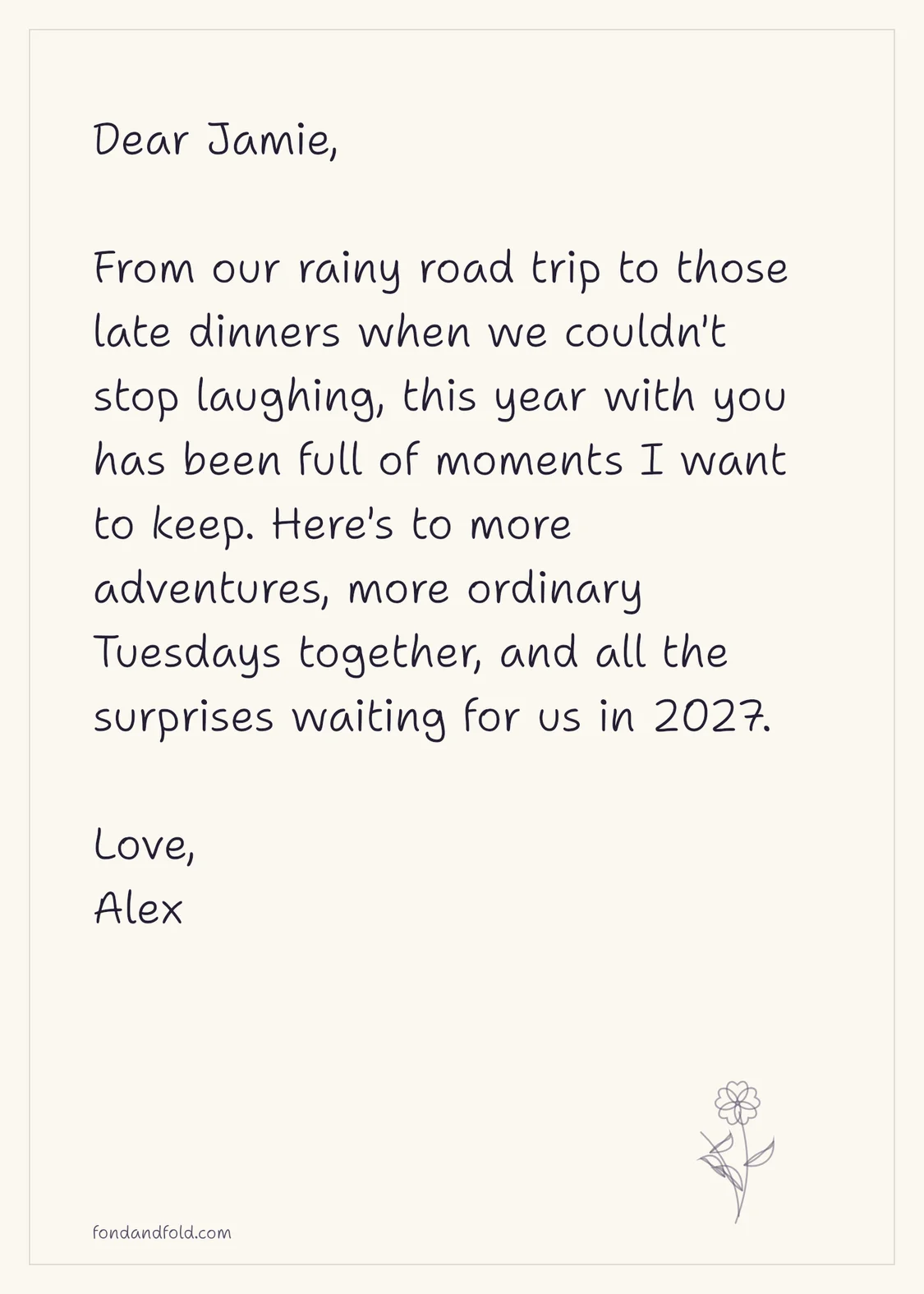
You can choose titles such as “Celebrating” or “Cheers To.” The finished cover below reads “Cheers to 2027,” with the blessing “Here’s to love, laughter, and a dazzling New Year.”
It's a fitting choice when the message celebrates a relationship, shared adventures, or excitement about what comes next.
Alex’s note to Jamie fits this cover. The toast is on the front, and the rainy road trip they still talk about is inside.


New Year Mountain Sunrise offers a different atmosphere. It turns a photograph of two to five people, with up to two pets, into a painted mountain scene. The group sits close together under a colorful wool blanket, watching the sun rise over snowy peaks.
The watercolor-and-gouache scene has a quiet, hopeful feel. This cover reads “A New Year, Together,” with the wish “May the little things bring you great joy.” Another title option is “New Year, New Light.”
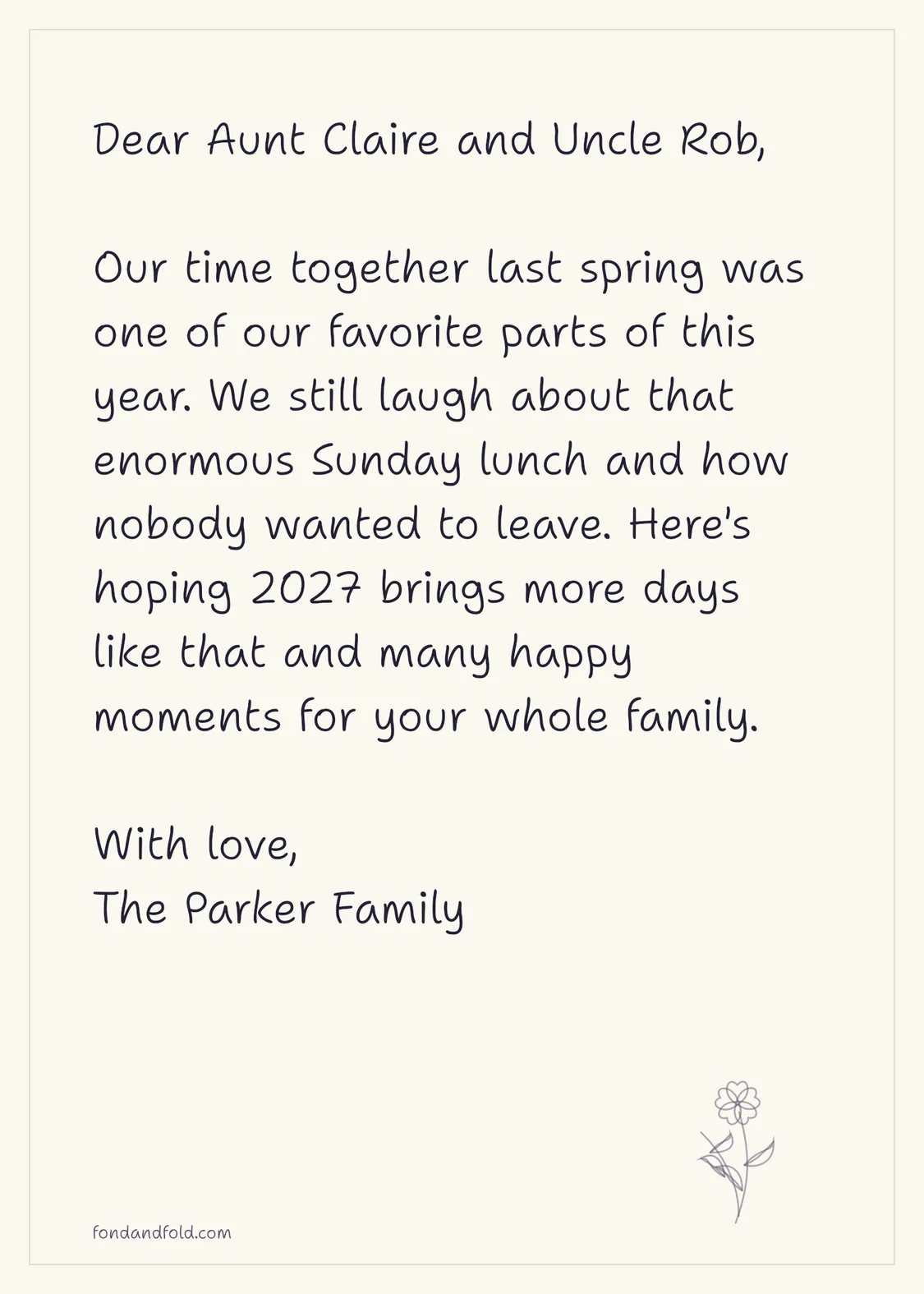
This kind of card suits a family sending New Year wishes to relatives or friends. It can also be especially meaningful when the message is about togetherness, gratitude, or hoping for a gentler year.
The family message to Aunt Claire and Uncle Rob in the previous section would work well with this scene. It looks back at a simple family gathering and hopes for more happy moments together.


One cover raises a glass at midnight. The other catches a family still huddled under a blanket at sunrise.
Read your first line aloud while you look at the cover. Do they sound like wishes you’d give the same person?
A thoughtful New Year card doesn't need to recount everything that happened over the past twelve months. Often, one meaningful detail is enough. Think about the person receiving it, what you value in your relationship, and how you want them to feel as they begin another year. A memory from the past can become a wish for the future, giving even a short New Year message something personal to hold on to.
At Fond & Fold, we design the artwork and cover greetings before you choose your card. Your photograph makes the picture yours. Inside, there’s room for the memory only you would think to mention.
When they open the card, they might remember that lunch you shared, the project they helped you finish, or an afternoon you’d both like to repeat. That’s a good thing to carry into January.
Look back at what mattered. Look ahead to what you hope to share.