
What to Write in an Anniversary Card: A Memory, a Note, a Wish
Turn a shared memory into a note for your partner, or write a warm anniversary wish to a couple you care about.
Published
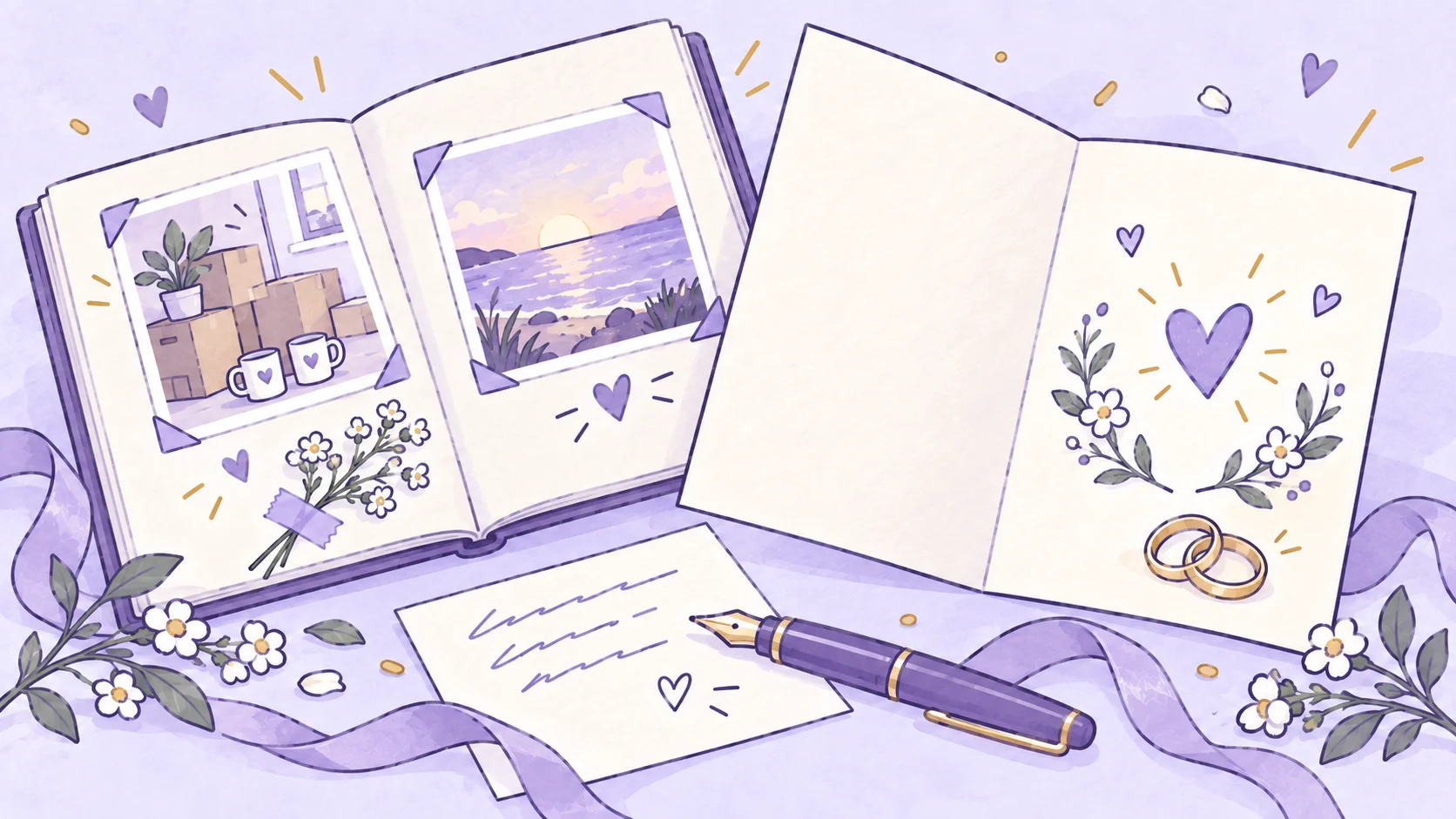
An anniversary makes time visible. One year ago, almost everything may have felt new. Ten years later, there may be routines, old jokes, apartments you no longer live in, trips you still talk about, and plans that have changed several times along the way. After thirty or fifty years, whole chapters of life may belong to the relationship.
That is why “Happy anniversary, I love you” can be completely sincere and still feel difficult to finish. The occasion is asking for something more specific: what does this amount of time mean to the two people involved?
You do not have to summarize an entire relationship. In most anniversary cards, one well-chosen detail does more than a list of milestones. Which detail you choose depends on where the relationship is now, and on whether you are writing from inside it or looking at it with affection from the outside.
Start with the sender and the stage
Two anniversaries with the same number do not necessarily need the same message. A couple celebrating their first anniversary may be thinking about how quickly the relationship has become important. Another couple at ten years may be looking at how different their life is from the one they imagined at the beginning. Someone marking forty years may have too many memories to fit into any card.
The sender matters just as much. These are four of the most common situations:
| Situation | Give the most space to | A useful starting thought |
|---|---|---|
| Writing to your partner in the first few years | Present + future | What feels exciting, easy, surprising, or worth continuing |
| Writing to your partner after several established years | Past + present + future | One memory, what your life feels like now, and what you still want together |
| Writing to your partner after decades together | Shared history + gratitude | What the years have contained and what you value after living through them together |
| Writing to parents, friends, or another couple | What you have actually witnessed | What you admire about them together and what you wish for them next |
The distinction does not have to make the card formal. It simply stops you from reaching for a message that belongs to a different stage of life. After a first or second year together, you might write:
A few years further in, the feeling can shift:
After decades, you may not need to make the language bigger. The amount of life behind the words already gives them weight:
When you are writing to another couple, the viewpoint changes again:
The anniversary number gives you context, and the relationship tells you what deserves the space.
One memory, not a timeline
A shared memory is one of the easiest ways to make an anniversary message personal, but the first version people remember is often too long. You may start with the entire story: where you were going, what train you missed, which restaurant had closed, what happened afterward, what somebody said, why it became a joke. Those details matter to you because you were there. They do not all need to survive the edit.
Going too far in the other direction creates the opposite problem. “We have made so many amazing memories together” is tidy, but the actual memory has disappeared. Try keeping one scene, what it meant, and where it leads now.
Suppose the memory is your first apartment. You could tell the whole story of finding it, moving boxes, assembling furniture, living on takeout, and discovering that the shower barely worked. Or you could reduce all of that to “We have been through so much.” A finished anniversary note only needs the part that carries the relationship:
The floor and the noodles make the memory visible. “Our mess” explains why the moment stayed. The last sentence quietly brings the memory into the present.
The same edit works with a first trip, the night you met, buying a home, bringing home a pet, raising children, changing cities, getting through a difficult season, or something much smaller. You are not trying to preserve every fact, only the part that still says something true about the relationship.
The first few years: write about now
In a newer relationship, there may not be a long archive of shared history yet, and the card does not need to make up for that. The first few anniversaries have their own energy. You are still discovering how the other person moves through the world. Some routines are only beginning to feel like “ours.” There are restaurants you have not tried, places you keep talking about visiting, friends and family you are still getting to know, and versions of the relationship that have not happened yet.
Let the message reflect that. Instead of trying to sound as though you have already lived a whole lifetime together, write about something you genuinely enjoy now and one thing you are looking forward to. You might begin with a present detail:
Or let the future carry more of the message:
At this stage, the cover does not need to tell your whole story. A line such as “WITH YOU LIFE IS SWEETER” on Roses & Ribbons Valentine makes the romantic statement quickly. Here is a version made for Mateo and Sofia:
WITH YOU
LIFE IS SWEETER
MATEO & SOFIA
The inside then has room for the evidence: the restaurant you always return to, the Sunday routine you have accidentally created, or the trip you keep talking about taking. A full first-anniversary note could read:
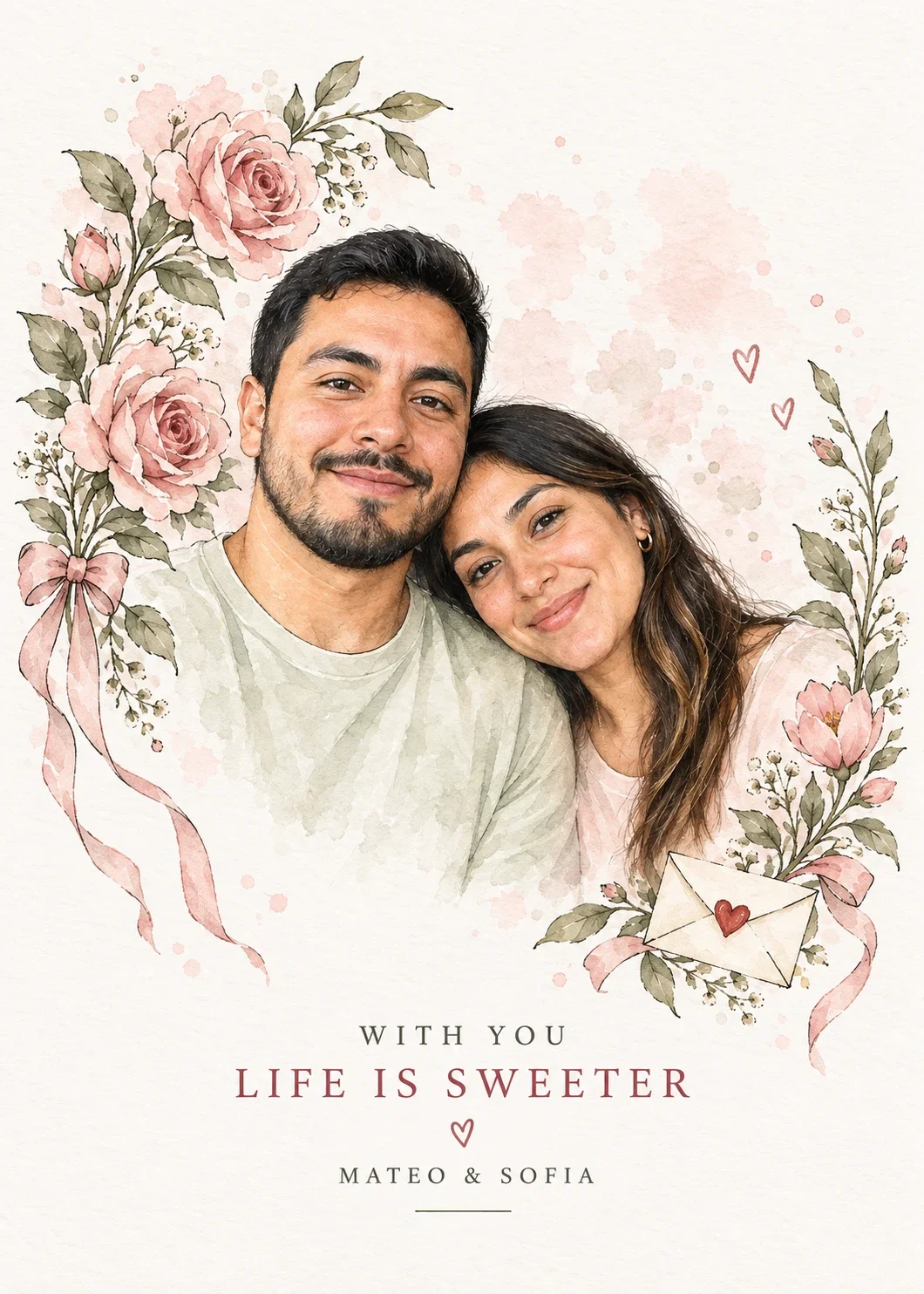
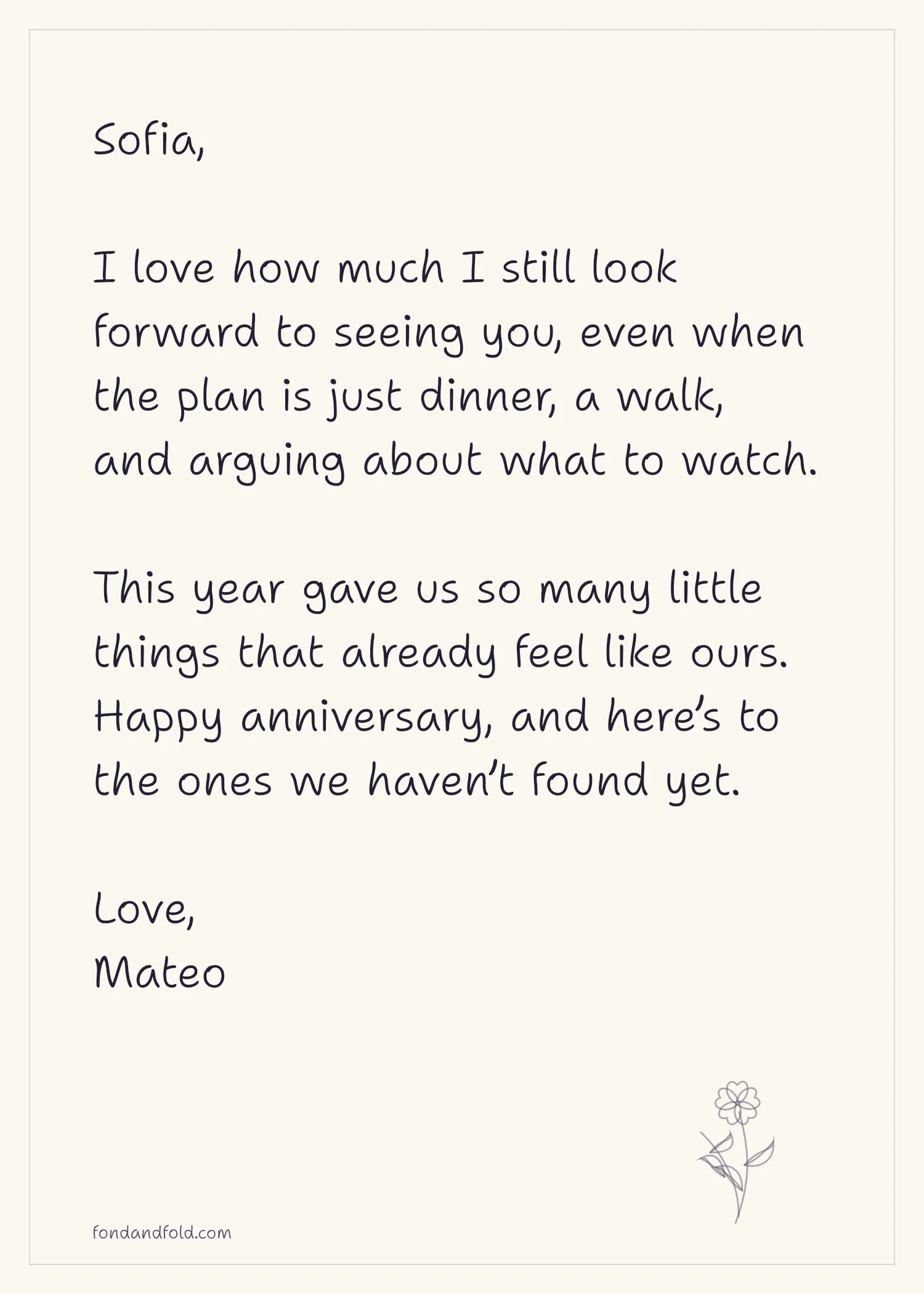

The card feels personal because the romance on the cover is followed by evidence from the relationship.
The same habit of writing from small, true details works between anniversaries too; the love card messages guide shows how to turn one into a note for an ordinary day.
Five or ten years in: then, now, next
Once a relationship has lasted several years, an anniversary often makes two things visible at once: how much has changed, and how normal some parts of being together have become. This is where a simple then → now → next structure can help.
Then gives you one point of contrast. It might be your first home, an early trip, the job you had when you met, or something the two of you once imagined.
Now says what the relationship has become. This is often where the most personal material lives: routines, habits, responsibilities, the things you know without asking, the ordinary life that would have been impossible to picture at the beginning.
Next keeps the anniversary from becoming only a retrospective. It does not need to be a grand promise. It can be next summer, a place you still want to visit, more quiet weekends, or simply another year of the life you already like.
Starry Night Anniversary works naturally with this kind of message. The lake, evening sky, and two people sharing the scene already make the occasion feel romantic, and a cover line such as this one looks ahead on its own:
Here’s to Us
EVERY YEAR WITH YOU GIVES ME MORE TO LOVE
The inside does not need to compete with that atmosphere. It can carry the quieter evidence of what has lasted, what has changed, and what the two of you still want from the years ahead:

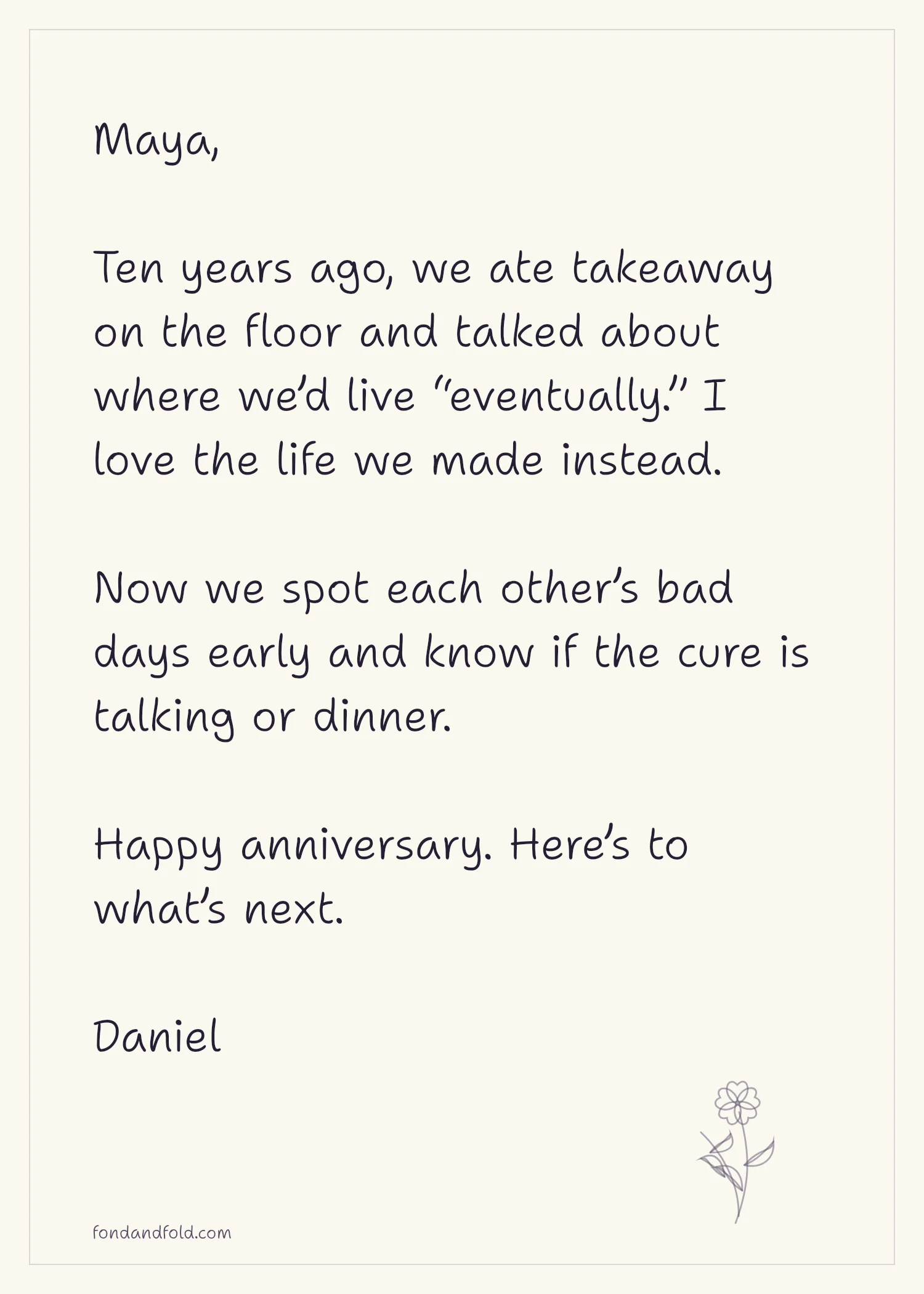
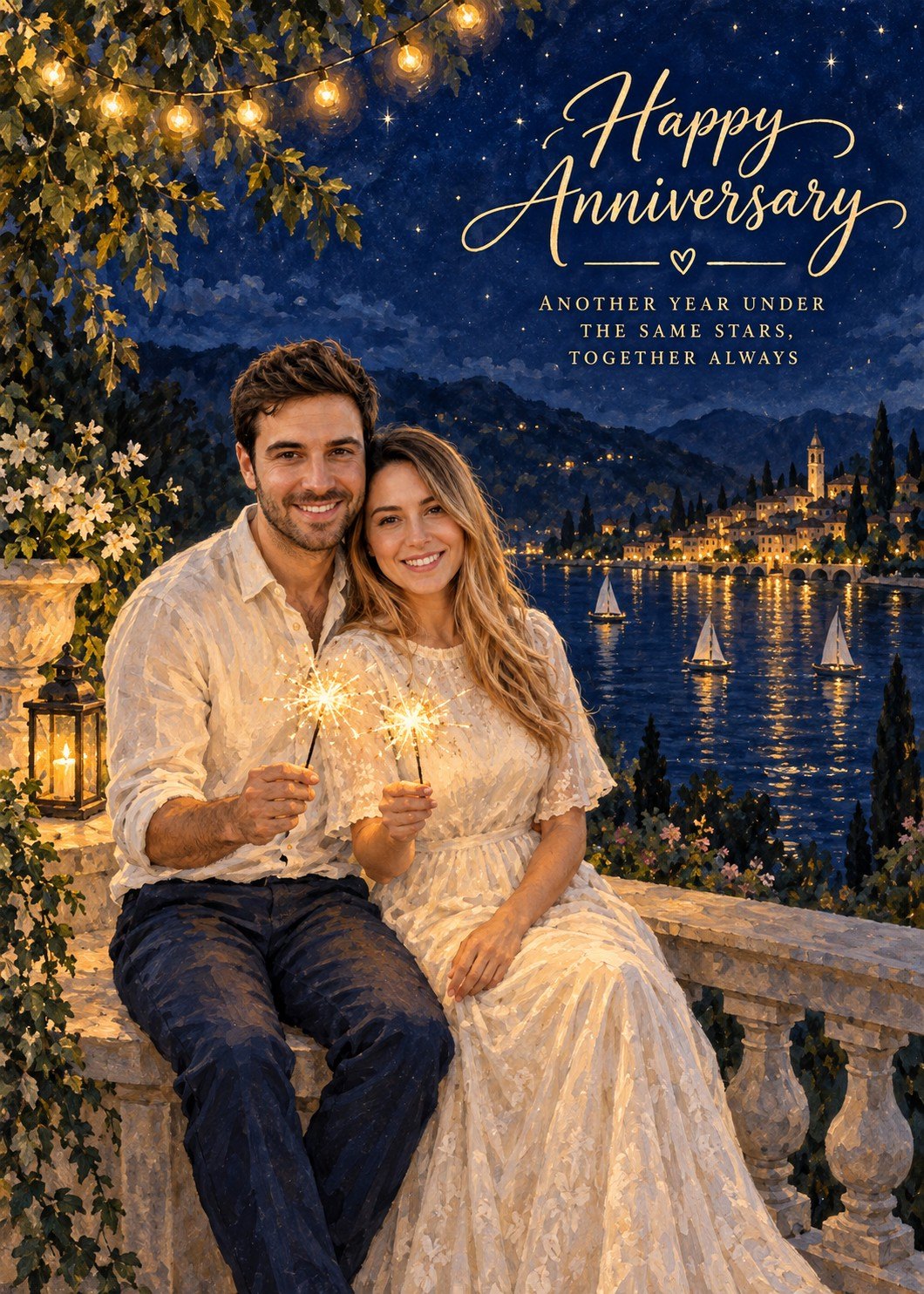
The note does not try to list ten years of events. One old scene establishes the distance traveled, the present shows what those years produced, and the last line keeps looking forward. You can use the same structure for a fifth anniversary, a tenth, or any point where the relationship feels established enough to look both backward and forward.
After decades: let the history lead
At twenty, thirty, or fifty years, there is simply more past available to write from. The message does not have to become solemn, and the future does not disappear. The balance changes because the relationship now contains whole periods of life: homes, careers, family changes, losses, celebrations, versions of yourselves that existed only for a few years and then gave way to others.
A 25th or 50th wedding anniversary message can acknowledge the number, but the number itself is rarely the most moving part. Instead of “Happy 30th anniversary. Here’s to 30 wonderful years and many more,” ask what you can see when you look back across those years. Perhaps the answer is change:
Perhaps it is continuity:
Or gratitude:
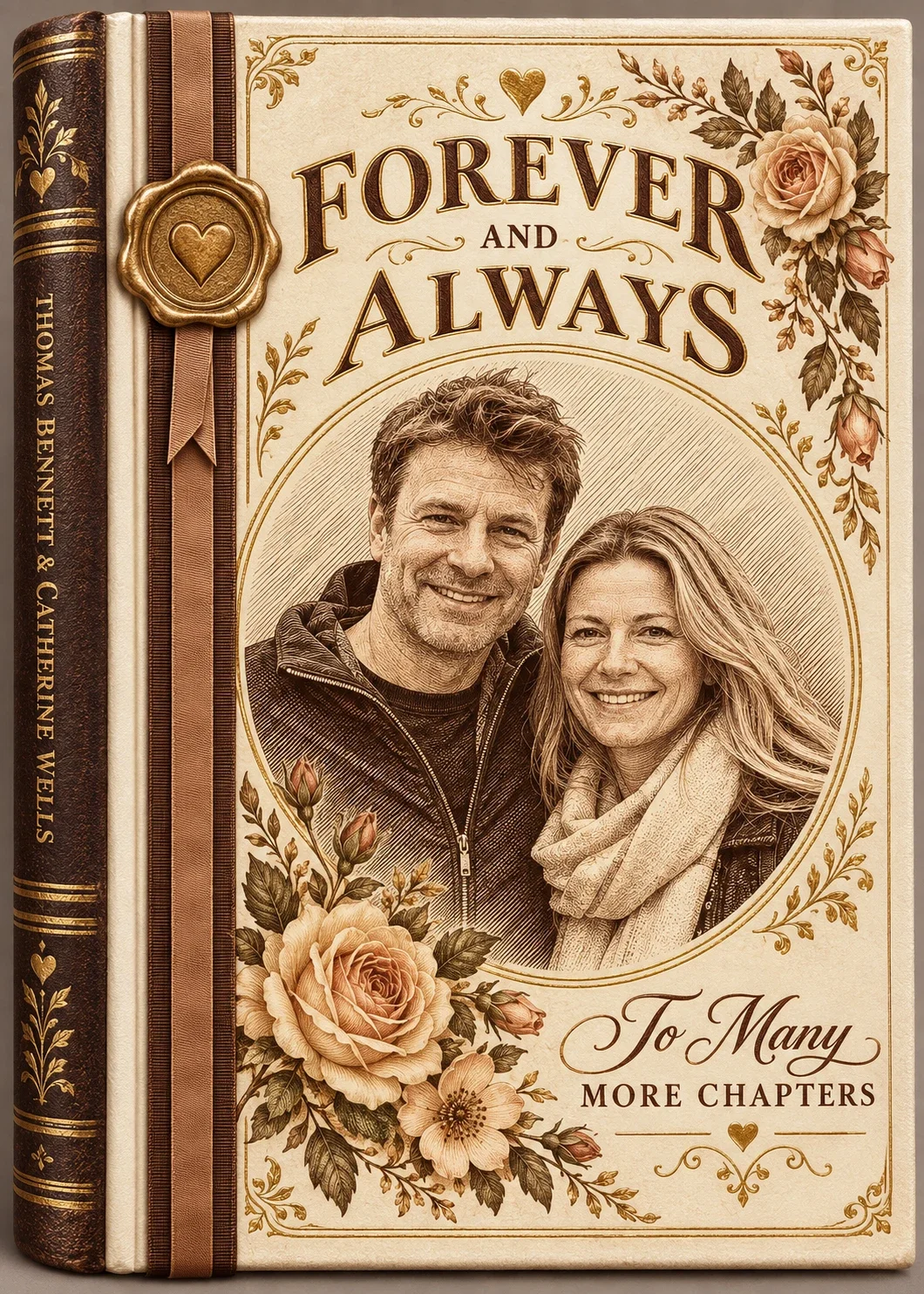
This is where Vintage Love Story fits especially well. Its warm, book-like design already treats a long relationship as a story with many chapters, and a cover option such as “Pages of Our Story” or “To Many More Chapters” acknowledges time without asking the cover to contain the memory itself. Here is a version made for Thomas and Catherine:
FOREVER AND ALWAYS
To Many
MORE CHAPTERS
Thomas Bennett & Catherine Wells
The inside does that work instead:
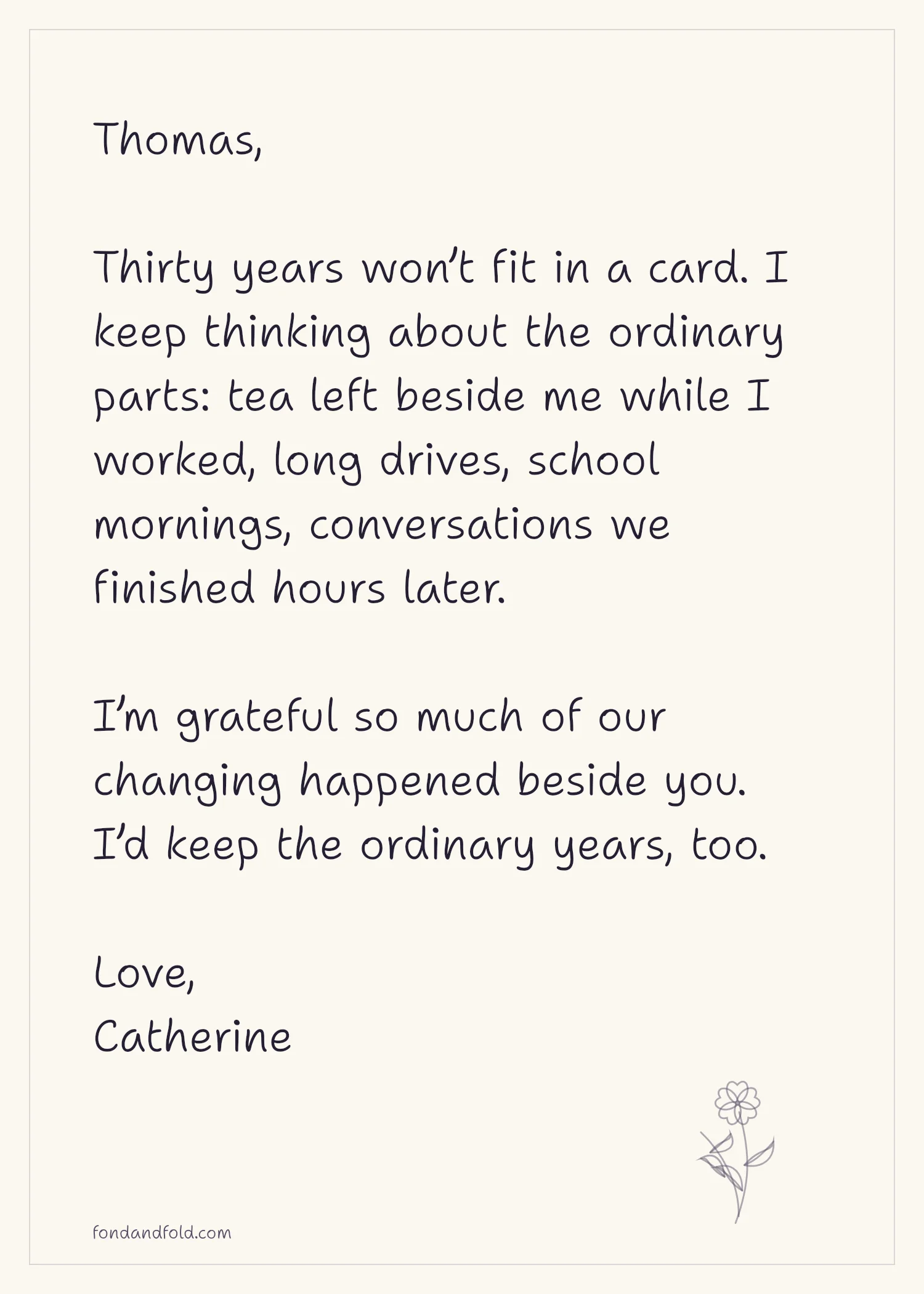
For a long relationship, the most romantic sentence may not be a promise about forever. It may simply recognize how much living has already happened together and why those years still matter.
For another couple: write what you’ve seen
Anniversary wishes for parents, relatives, or friends need a different kind of intimacy. You may know the couple very well, but you are still outside the relationship. You do not need to invent what their marriage means privately, describe struggles they have never discussed with you, or speak as though you know what every year between them has felt like. Write from what you can truthfully observe.
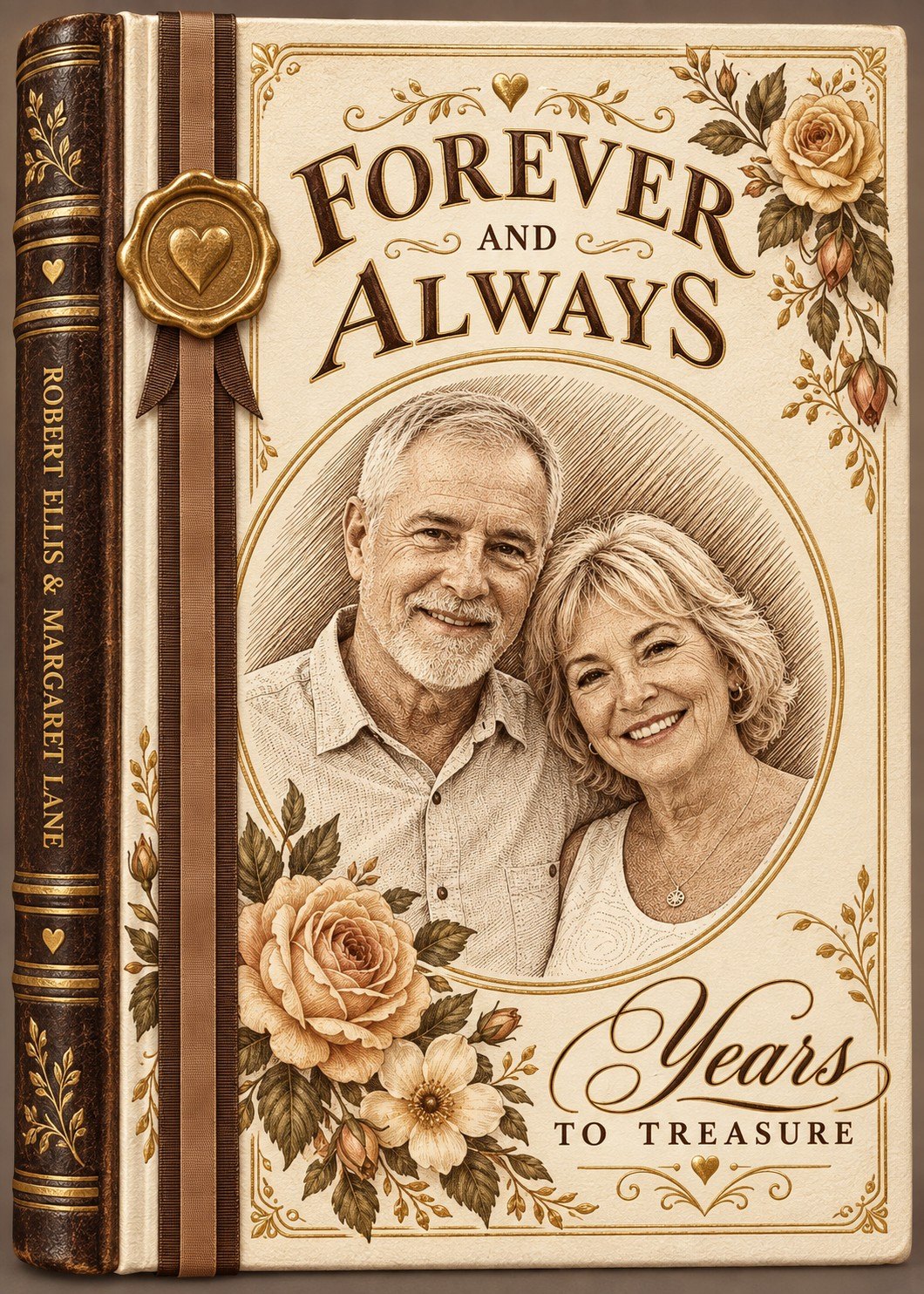
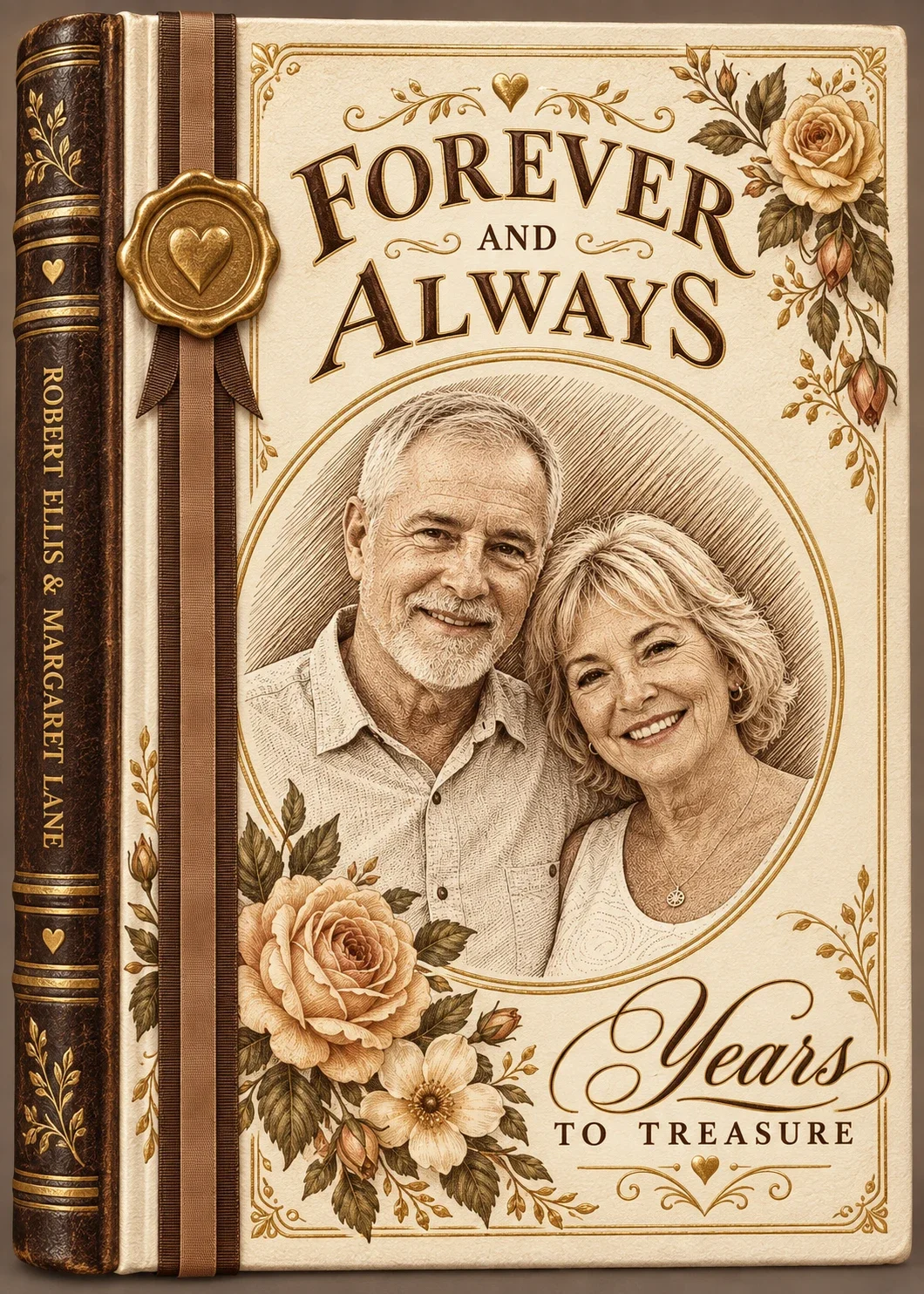
For parents, that might be the home they created, the way they make decisions together, the rituals that shaped your childhood, or something you only appreciated once you became older. Vintage Love Story works well here too. The card uses a photo of the couple themselves, so an adult child can make it for their parents without placing themselves in the image, and a neutral option such as “Years to Treasure” or “Happy Anniversary” suits that sender better than a line written in the voice of one partner:
FOREVER AND ALWAYS
Years
TO TREASURE
Robert Ellis & Margaret Lane
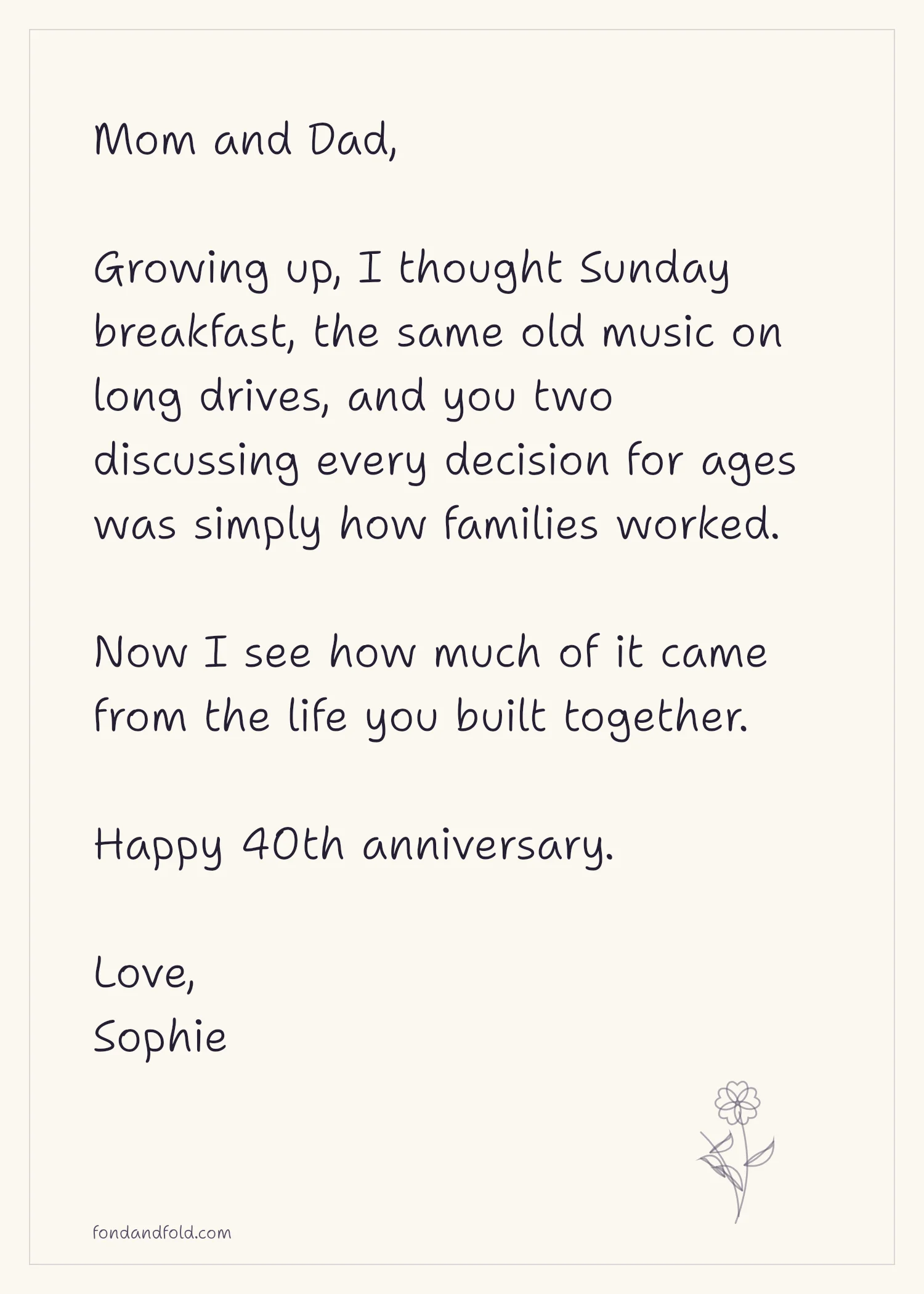
The inside then makes the sender clear:
For close friends, you may have watched the relationship change from dating to a shared home, marriage, children, or simply many years of partnership:
And sometimes the milestone alone deserves a simple acknowledgment:
When you are writing to your own partner, the memory can come from inside the relationship: Do you remember when we…? When you are writing to another couple, the message is often stronger when it says: This is what I have seen in the two of you. Both are personal; they come from different points of view.
The best anniversary message does not depend on whether the year is the first, fifth, tenth, twenty-fifth, or fiftieth. The number tells you how much time has passed; the relationship tells you what that time means. Early anniversaries can lean into what is happening now and what might come next. Established relationships can move between then, now, and next. After decades, shared history can carry much more of the note. And when you are celebrating another couple, one thing you have genuinely observed can say more than a private story you could only guess at.
That is also why Fond & Fold’s anniversary cards begin with a finished visual idea rather than a blank design. Roses & Ribbons Valentine carries a warm romantic feeling, Starry Night Anniversary gives two people a quieter anniversary scene, and Vintage Love Story gives a long shared history a visual language of its own. The couple becomes part of the illustration from their own photo, while the inside stays open for the part no design can supply: the memory, observation, or wish that belongs to these particular people.
We hope the first thing they recognize is themselves together, and the next is a sentence that reminds them what all that time has held.
An anniversary is more than a number. It is a piece of shared life that the two of you can recognize together.