Thank-You Messages for Teachers: Turn a Classroom Moment Into a Note
Start with something a teacher did, then shape it into a note from a student, a parent, or both.
Published
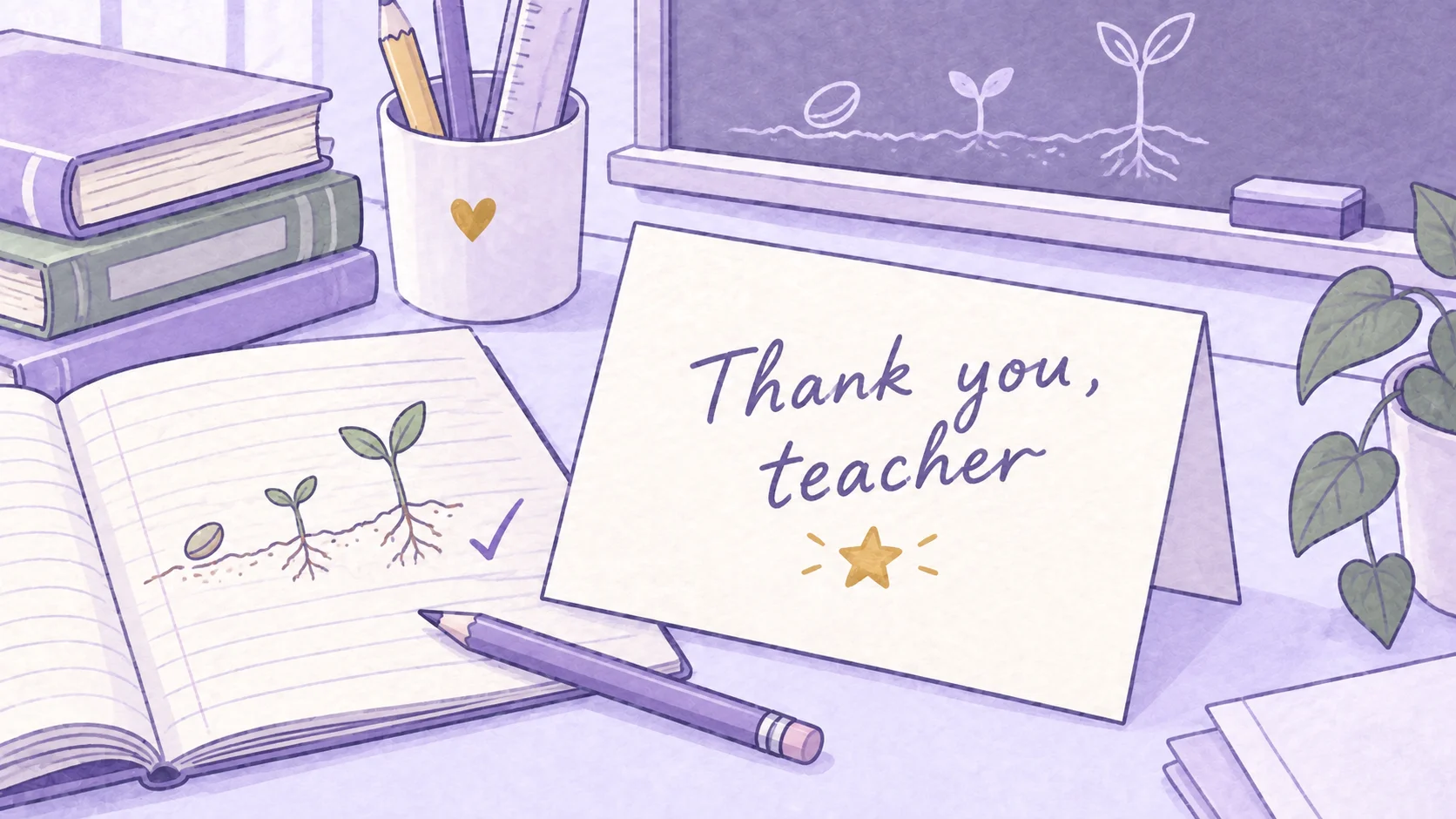
The hard part of thanking a teacher is rarely knowing whether you are grateful. It is deciding which part of that gratitude belongs in the note.
A teacher may have explained something for the fifth time, noticed when a student was losing confidence, made a new child feel included, or encouraged someone to try before they felt ready. Those moments can look small from the outside. What makes them worth writing about is what happened next.
A parent and a student will naturally tell that story differently. The parent usually sees the classroom indirectly, through what the child says at home and the changes that show up afterward. The student can speak directly about what the moment felt like. Both can arrive at the same message: not simply thank you for teaching, but this is what your teaching changed for me.
What to write in a teacher thank-you card: use SEE
A specific teacher thank-you message can usually be built from three pieces.
Specific moment is the thing the teacher actually did. It might be staying after class, inviting a quieter student into the conversation, giving another chance after a rough assignment, or noticing a strength the student had not seen yet.
Emotional response is what that moment felt like for the student. Relieved, less embarrassed, more willing to try, understood, curious, proud, or a little less afraid of getting something wrong can all matter more than a sweeping compliment.
Effect is what happened afterward. Maybe the student attempted the harder problem, began raising a hand more often, stopped avoiding a subject, joined an activity, finished something they had wanted to give up on, or carried a new sense of confidence into the next challenge.
That gives the note a small arc: you did this, it made me feel this, and because of it, something changed.
A parent and a student can use exactly the same structure. What changes is where the evidence comes from. A student can say, “I was nervous.” A parent is more likely to say, “She came home talking about it,” or “We started noticing that she…” The strongest version sounds like the person who is actually writing.
Everyday teacher thank-yous: stay close to one moment
An everyday thank-you does not need the weight of an entire school year. Often the clearest note is about one thing that happened recently and mattered more than the teacher may have realized.
That can be academic, but it does not have to be. A teacher might have helped a student understand fractions, or made it easier to speak in front of a group, settle into a new school, take part in PE, recover from a disappointing grade, or believe that asking for help was allowed.
From a parent: write what came home with your child
A parent often learns the important part after the school day is over. Listen for the sentence the child keeps repeating. Notice the subject that suddenly appears at dinner, the assignment they approach differently, or the confidence that shows up somewhere it did not before. Those details give a parent something concrete to thank the teacher for without trying to recreate a classroom they were not in.
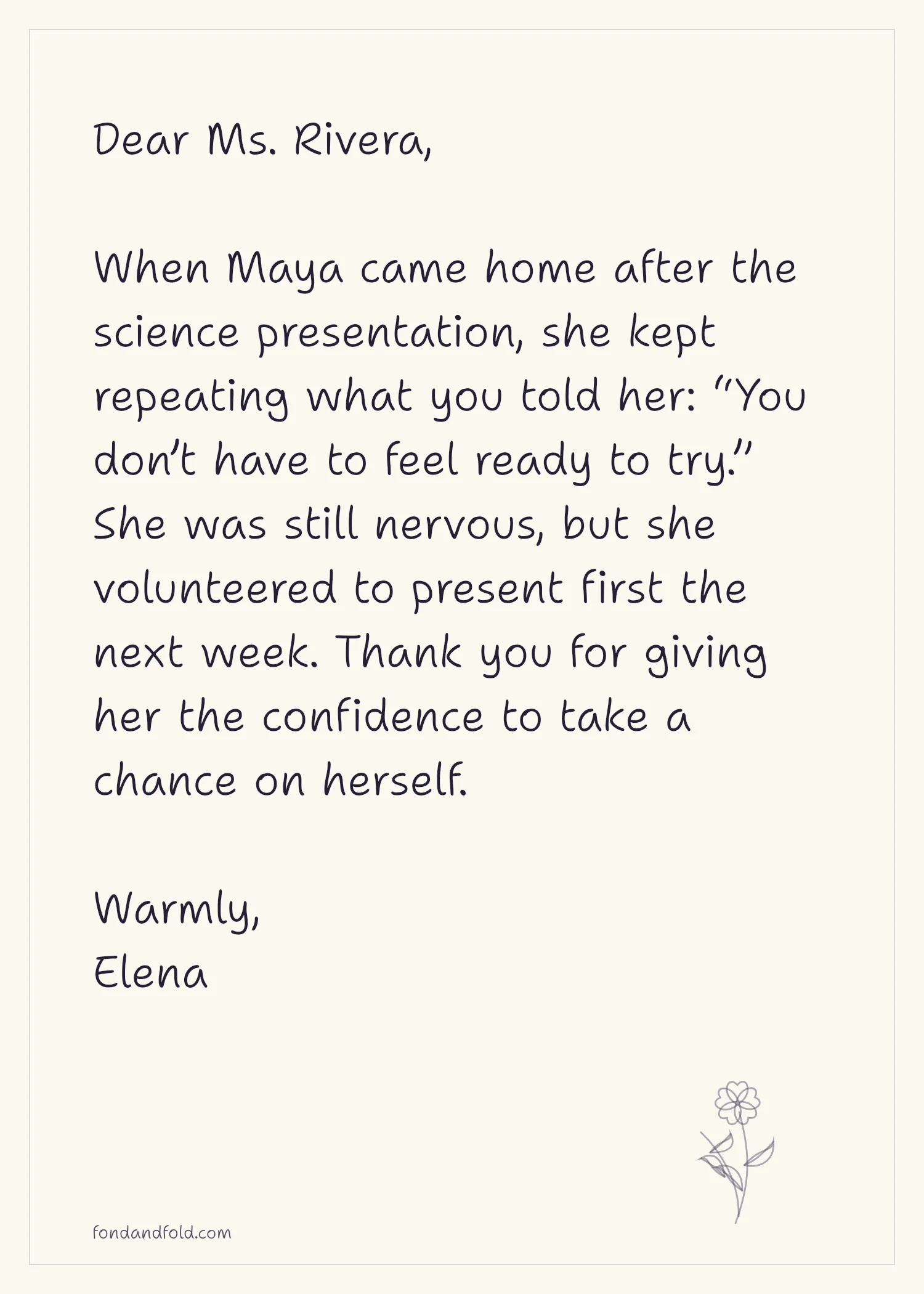
Imagine a child comes home after a presentation and repeats something the teacher told her: You don’t have to feel ready to try. A week later, the parent hears that she volunteered to go first. The teacher’s words are the specific moment, the nervousness and reassurance are the emotional response, and volunteering the next time is the effect.
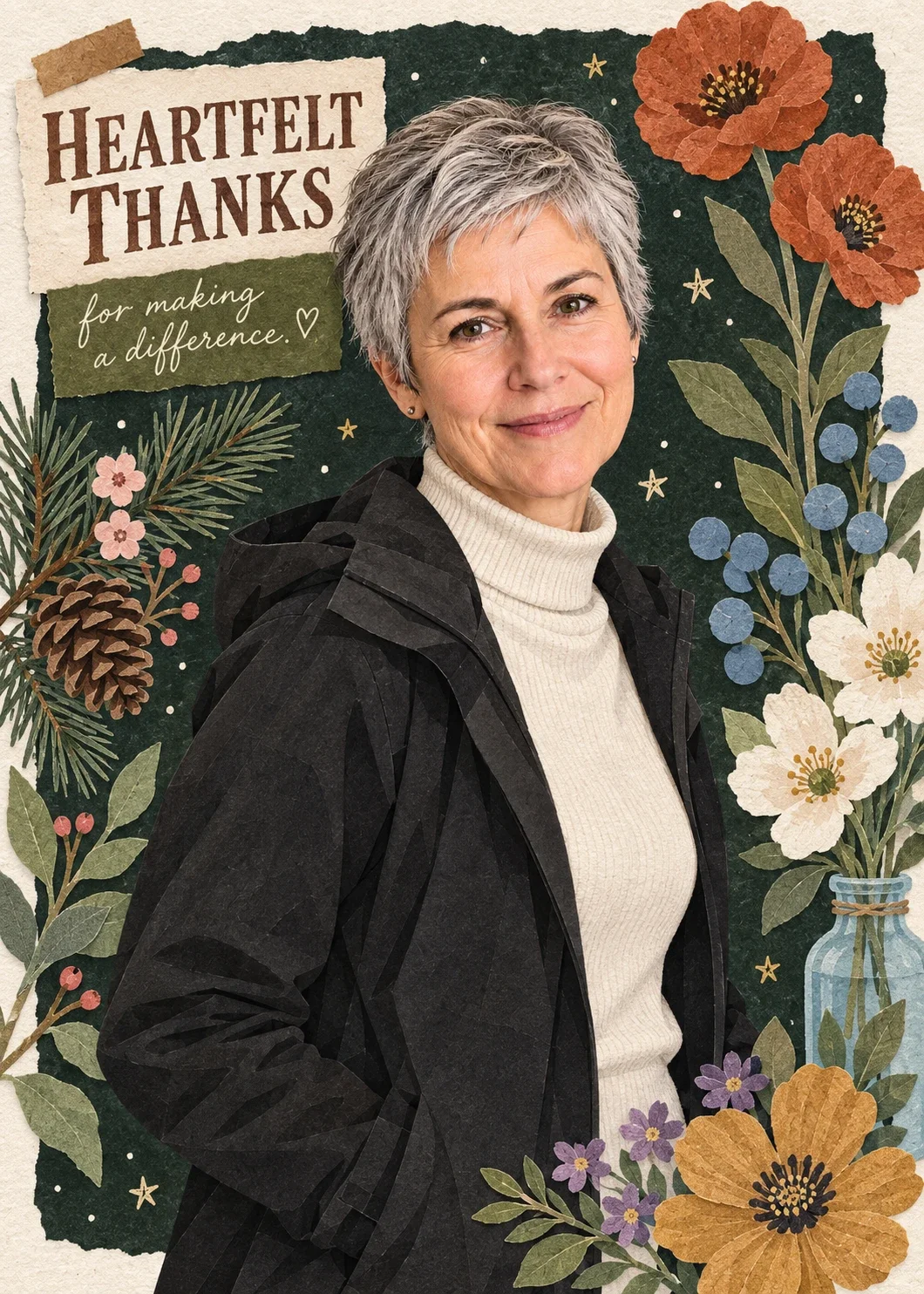
A short cover can establish the thank-you while the note explains what the teacher actually changed. On Botanical Collage Thank You, for example, the cover can read:
HEARTFELT THANKS
for making a difference.
The inside then carries the classroom detail:

The same approach works when the change is less dramatic. A child who starts reading aloud voluntarily, complains less about a difficult subject, talks about a teacher’s class with real curiosity, or feels comfortable enough to ask a question is already giving a parent material worth noticing.
From a student: write from inside the moment
A thank-you message from a student to a teacher can usually be more direct, because the student was there. Instead of explaining that the teacher was “supportive,” go back to the point when that support became visible. What were you stuck on? What did the teacher say or do? What did you think before that moment, and what became easier afterward?
For a warmer cover, Thank You in the Sunflowers puts the teacher’s name in the title and adds a broader line. Here is a version made for Jack:
Thank you, Jack
What you do means more than words can say.
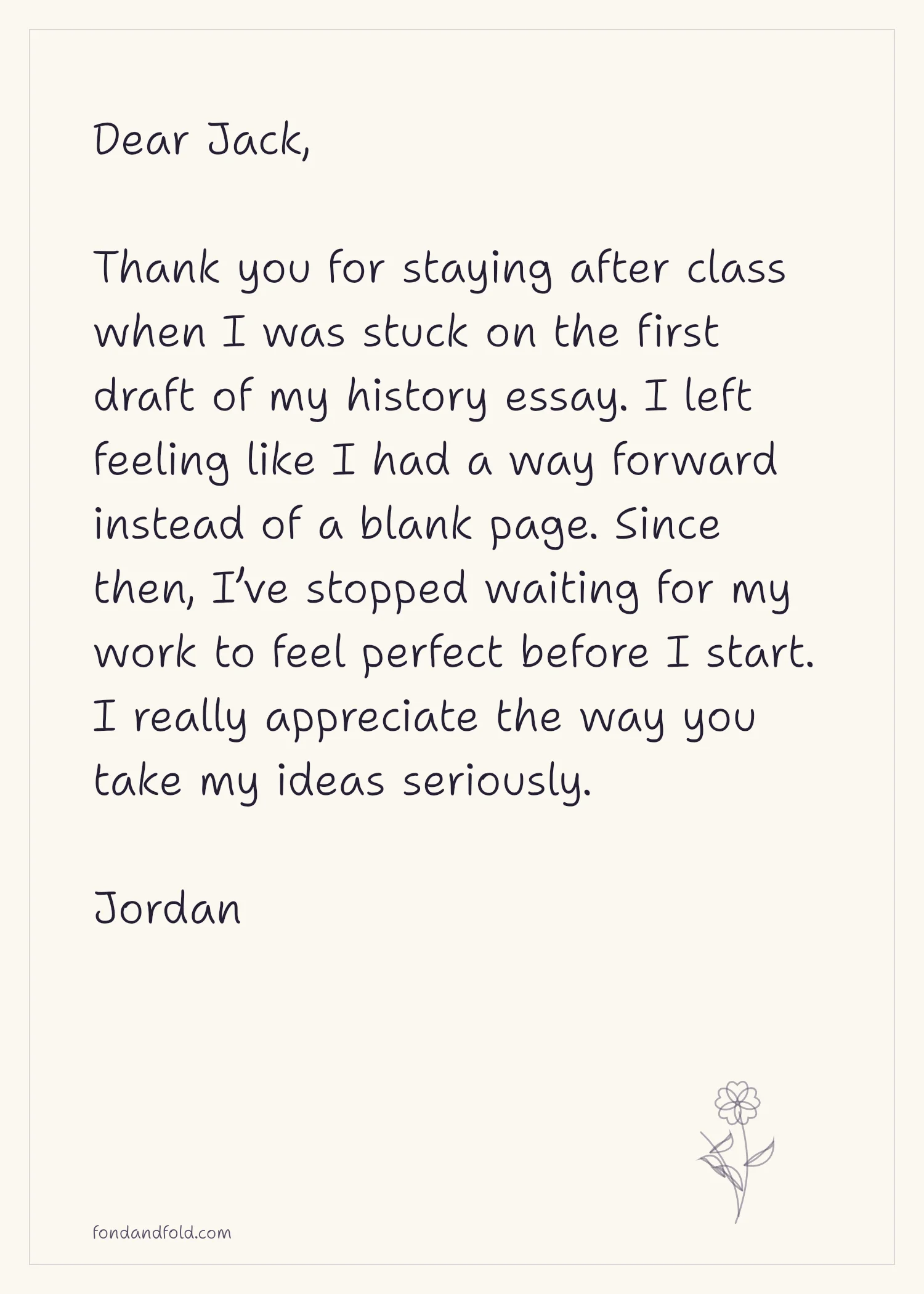
The inside supplies the words that belong to this student and teacher:
The note works because the appreciation is attached to something only this student could have written. It never calls Jack patient; it shows what his patience led to.


A student does not need a life-changing story. Sometimes the most convincing thank-you is about a small shift: I started asking questions instead of pretending I understood. I stopped dreading presentations. I realized I was actually good at this. Those are ordinary classroom changes, which is exactly why they feel real.
End-of-term and graduation thank-yous: widen the lens
An end-of-year teacher thank-you message has a different scale. Instead of asking only, What happened that day?, look across the class, term, or year. What kept happening? What did the student become better at? What will they remember about the way the teacher taught, encouraged, challenged, or included them? A single memory can still anchor the note, but now it stands for something larger.
End of term and graduation fit together for that reason. When a class ends, the note can look back over what the student gained from that particular teacher. At graduation, the same reflection can stretch further and add one more thought: which part of the teacher’s influence the student will carry into whatever comes next.
From a parent: name the growth you watched over time
Parents have a useful vantage point at the end of a term, because they can compare the child who started the year with the child who finished it. That growth may show up in grades, but it can also show up in independence, curiosity, resilience, friendships, willingness to participate, or confidence in something the child once avoided. For example:
This kind of note does not try to summarize every class or every accomplishment. It picks one line of growth and lets the teacher see the part they played in it. For another child, that line might run from “I hate math” to explaining a problem at the dinner table, from needing reminders to organizing work independently, or from feeling invisible in a new school to finally talking about friends by name. The subject changes, but the structure stays the same.
From a student: say what you are taking with you
A student at the end of a course or at graduation can look back more personally. A good place to begin is not necessarily the biggest achievement. Think about the habits, questions, phrases, or ways of thinking that will outlast the class itself. Maybe a teacher made it normal to revise instead of getting everything right the first time. Maybe they taught you to defend an argument, listen more carefully, speak up, try a harder level, or stay curious when an answer was not obvious.
Wildflower Meadow Thank You suits this kind of note, because its cover already has a broader, reflective feeling:
Heartfelt Thanks
for making more of a difference than you know.
The student’s note then shows the teacher what that difference was:

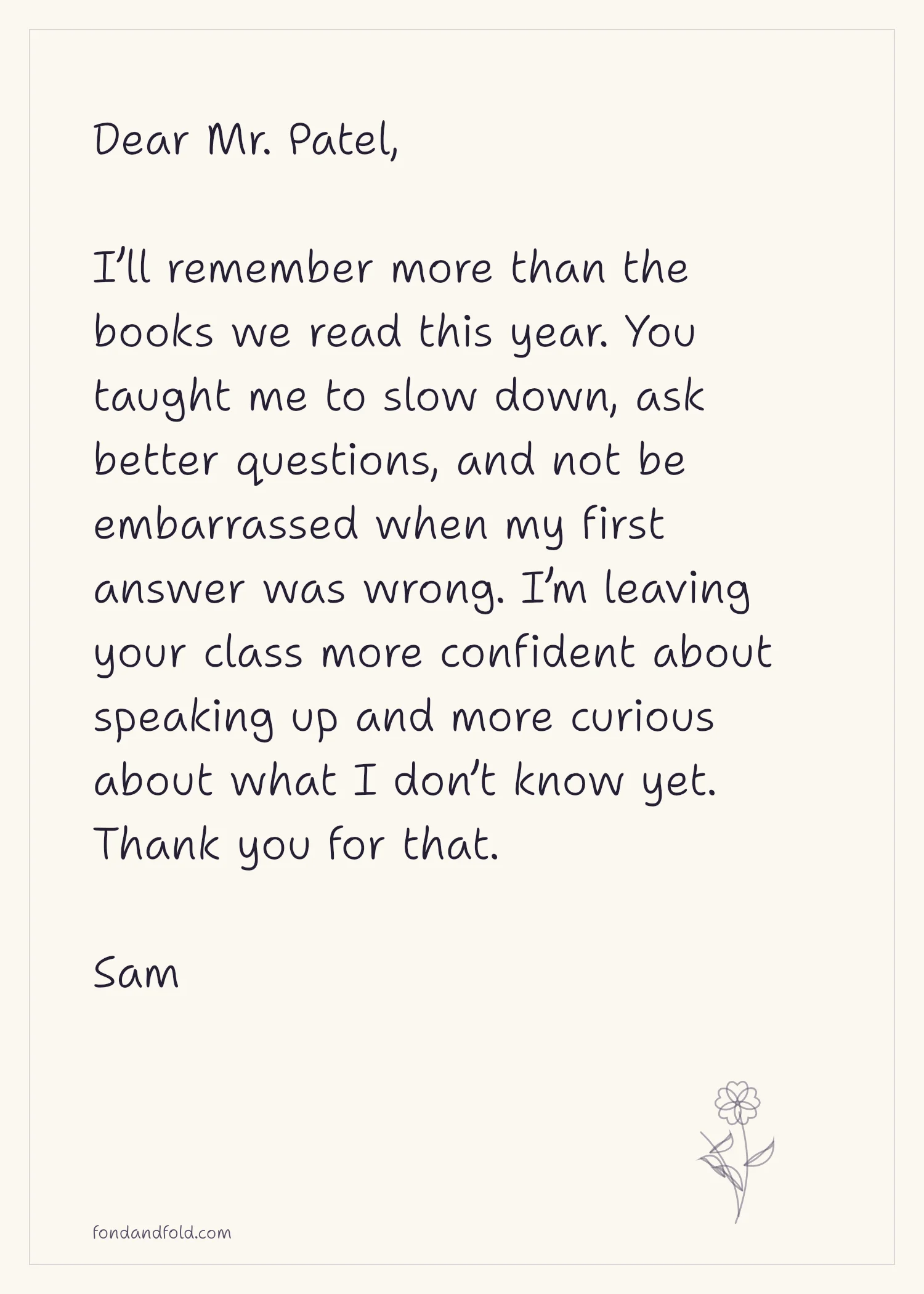

At graduation, one final sentence can carry the note forward: I know I’ll take that with me next year. I’ll think of your class whenever I have to start something before I feel completely ready. Looking ahead works here because the note has already shown what the teacher changed.
Let the cover say thank you, then let the note say why
A teacher appreciation card has two useful jobs. The front makes the gesture immediately clear. It can simply say “WITH GRATITUDE,” thank someone “for your support,” or acknowledge that they made more of a difference than they knew. The personal note contains the detail the teacher could never get from a generic thank-you line.
That division helps because the most personal part of the card should not have to sound like a slogan. The cover can stay short. Inside, the parent or student has room for the classroom moment, the feeling attached to it, and the effect that followed.
It also gives the photo a clearer role. If a suitable photo of the teacher is available, making the teacher the subject turns the card into a small portrait of the person being thanked. In another situation, a photo of the student may make the message feel more clearly like something from this child. There is no need to force a teacher portrait when the sender does not have one; the useful question is which photo makes the relationship behind the note easiest to understand.
All three designs shown here come from Fond & Fold’s Thank You cards: Thank You in the Sunflowers, Botanical Collage Thank You, and Wildflower Meadow Thank You. On each one, the cover establishes the gratitude, and the optional personal note leaves room for the classroom detail only the sender can supply.
A meaningful teacher thank-you does not have to explain an entire education. It only has to make one connection visible: this is something you did, this is how it reached the student, and this is what changed because of it. Parents can tell that story through the things a child brings home, and students can tell it from inside the moment. At the end of a class or at graduation, the same idea grows into a record of what the teacher helped them carry forward.
That is also why Fond & Fold keeps two kinds of work in two places. The illustration, composition, and cover wording are already shaped into a finished card, so the sender does not have to design the thank-you from scratch. The personal note stays open, because no preset line can know which comment was repeated at dinner, which difficult assignment finally clicked, or which quiet encouragement changed the way a student saw themselves.
For the teacher opening it, that specificity is the part that can stay with them. Along with hearing that they were appreciated, they get to see where their effort landed, and what a student carried away from the classroom because they were there.
Show them the difference they made.