Love Card Messages: Put an Everyday Detail Into Words
Write about a small thing you notice and love, with complete notes for the ordinary days between anniversaries.
Published
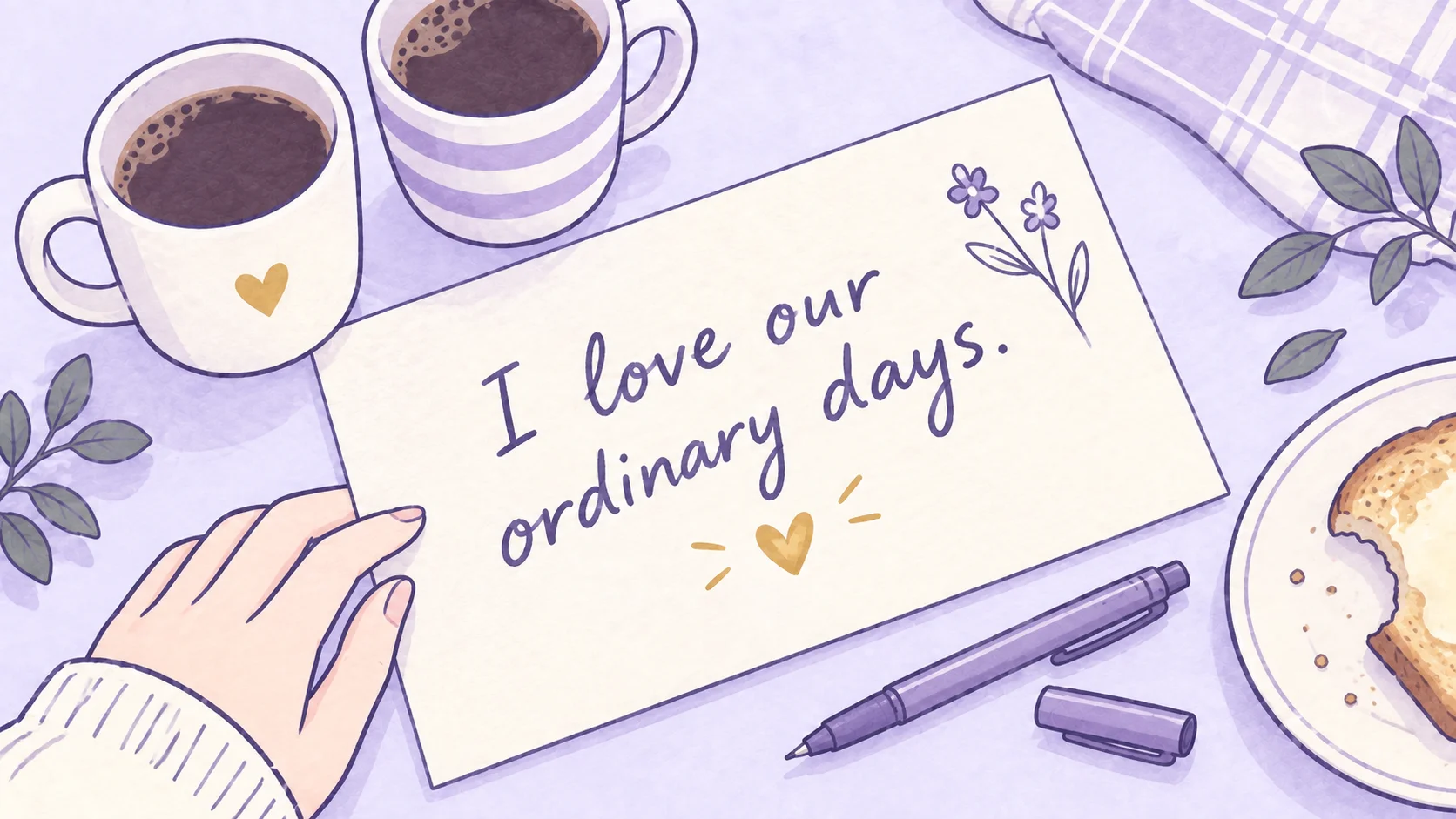
You know how you feel about your partner. The trouble is that the first words to arrive, such as “I love you so much” or “you mean the world to me,” are the same ones everyone reaches for. They are true, but they could have been written by anyone to anyone. The notes that stay with someone usually start smaller: a habit you have noticed, a morning you remember, a plan you keep coming back to.
Love cards are not only for Valentine’s Day
There are obvious times to write a love card, but you do not need an occasion at all. The reason you are writing changes what deserves the most space, even when the relationship is the same.
Valentine’s Day gives you permission to let affection lead. You do not need to explain why you are being romantic, so the message can move quickly toward attraction, closeness, or the things you enjoy about being together. You might write:
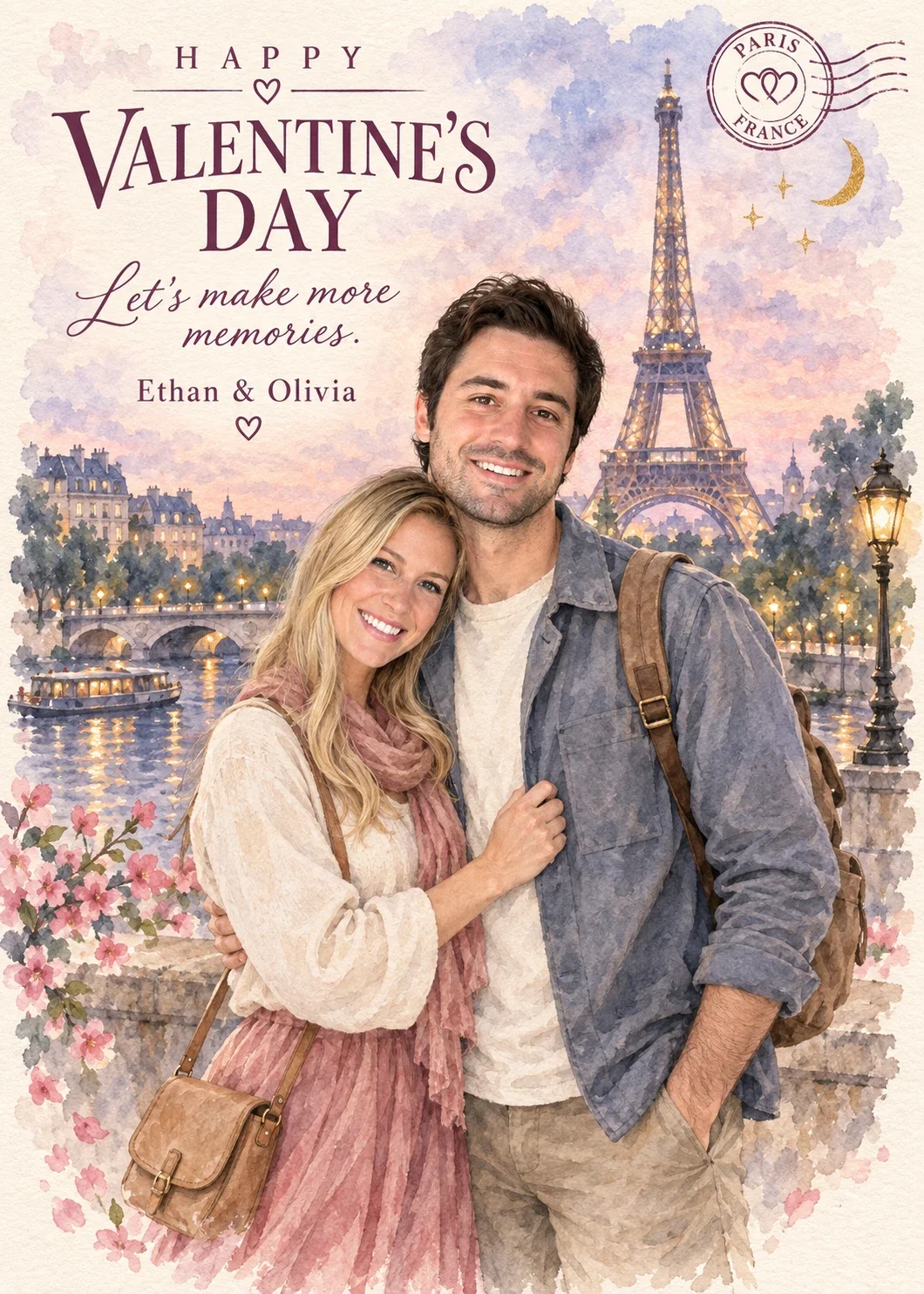
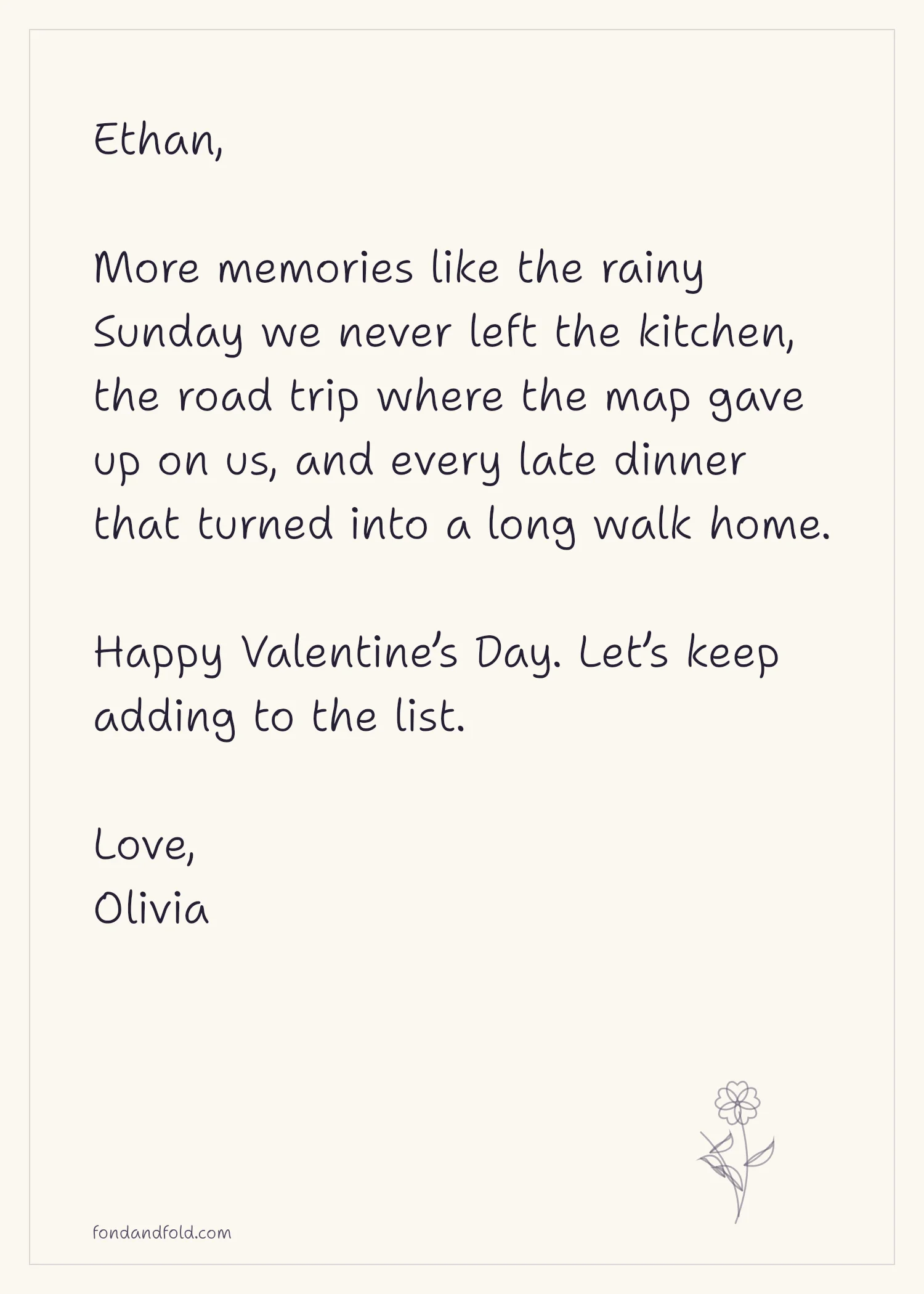
A card such as Valentine in Paris belongs naturally here because the occasion is already part of the design, and a cover line such as “Let’s make more memories.” leaves the inside note to say which memories you mean. On this version, made for Ethan and Olivia, the inside names a few:
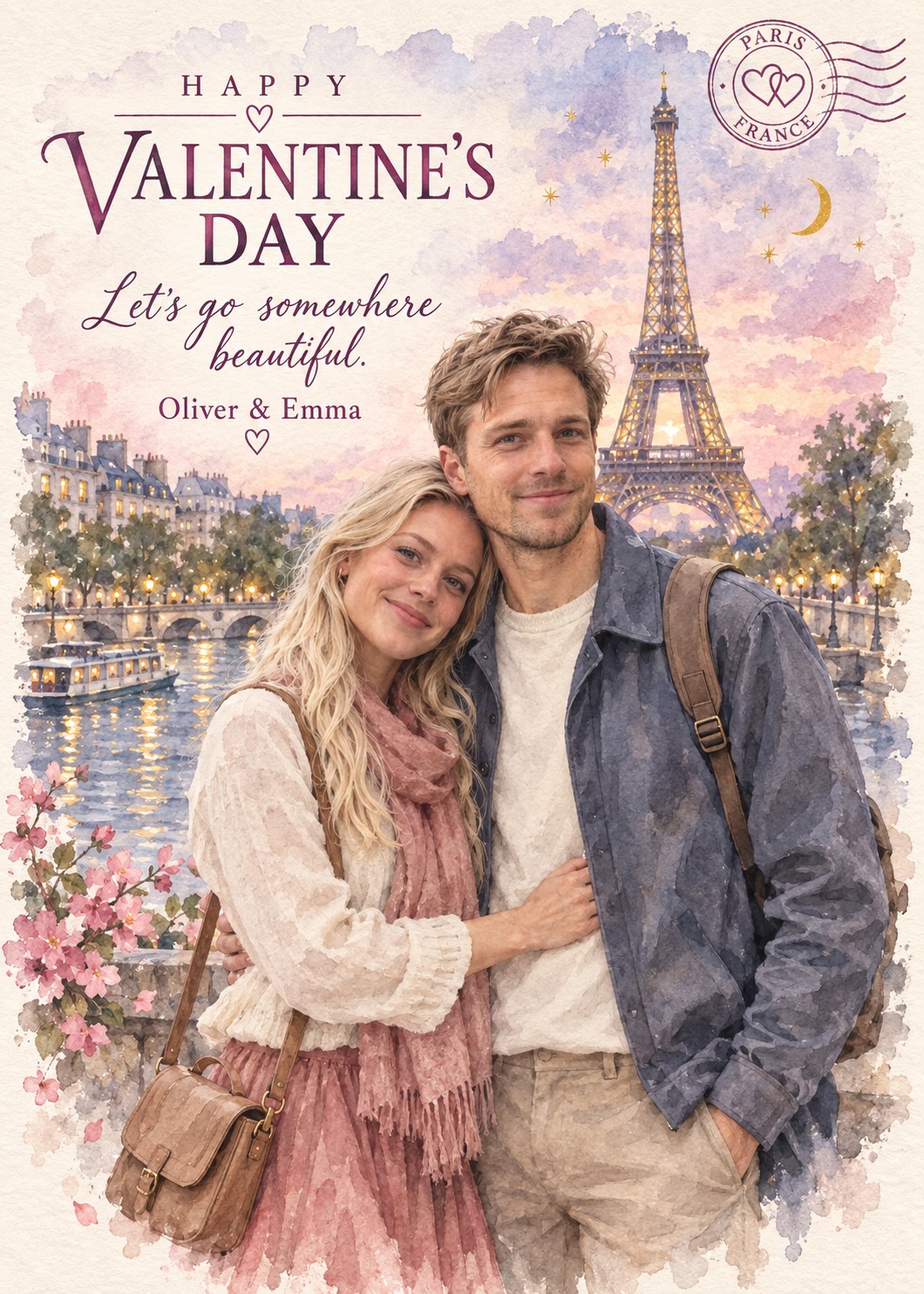
An anniversary is different because time itself becomes part of the message. Something has built up, whether that is one year of learning each other, five years of routines, or twenty years in which whole parts of your lives have grown together. Instead of simply saying “I love you,” you can mark the milestone:
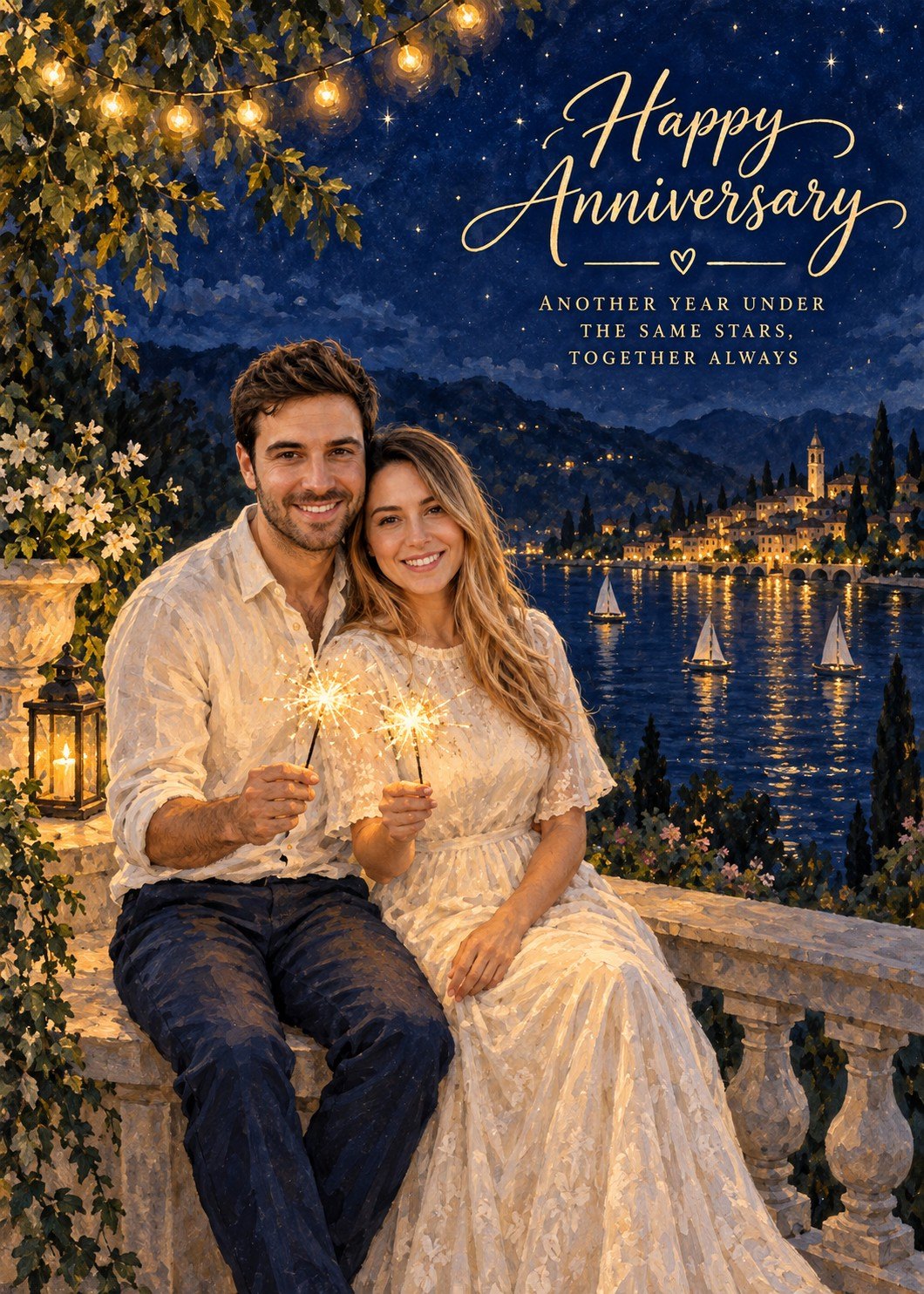
A cover line such as “STILL FALLING FOR YOU” or “ALWAYS BETTER TOGETHER” can carry that feeling without making the whole message sound ceremonial. A thinking-of-you message, by contrast, often begins with absence. The person is not where you wish they were, and some small part of your day reminds you of them. It does not need to become a dramatic long-distance declaration, because one detail can do most of the work:
A thank-you love note starts somewhere else again, with affection made visible through what the person actually did:
A note like this says more than that they helped; it shows you noticed how they show up in your life. Then there is the just-because card, written when nothing special has happened. On an ordinary day, no milestone does the emotional work for you, so something small is enough:
Each of these occasions could fill a guide of its own. Here, the useful question is simpler: why are you writing today, and what does that reason make you notice?
What makes a love message feel personal
A love note does not become personal because the language gets bigger. It becomes personal when the words would be hard to send to anyone else.
The first ingredient is specificity. “You always make me happy” may be completely sincere, but it could belong to almost anyone. A detail gives that sincerity something to stand on:
The detail can be tiny: the way they order your coffee correctly without asking, the crispy potatoes they always save for you, the song they play while cooking, or the way every five-minute errand becomes an hour together. What you need is a recognizable story, and it does not have to be an impressive one.
The second is truthfulness. A love card is not an audition for who can sound most romantic. If the two of you do not usually speak in grand declarations, suddenly writing something enormous can sound less intimate than plain language. A new relationship and a long one might honestly say quite different things:
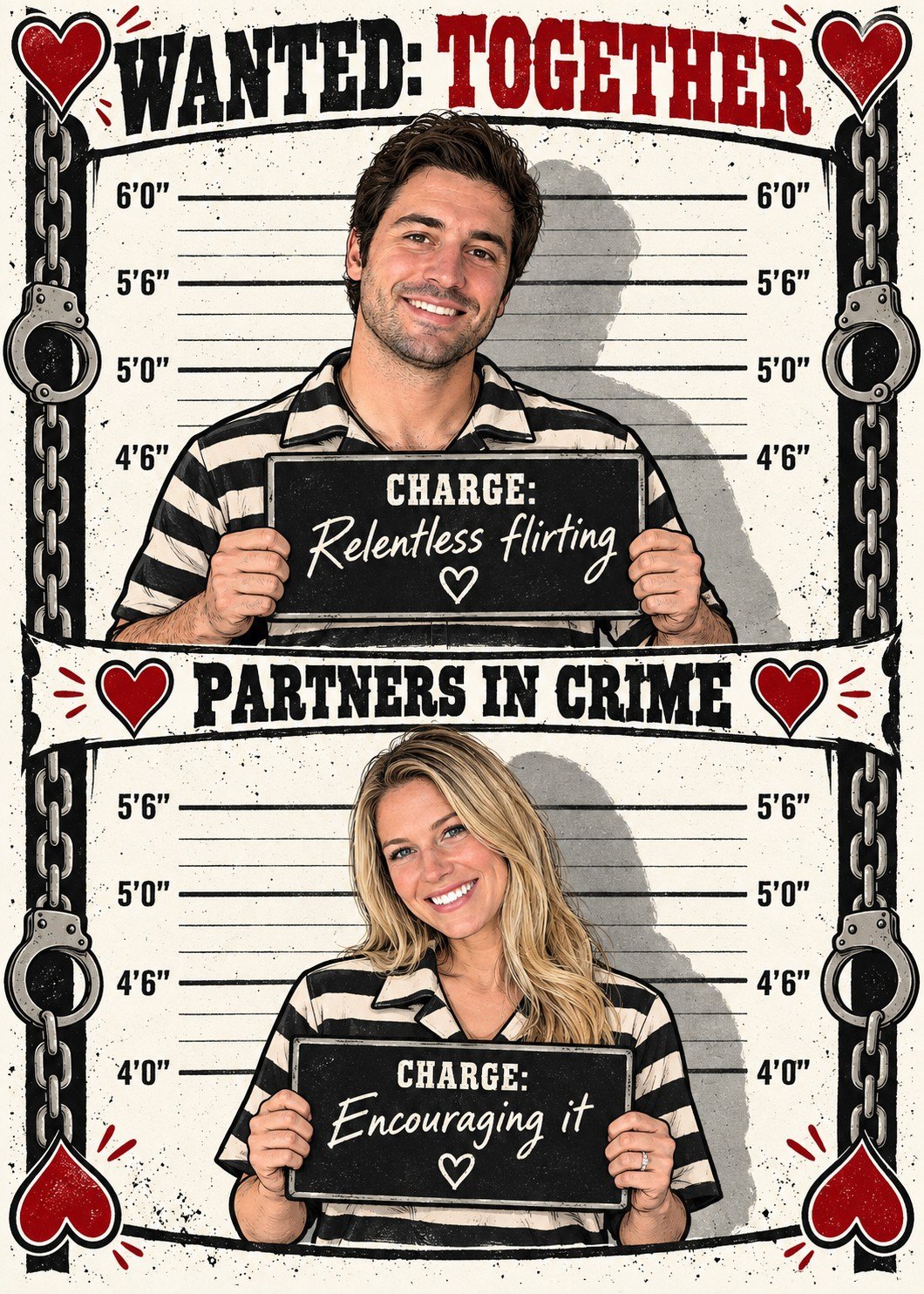
Neither needs to perform a kind of romance the relationship does not use. The third ingredient is surprise or humor, when it belongs to you. It is an extra layer, not a requirement. Some couples show affection partly through teasing, absurdity, or the strange little language they have built together. Partners in Crime, for example, turns two people into wanted suspects, with one charged with “Stealing hearts” and the other with “Aiding & abetting.” The joke is really about reciprocity: one person does something, and the other happily joins in. The same idea works in a note:
Funny does not have to mean laugh-out-loud. Sometimes the surprise is simply seeing a familiar part of the relationship described in a way you never have before. What matters is that the joke still tells the truth. The Partners in Crime lines work because they play with something true about how the two of you treat each other.
Use a 3×3 matrix when you do not know what to write
When the blank card is the problem, stop asking yourself to “be romantic” and make two smaller decisions instead. The first is time: are you writing about the past, the present, or the future? The second is the kind of thing you want to say: what happened, how you feel, or what it means. Put those together and you get nine possible places to start:
| What happened | How I feel | What it means | |
|---|---|---|---|
| Past | A trip, conversation, first date, mistake, or ordinary memory | How one remembered moment made you feel | What a past moment changed or revealed |
| Present | A habit, routine, or thing you do together now | What being with them feels like now | What the relationship means in your life now |
| Future | Something concrete you want to do together | How you feel about what is ahead | What you hope this relationship becomes or represents over time |
This is not a checklist, and a love card does not need to cover all nine. One good square can be enough.
A past + what happened note begins with a scene. You can take it one step further by adding what the scene meant:
The memory provides the evidence, and the last sentence explains why it stayed with you. A present + feeling note can be quieter because there may be no story at all:
For a relationship that has moved past its earliest intensity, that can be more romantic than trying to recreate the language of the first few months. A future + what happened message makes a future concrete. “I want to travel with you” is an idea; this gives the idea a scene:
A future + meaning thought can grow much bigger, but it still benefits from an image. Instead of “I want to spend forever with you,” you might write:
“Forever” is abstract, and two eighty-year-olds arguing about an old story gives it a shape. You can also move between squares. An anniversary note might begin with a first date, move into how comfortable the relationship feels now, and end with a future full of very ordinary dinners. The matrix is there to help you find the first door, not to keep you in one room.
Turn one idea into a complete love note
A cover can make the first emotional statement and leave the inside to explain what it means. That is where a familiar romantic phrase stops being generic: the note underneath tells the reader why it is true.
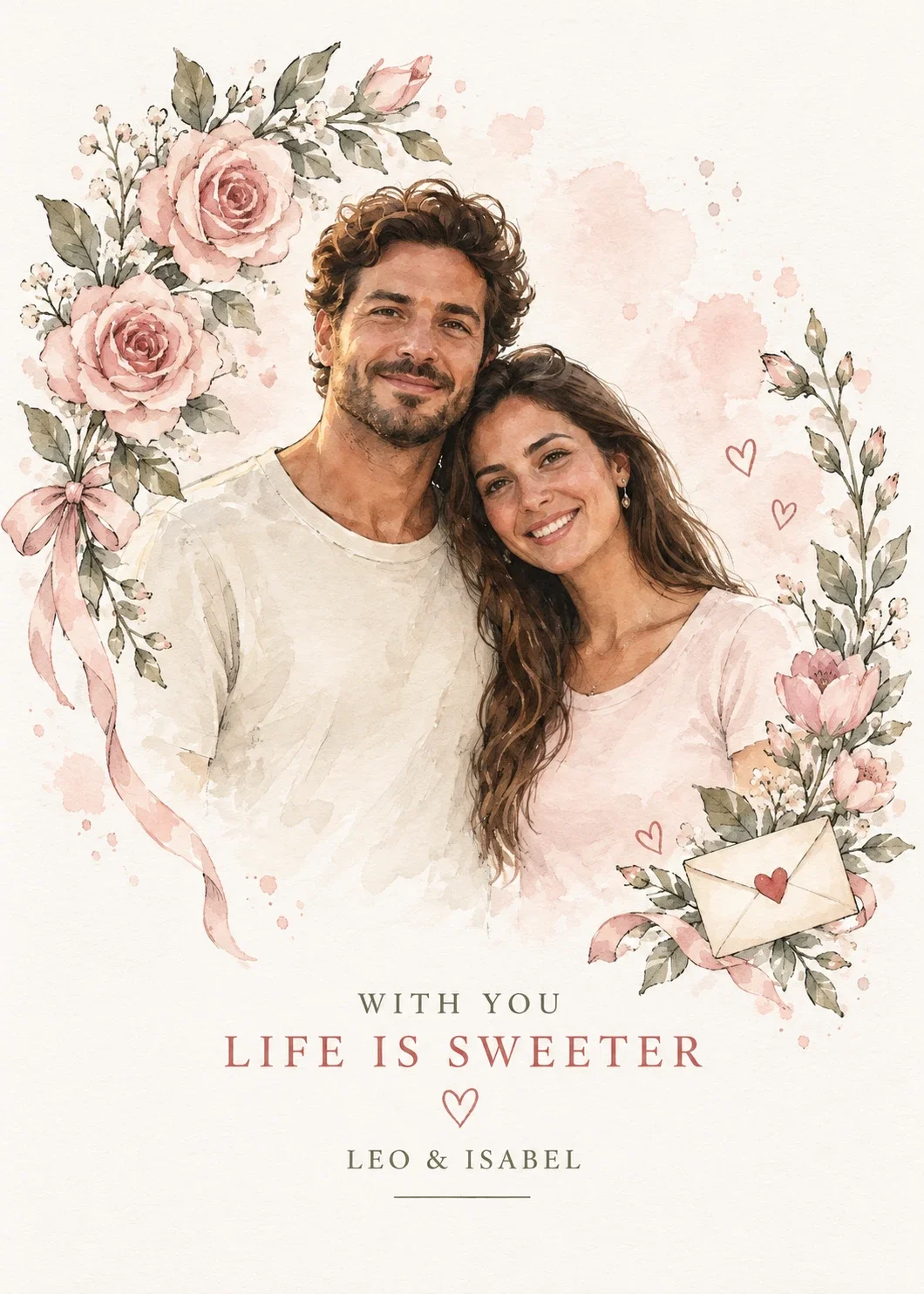
On Roses & Ribbons Valentine, for example, one of the cover lines you can choose is “WITH YOU LIFE IS SWEETER.” On its own, it is a warm romantic thought. What the inside adds depends on where the two of you are.
In a newer relationship, the note should not pretend that years of shared history already exist:
In a longer relationship, the same line can rest on routines you already share. Here is a version of the cover made for Leo and Isabel:
WITH YOU
LIFE IS SWEETER
LEO & ISABEL
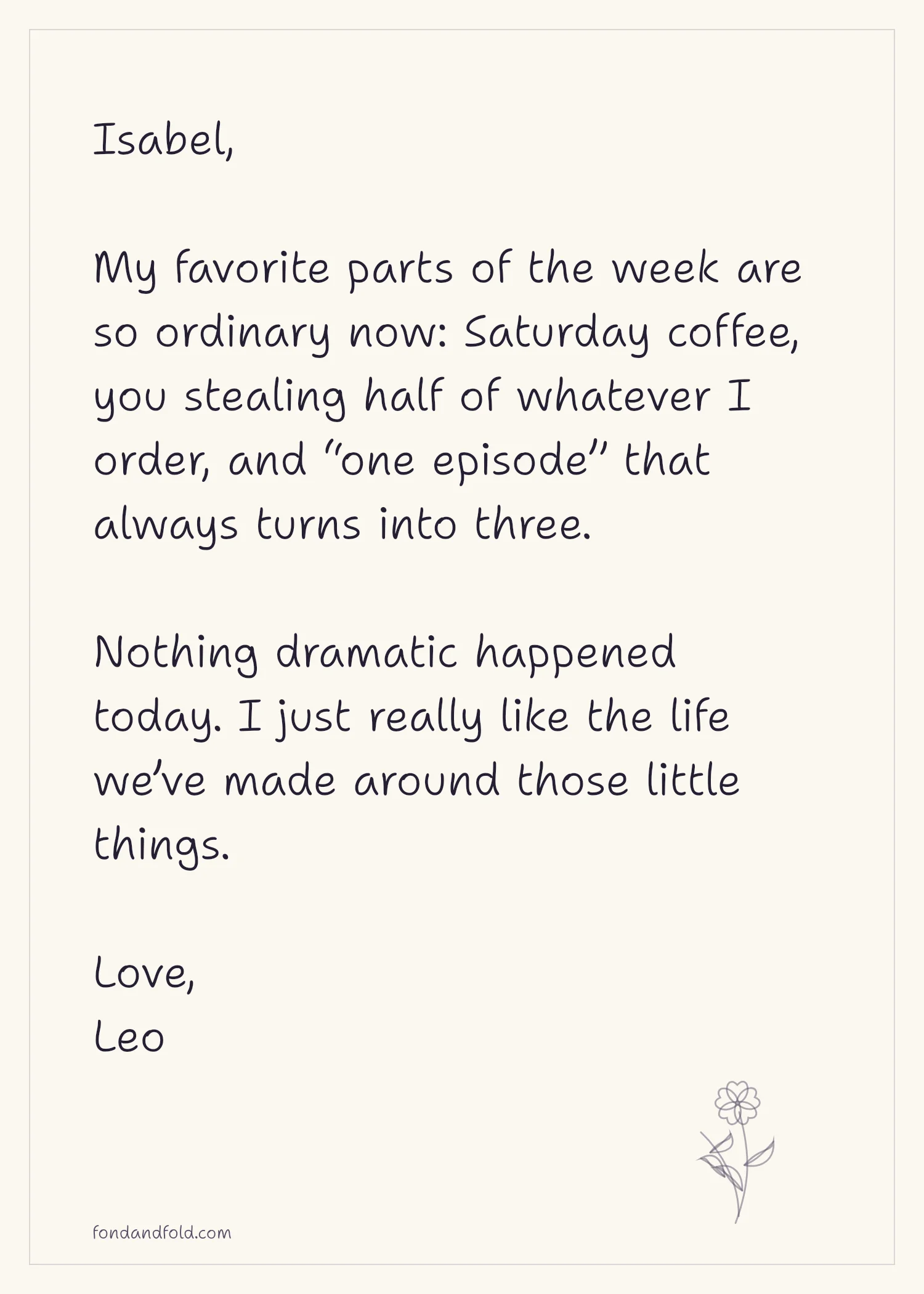
Leo’s note points to the ordinary week behind it:
Neither note is more romantic than the other; each is honest about where the relationship is. The cover gives the feeling, and the inside shows where it came from. You can use the same method for an anniversary, a thank-you, a period apart, or an ordinary day: start with one thing that happened, one thing you feel, or one thing you think the relationship means, then let the note go only as far as it needs to.
If you are still stuck, start with what you notice
You do not have to begin with “I love you”; that can be where the message arrives. Instead, think about what has stayed with you recently. Maybe they did something kind without making a big deal of it, or there is an ordinary ritual you miss whenever they are away. Perhaps the relationship feels different from a year ago, you can already picture a future scene, or there is a ridiculous habit that would make no sense to anyone outside the two of you.
Write that part down plainly first. It might look like one of these:
None of these announces itself as a grand romantic line, but each one contains a relationship. Once you have it, you can decide whether it needs another sentence about how you feel, what the moment means, or what you hope comes next.
A love card does not need to hold everything important about two people. One memory, one habit, one thing you are grateful for, one sentence about the life you have now, or one future you would like to see is enough. The more particular the detail, the less the message has to insist that the relationship is special, because the detail already shows it.
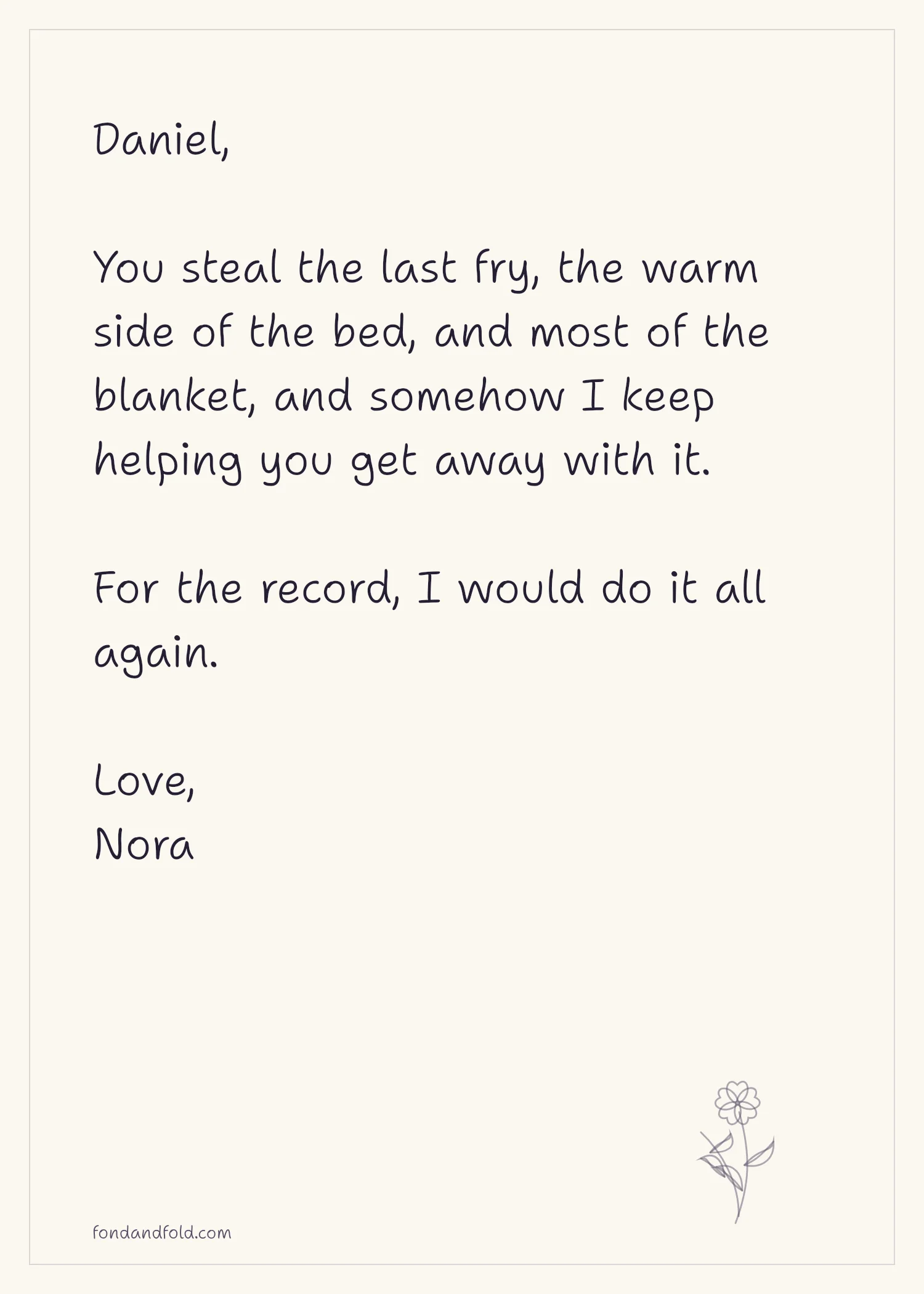
That is also why a personalized card works best when the cover and inside do different jobs: the cover holds a simple idea, and the inside carries the part that could only have come from you. The same goes for a playful cover. On Partners in Crime, the cover makes the two of you suspects in a small romantic crime, and the inside can bring the joke back to a habit only the two of you would recognize:

You do not need to write the perfect love letter. Most of what makes a love note land is already in the relationship: a routine you share, a joke no one else would understand, a future you keep picturing. The note only has to notice something true and give it a little more permanence than a passing thought.
That is the idea behind Fond & Fold’s couple cards. Each design and its cover lines are chosen in advance, so the cover can carry the romance or the joke without you having to design it, and the two of you are illustrated into the scene from your own photo. The inside stays open for your own words.
We hope they recognize the two of you on the cover, then keep the card for the line inside that shows what you notice about them.
The most romantic sentence is often the one that could only have been written to this person.