
From Face Swaps to New Worlds: Five Eras of Personalized Photo Art
How image technology changed what an ordinary photograph could become, and why the creative idea still matters.
Published
I have always liked seeing what technology can do with a photograph. Long before AI image generation was part of everyday conversation, I was playing with photo-editing apps, swapping faces and making pictures of moments that never quite happened.
Some of those experiments are still in my photo archive. Looking at them more than a decade later, I’m struck by how much an ordinary smartphone could already do in 2013, and just as amazed by everything that has become possible since.
Years later, when I started making personalized illustrated greeting cards, I found myself thinking about that history again. The tools had changed completely, but the fascination was the same: taking a photo of someone we know and seeing them in a way we had never imagined. Looking back, I see that possibility opening up over five eras.
1. The cut-and-paste era: placing a photo into another picture
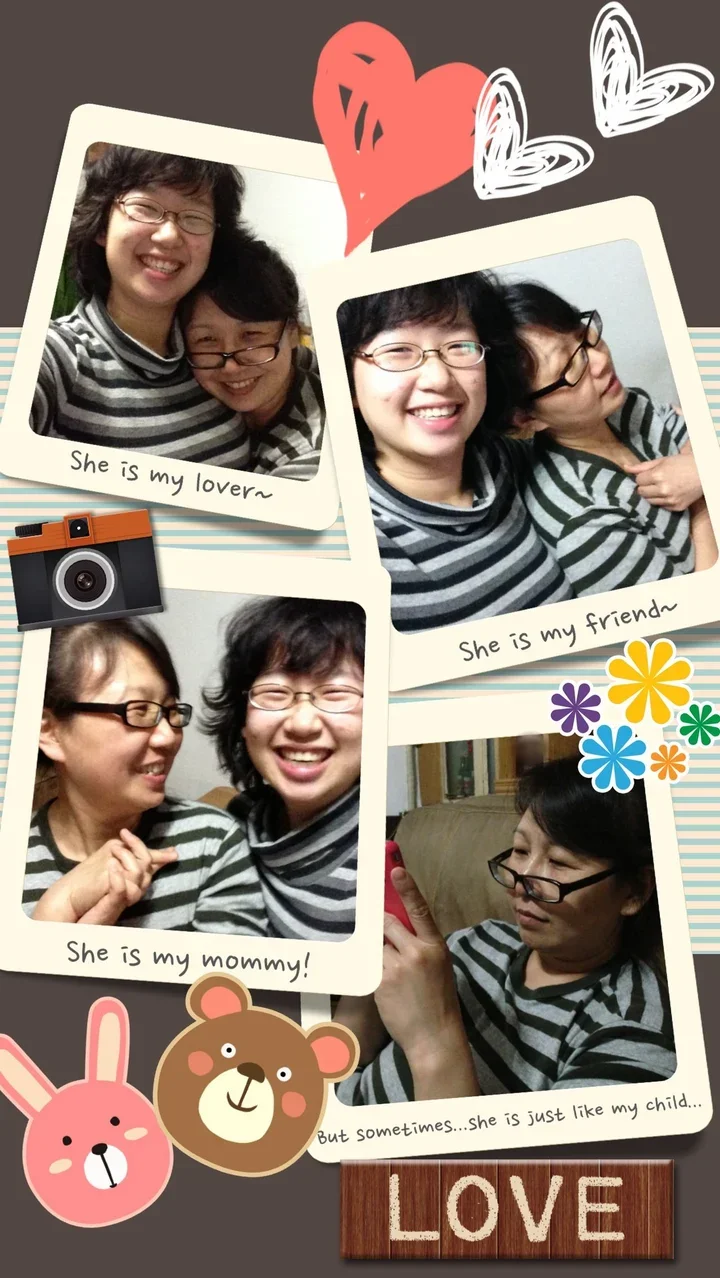
The earliest personalized photo edits were simple in concept: take a photo, cut out the part you want, and put it somewhere else. Before software, that meant scissors and glue, with a snapshot stuck inside a handmade card or arranged into a collage on poster board.
It is still the most common kind of personalized photo card. On most greeting card websites, you pick a design with a fixed opening, like a rectangle, heart or collage grid, and your photo is cropped to fit. The person looks exactly like themselves and the moment stays as it happened, which is the appeal. The card also depends entirely on the photo: its light, background and expression come through unchanged, and the person sits next to the design instead of inside it. Our guide to photo greeting card ideas covers when a photo template works best.
Desktop photo-editing software let people go further. With layers, selection tools and masks, you could put someone’s head on a superhero’s body or drop a relative into a famous scene. The result depended on the editor’s skill, since hair was hard to cut out cleanly and mismatched skin tones or shadows could give the trick away, but careful work could be convincing.
Either way, a photo was no longer something you could only crop or print; you could take it apart and rearrange it. The pieces still had to come from existing pictures, though. To show someone in a particular costume, pose or setting, you needed source images that already showed it.
2. The face-swapping era: making the replacement look natural
By the early 2010s, face swapping was something you could do for fun on your phone, and I found a good example in my own photo collection from 2013.
A friend and I took a selfie together outdoors. She was wearing a purple baseball cap, and I was smiling broadly beside her in my glasses. Just for fun, I used a face-swap app to put my face in place of hers, because I liked the idea of the two of us looking like twin sisters. The edited picture shows my face twice: once on me, and once under her hair and cap, with my glasses and big smile included.
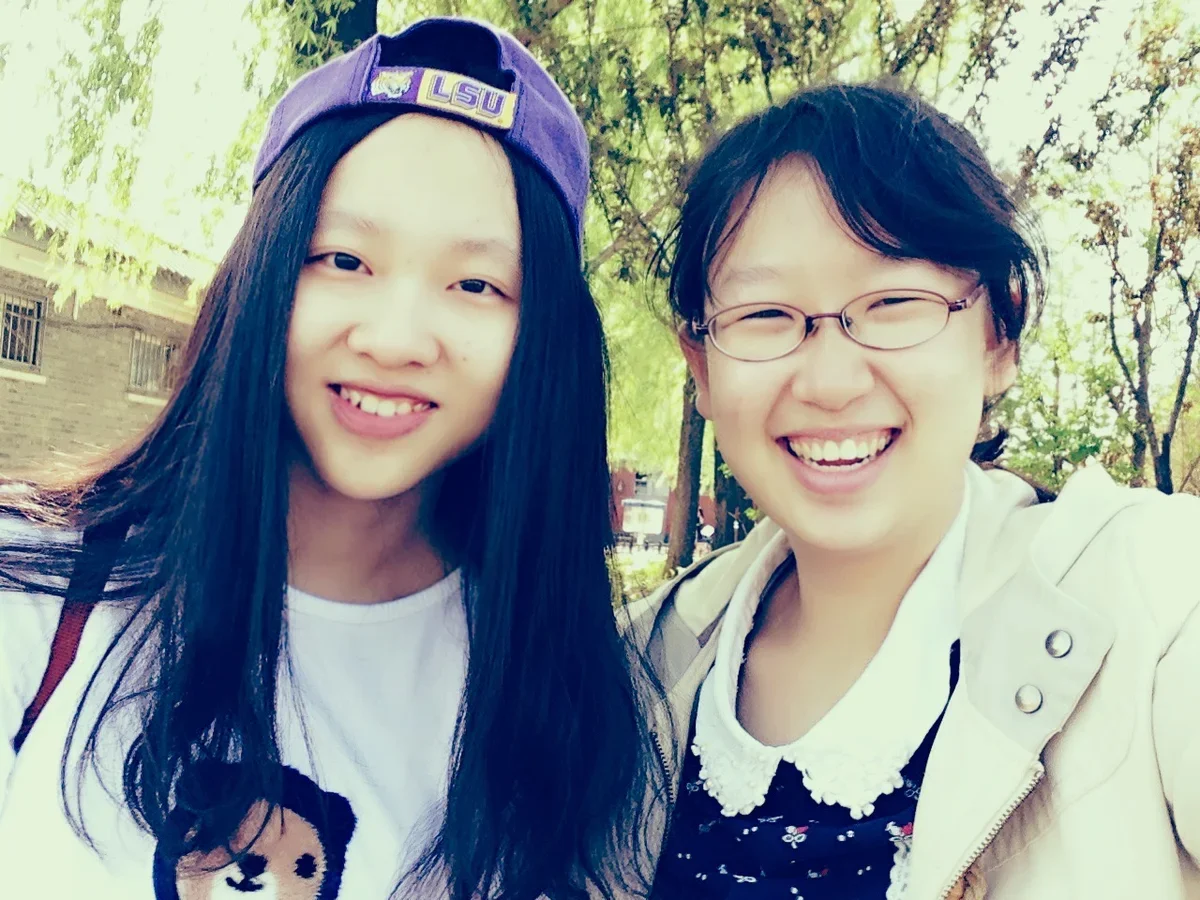
Original
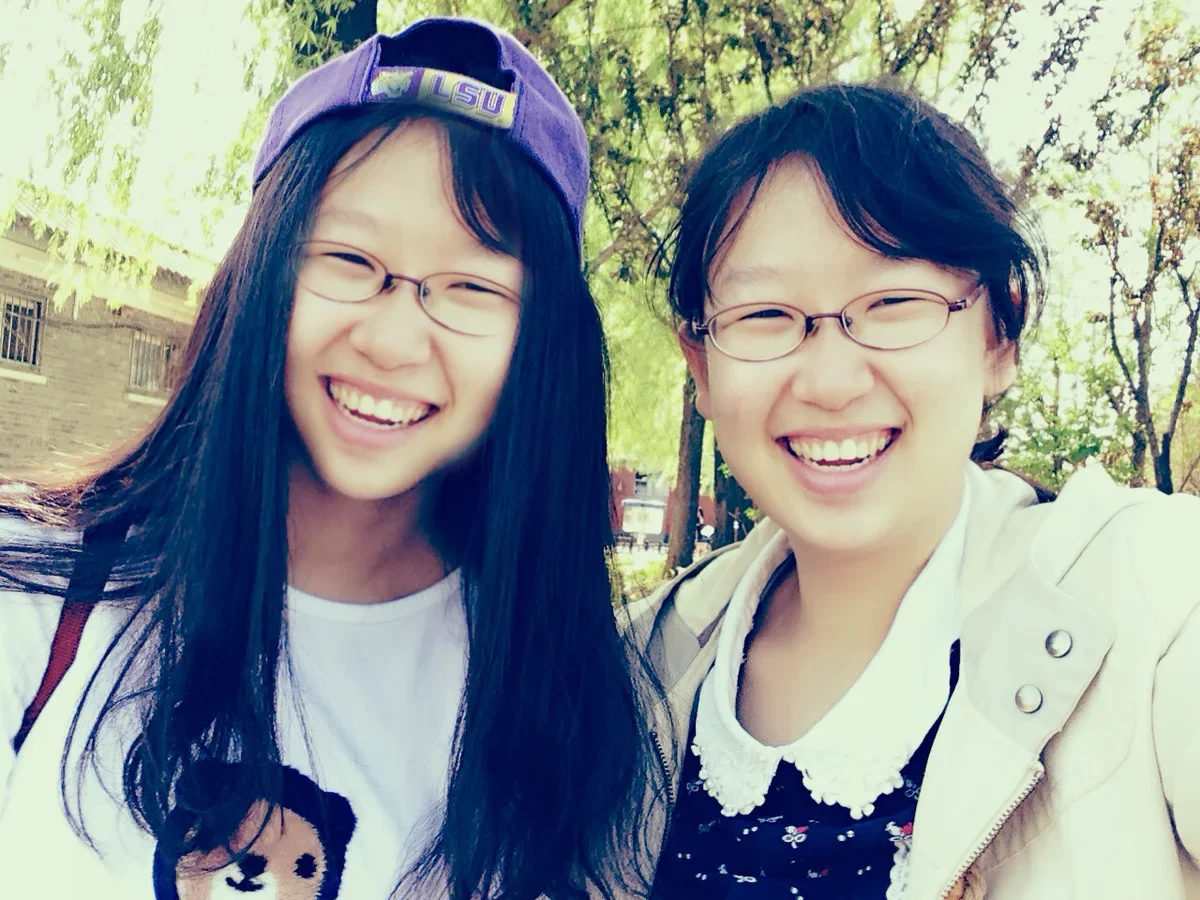
Face-swapped
The result still holds up. The new face is recognizable, the expression is convincing, and the blend is smooth enough for the joke to work.
Years of work in computer vision made that possible. Face detection finds a face in the image, and facial landmarks locate the eyes, nose and mouth so that one face can be lined up with another. Geometric warping then adjusts the shape and position of the replacement, while masking, color correction and blending soften the boundary between the two photos. Researchers had been improving seamless blending since the early 2000s (Poisson image editing, published in 2003, is a well-known example), and landmark detection kept improving through the following decade. Consumer photo apps were built on that work.
Greeting cards were a natural use for it. A friend could appear as a European monarch in a royal portrait, or a relative could star in a dramatic movie poster. The costume, setting and composition already existed, and the personal touch came from the face. It was a very effective way to make people laugh, because the surprise was seeing someone familiar in an unfamiliar role. Face-swap cards still have their place, and the same guide looks at when one makes sense.
The big change was that software now handled most of the visual fitting, so you didn’t have to be good at cutting and blending to make the joke work. The scene itself was usually still a picture someone had already made; the technology changed who appeared in it.
3. The artistic transformation era: changing how a photo looks
Photo filters existed long before AI was a household term. A few taps could change the colors, add grain, soften a portrait or make a photo look like an old print. Neural networks made a far more interesting kind of transformation possible.
In 2015, researchers demonstrated a technique called neural style transfer, in which a neural network combines the content of one image with the artistic character of another. Instead of laying a colored effect over a photo, it could reinterpret the textures, brushstrokes and patterns of the whole picture. A garden photo could become an impressionist painting, a family portrait could take on the soft edges of watercolor, and a holiday snapshot could look like an ink drawing.
In most of these uses, the photo still supplied the composition. The people stayed where they were, the background still described the original place, and the gestures and relationships in the picture stayed largely intact. What changed was the artistic interpretation of a moment that already existed. Later, diffusion-based image-to-image techniques made these transformations much more flexible: they could change details more substantially and redraw whole regions, going well beyond what a filter could do.
I’ve tried this kind of transformation many times over the years, and my favorite recent one is from March 2025, when I turned a photo of my mom and me at Beihai Park in Beijing, China, into a storybook-style illustration. We both loved it. What surprised me was how different its personality was. The original shows an ordinary day by the lake, the two of us standing together in sunglasses. In the illustration, our expressions are more playful, the colors and textures are softer, and the whole scene has a cheerful, almost nostalgic warmth.
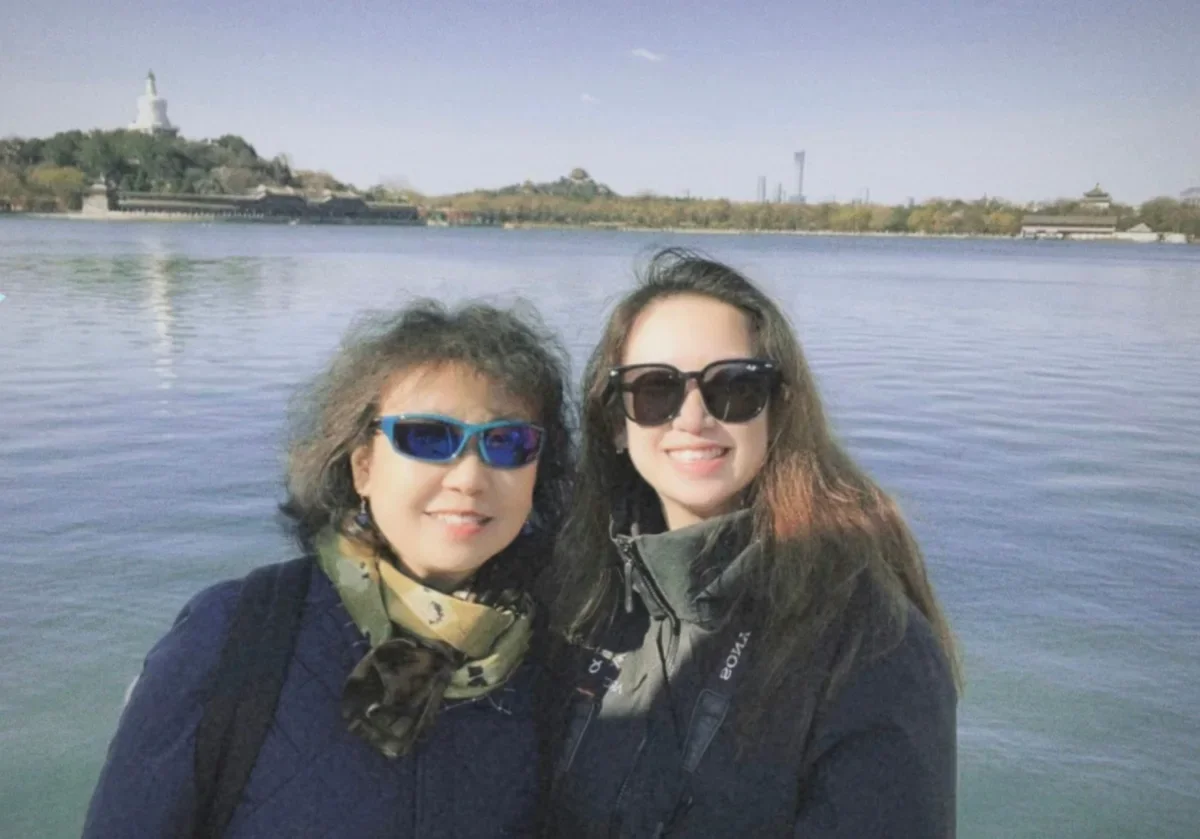
Original
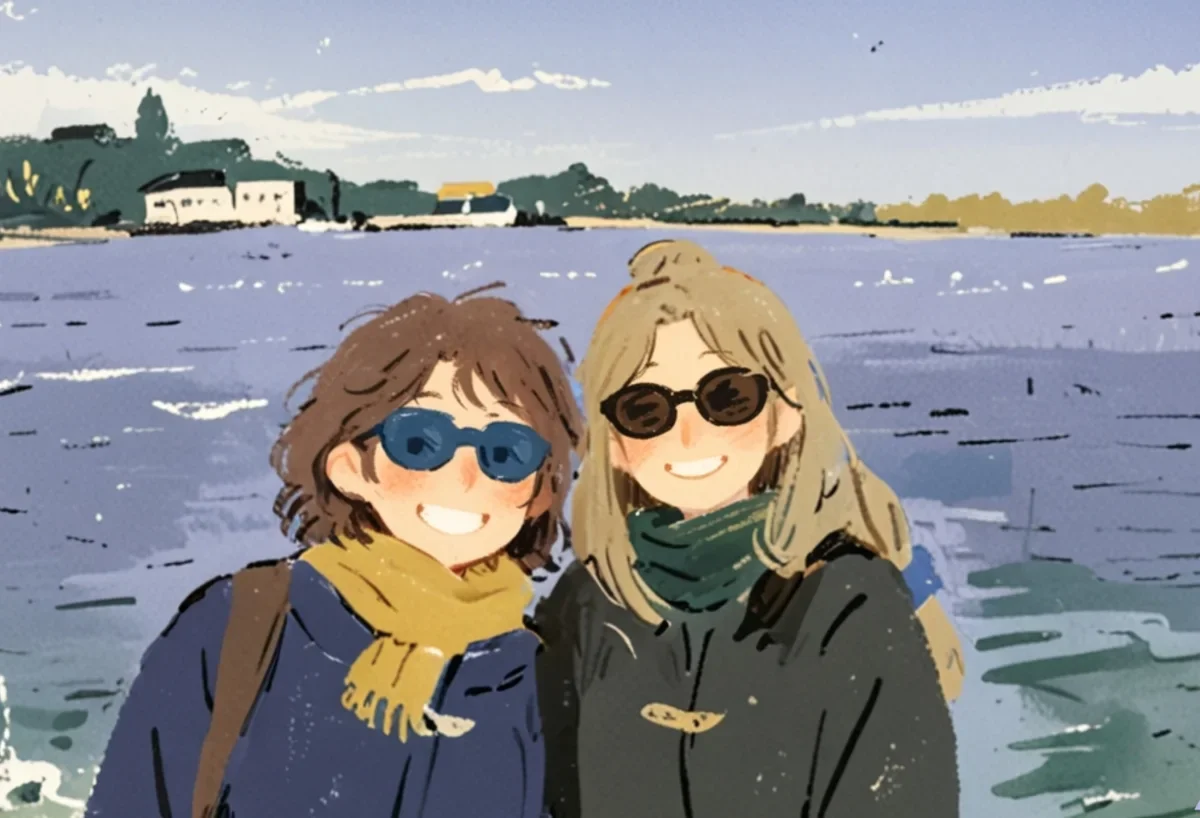
Illustration
This made personalized art accessible in another way. A photo no longer needed beautiful light, perfect colors or an artistic atmosphere of its own, because the treatment could bring a new look. People turned family photos into painterly gifts, made stylized portraits and created illustrated photo cards from everyday snapshots.
4. The generative era: creating a world that was never photographed
Increasingly capable generative image models changed the photo’s role. People could now describe a scene that had never been photographed and have an AI model create it. Research on latent diffusion models, the approach behind many of today’s image generators, was published in 2022 and helped make high-quality image synthesis practical. Later work let people guide a generated image with poses, outlines, depth and other structure. A photo could serve as a reference instead of the foundation of the finished picture.
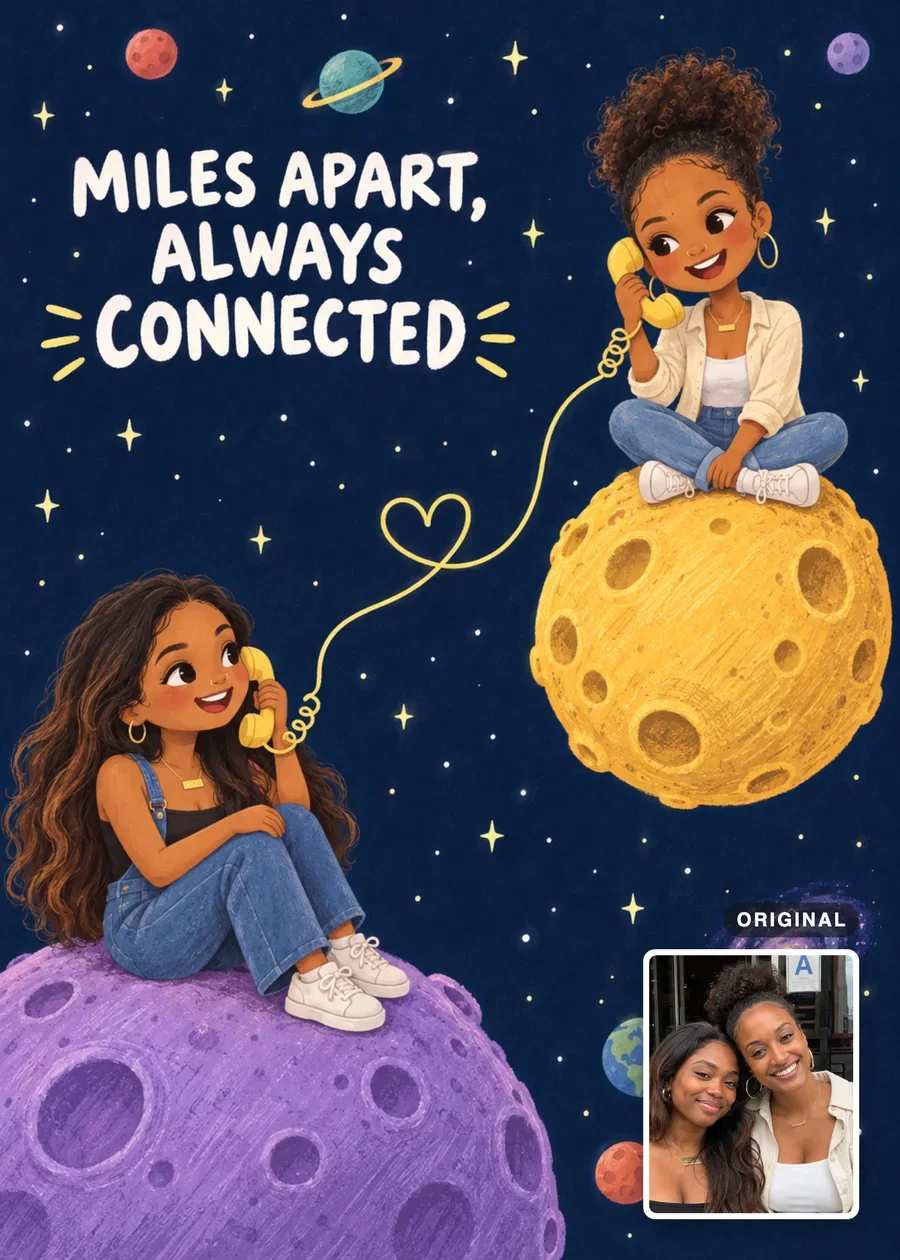
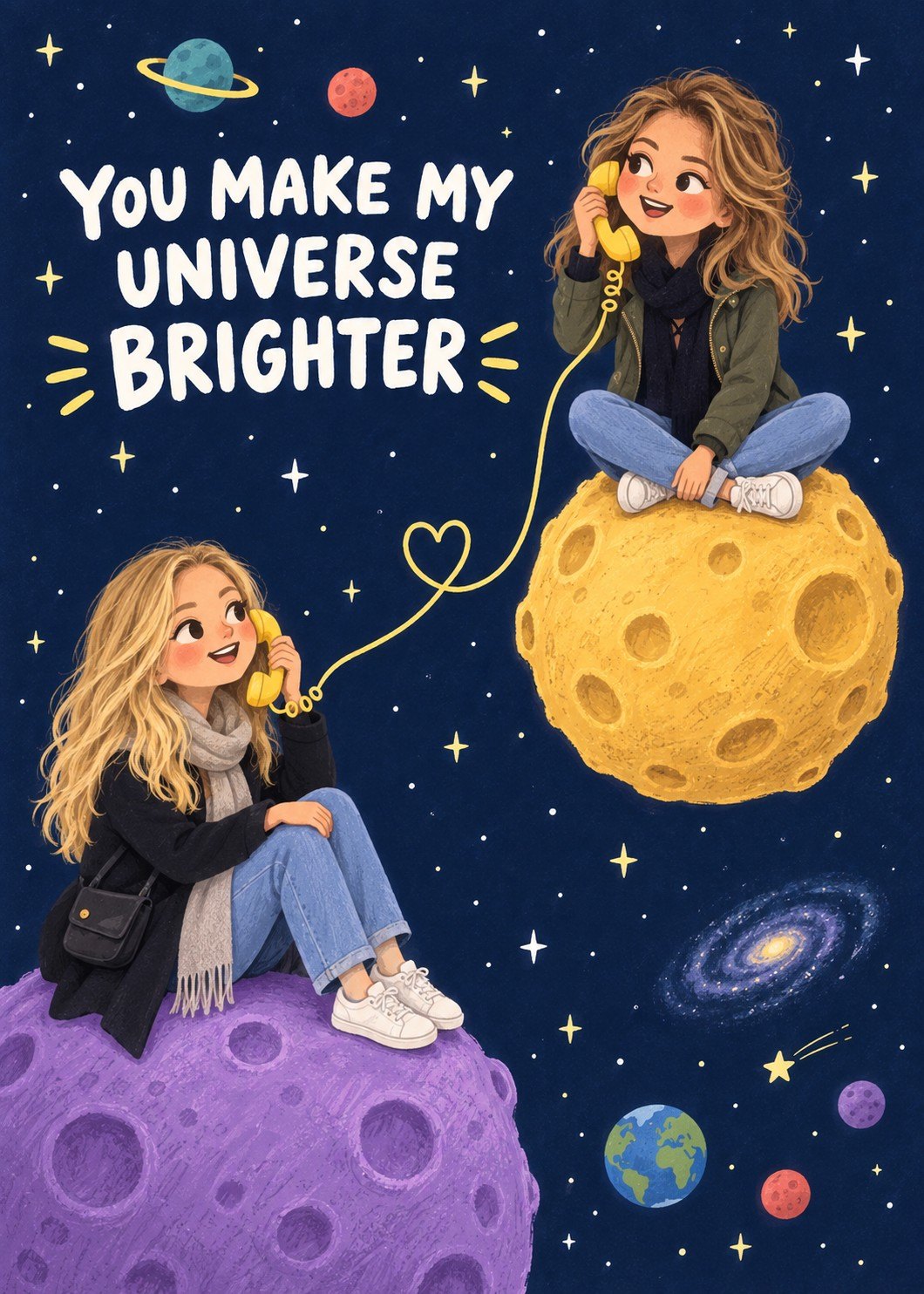
You could upload a casual portrait of a friend and ask for them as an explorer in an imaginary landscape, or turn a photo of two people into an illustration where they sit on separate planets, connected by a telephone line running through space. The scene doesn’t have to exist anywhere; the clothes, setting, lighting and action can all be invented.
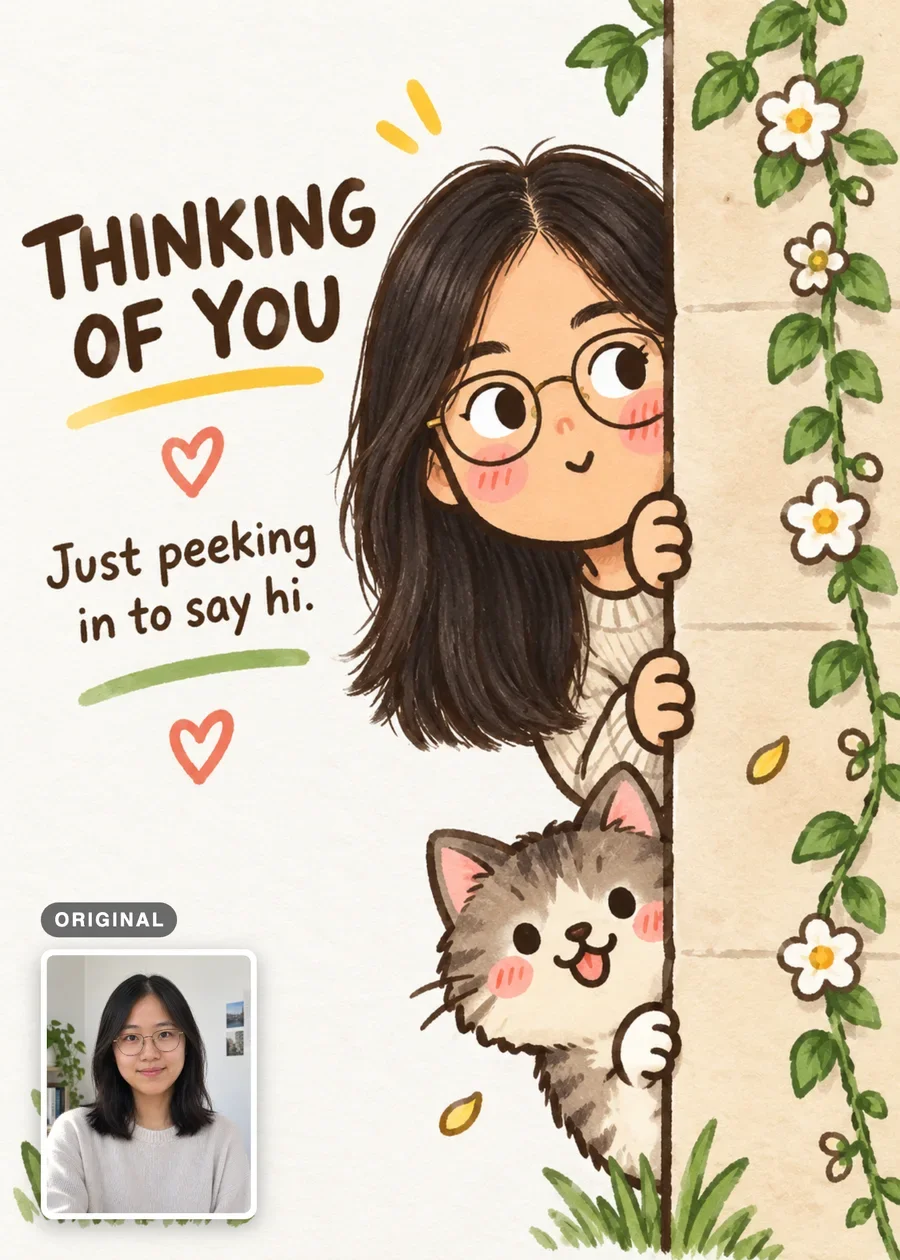
It also introduced a hard problem: the person in the new picture didn’t always look like the person in the photo. Early results could be charming in strongly stylized artwork, where a model kept someone’s dark hair, glasses, broad smile or general appearance while turning them into a playful cartoon. But recognizable characteristics aren’t the same as a recognizable person. When the facial proportions, expression and distinctive details changed too much, the result started to look like a character inspired by the person rather than the person themselves.
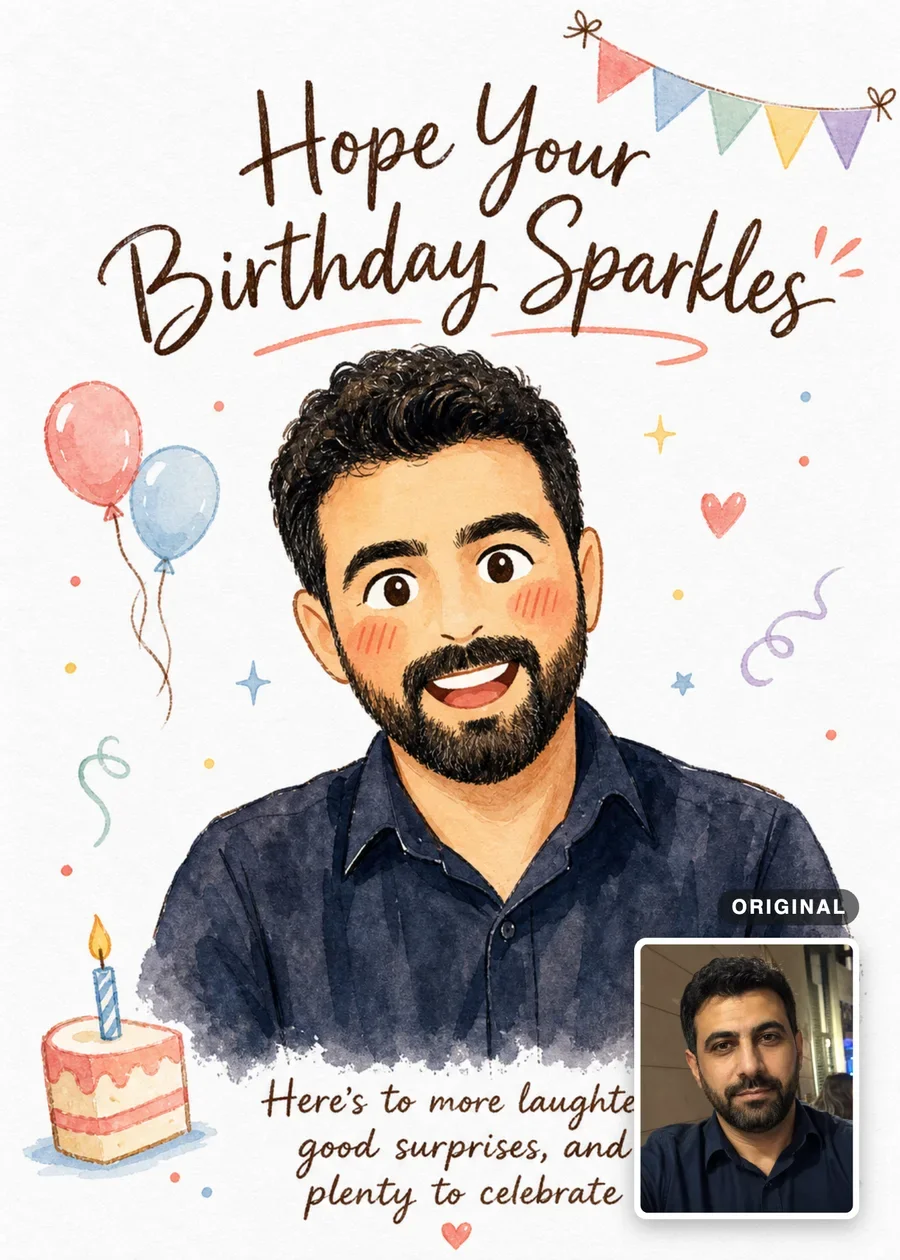
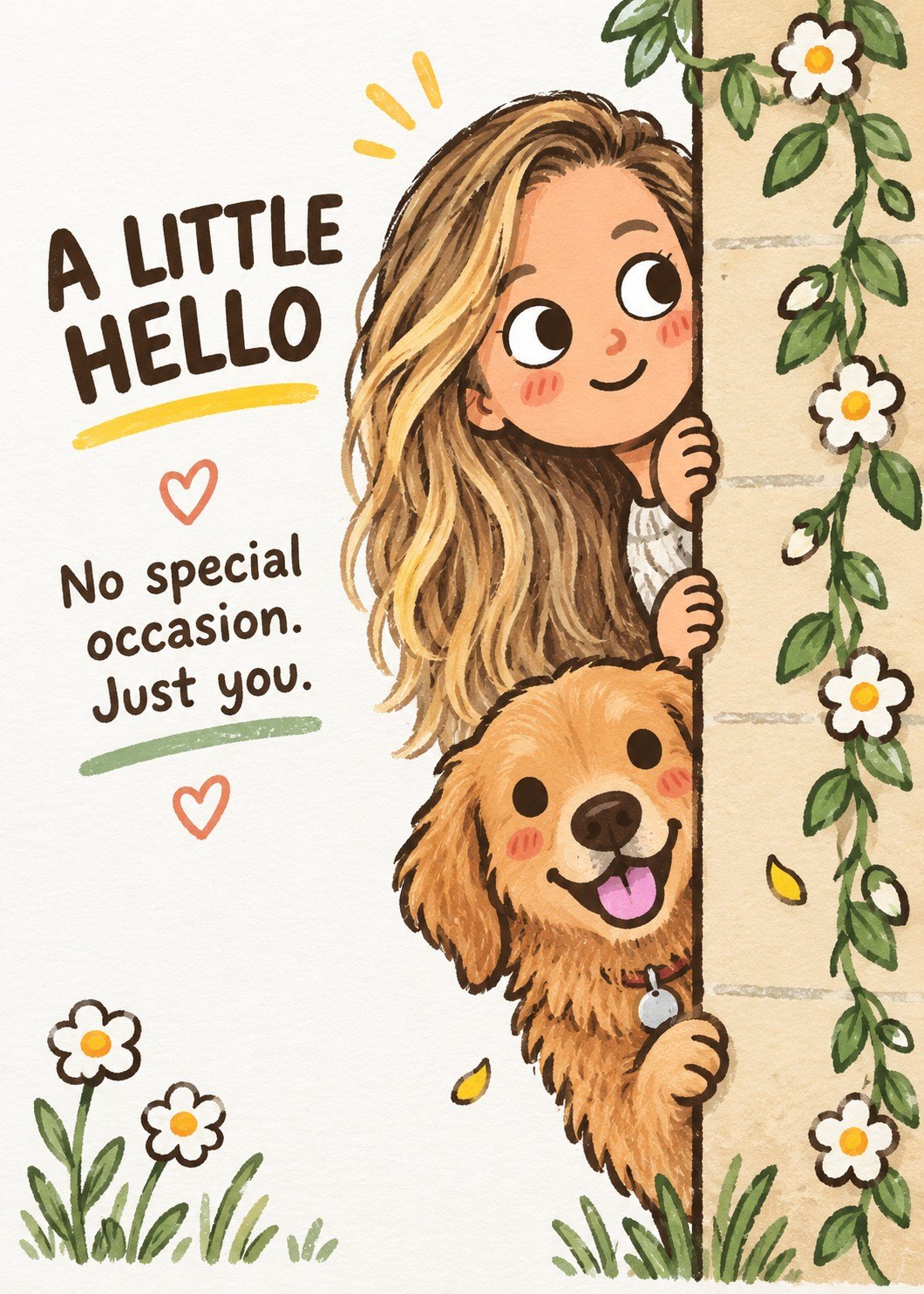
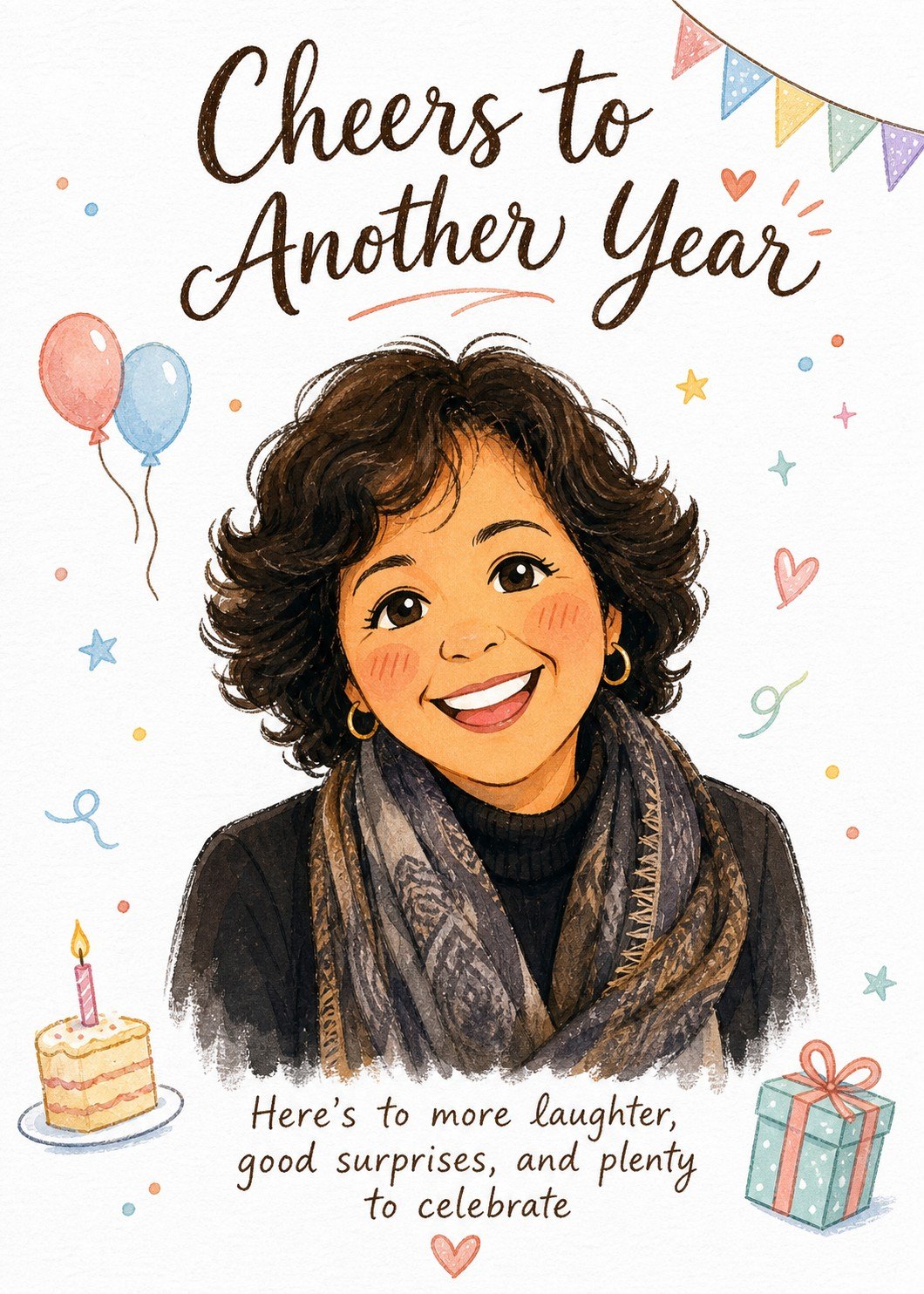
Even with today’s more capable models, this freedom to reinterpret someone is still one of my favorite possibilities. At Fond & Fold, some of our designs deliberately use stylized characters instead of photographic realism. A person’s hairstyle, glasses, clothing and other distinctive details stay familiar, while their expression, pose and proportions are playfully reimagined. This also gives us more flexibility with everyday photos that may not have the ideal pose or expression for a realistic portrait, as long as the person’s features are clear enough for the chosen design.
For example, Peekaboo Thinking of You, Universe Calling and Birthday Balloons & Confetti all turn the person in the photo into a storybook character.
5. The identity-faithful era: keeping the person, changing everything else
By the mid-2020s, progress in identity-preserving image generation was bringing two abilities closer together: the freedom to create a new scene, and the ability to keep a particular person’s appearance. Research published in 2024 explored ways to encode identity from reference photos and carry it into newly generated images, and during 2025 and 2026, more capable multimodal systems, which understand both text and images, brought realistic, detailed edits within reach of everyday users. The result didn’t have to be a cartoon. It could be a realistic new photo with natural skin texture and believable light, and a face that still looked like the person’s own.
By the end of 2025, the results could be astonishing. In December, a suggested AI image prompt and one of my own photos produced a realistic Christmas portrait with new clothes, a new setting and new light, and a face that was unmistakably mine.
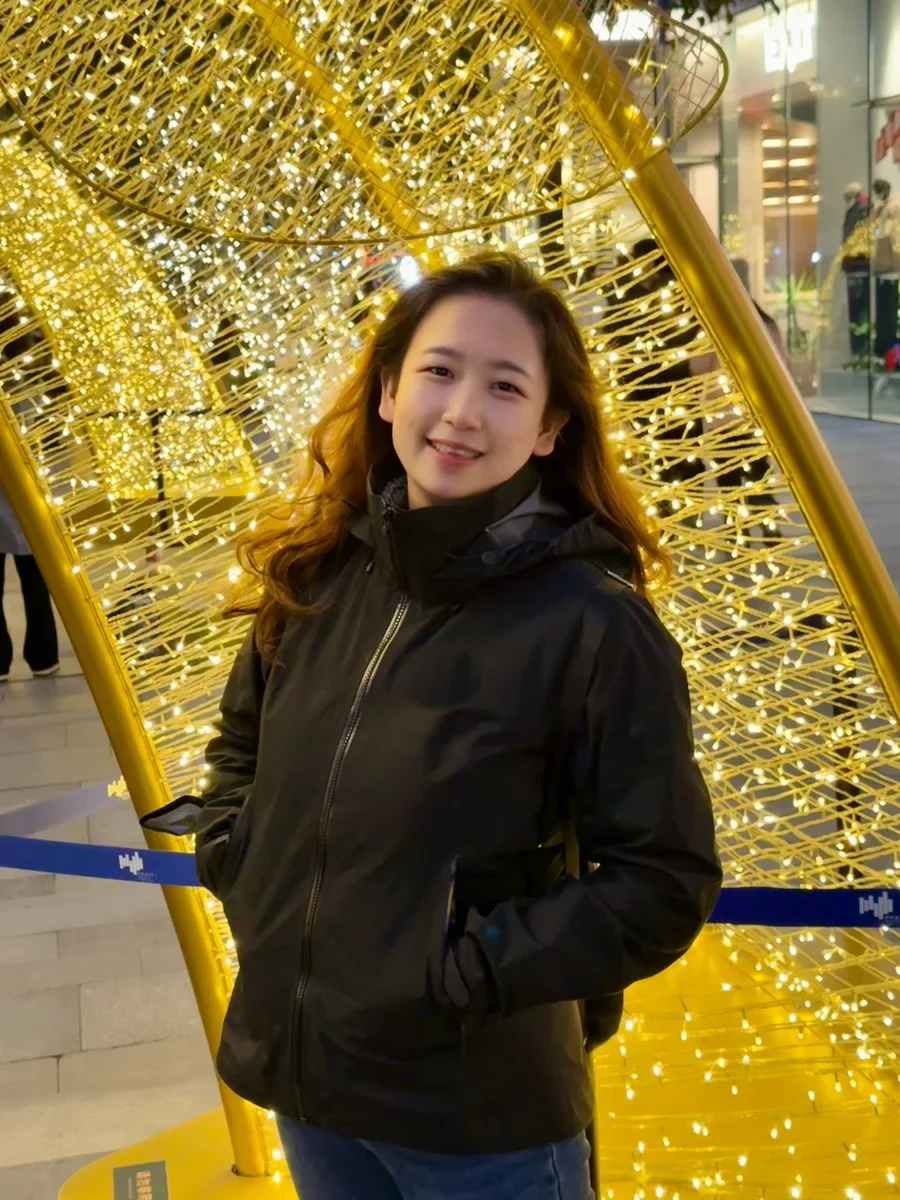
Original
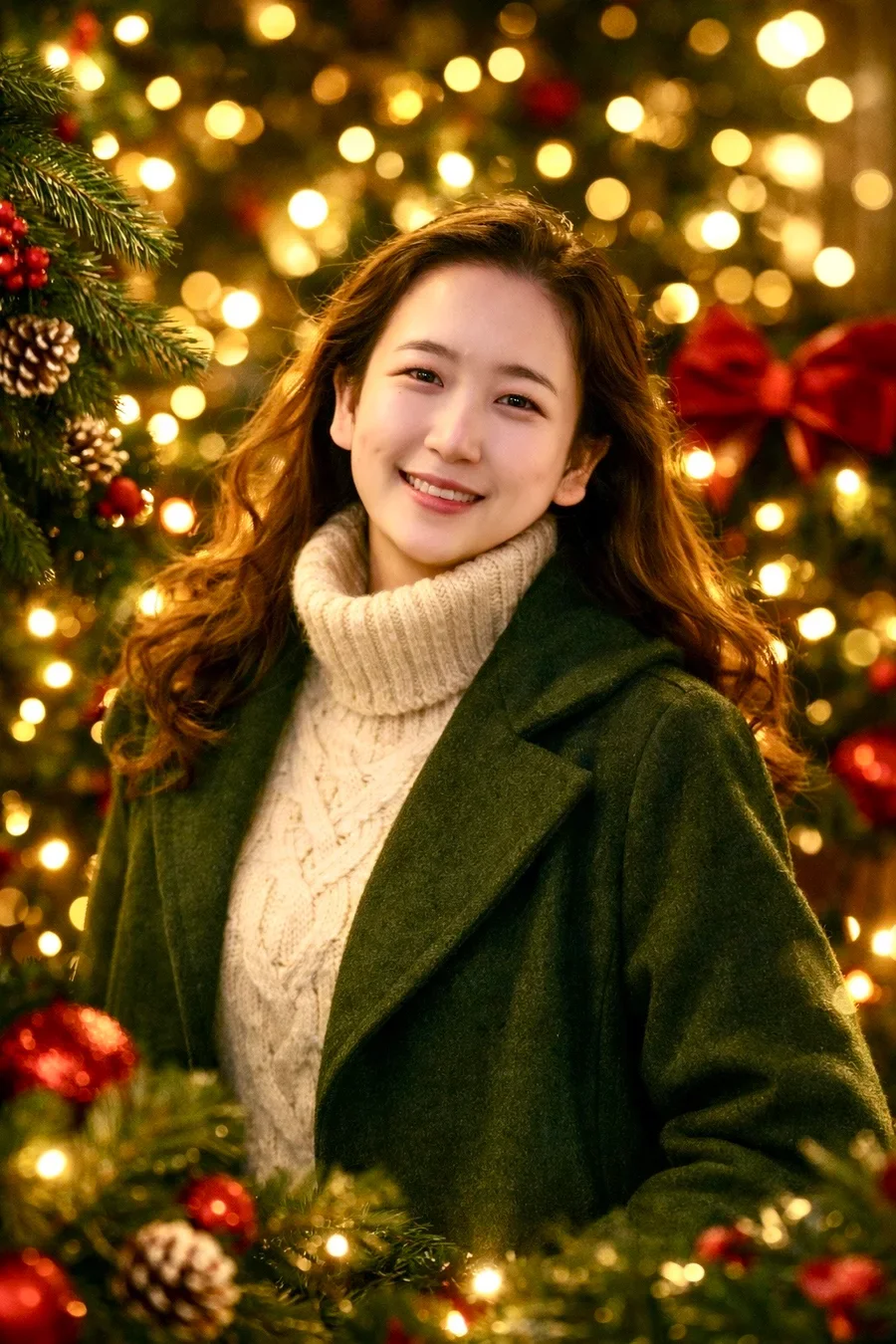
AI-generated
They were not yet reliable, though. That one prompt worked remarkably well, but variations written in my own words were far less consistent: sometimes the resemblance was excellent, and sometimes the face no longer quite looked like mine. Within a few months, that changed. As the image models kept improving, the likeness began to hold almost every time, and by late April 2026 a single afternoon was enough to take my mom and me around the world without leaving home.
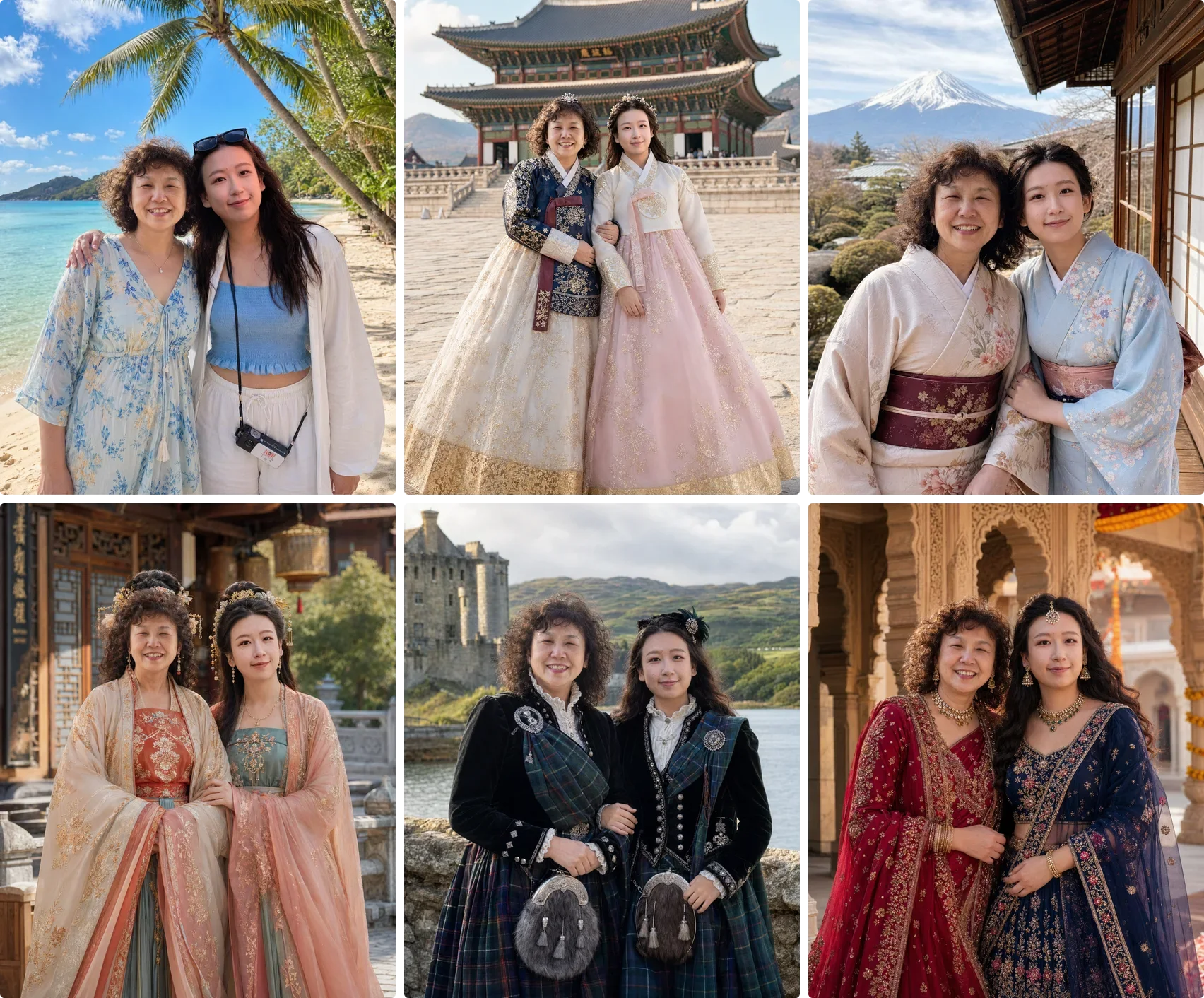
The pictures were a delight, and they cost almost nothing to make. What excited me more was how fast the technology behind them had moved. A real, recognizable face could now be carried into a completely new scene again and again, and that opened up a new possibility. That afternoon came just before Fond & Fold began: designs that keep a person’s actual likeness could finally be offered with confidence, and they are now an important part of our collection.
Realism still asks more of an image than illustration does. A convincing photographic face needs coherent structure, texture, light and expression, and small inconsistencies show more when an image looks almost exactly like a real photo. Illustration strikes a different balance: a storybook character can have oversized eyes, simplified features or a very different body shape and still be recognizable through the details that make someone distinctive. For personalized photo art, recognizability and photorealism are two separate things.
Designs such as Rainy Filmstrip Memories, with its black-and-white filmstrip portraits, and Christmas in the Snow, with natural-looking faces in an ink-and-watercolor winter scene, put more weight on facial detail and a close resemblance to the source photo. That can make the artwork feel especially personal, but it also makes the reference photo matter more: facial clarity, the original expression and distinctive features all count for more when the result aims to look like a real person.
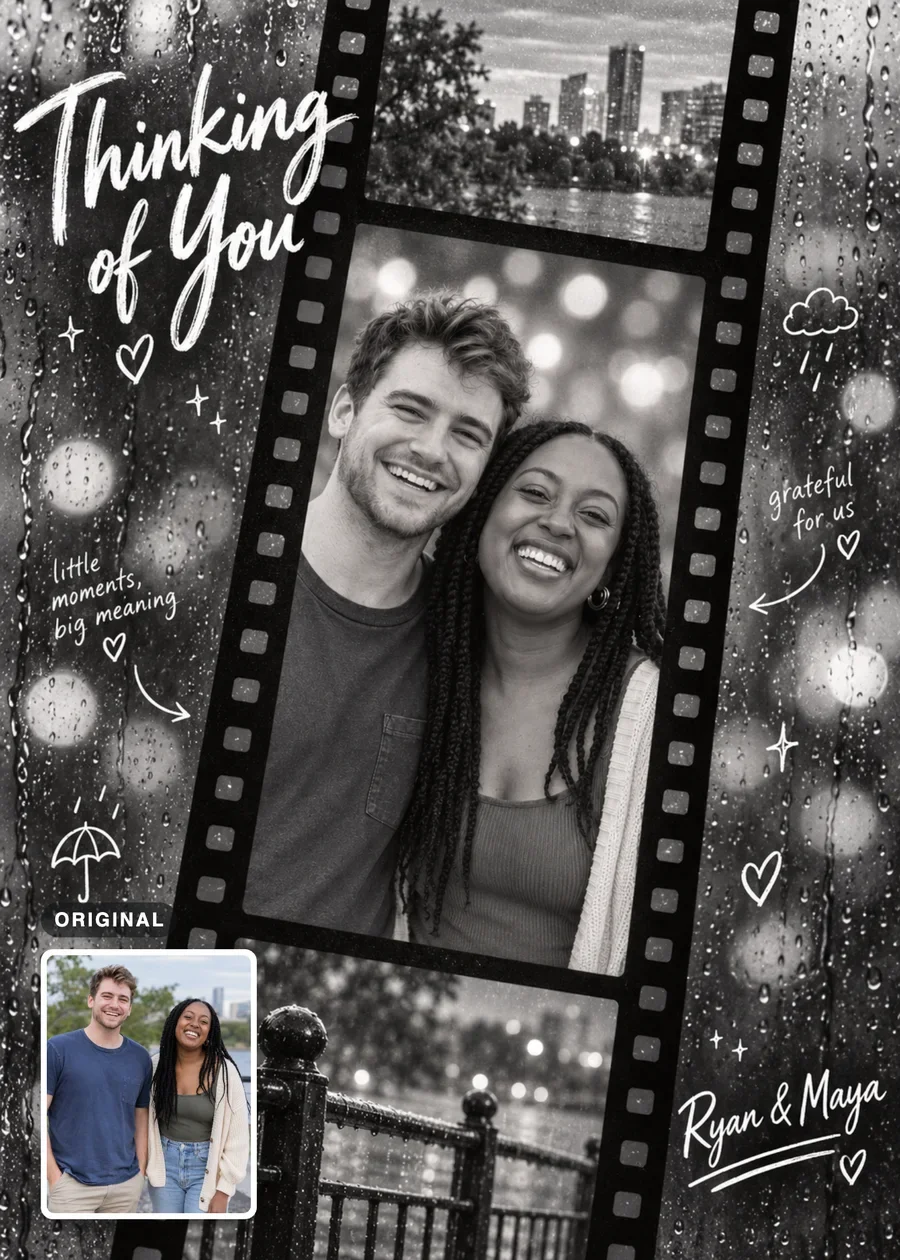
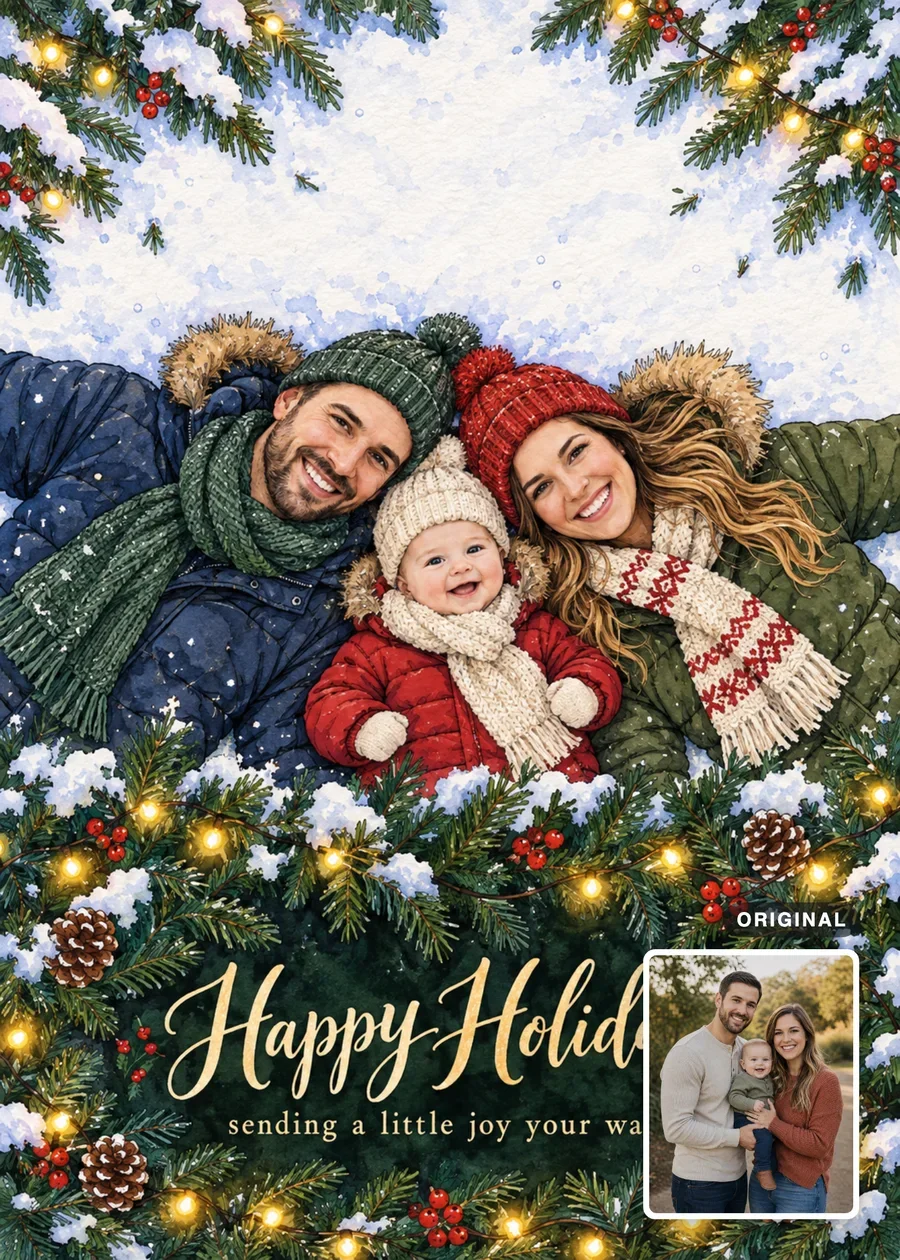
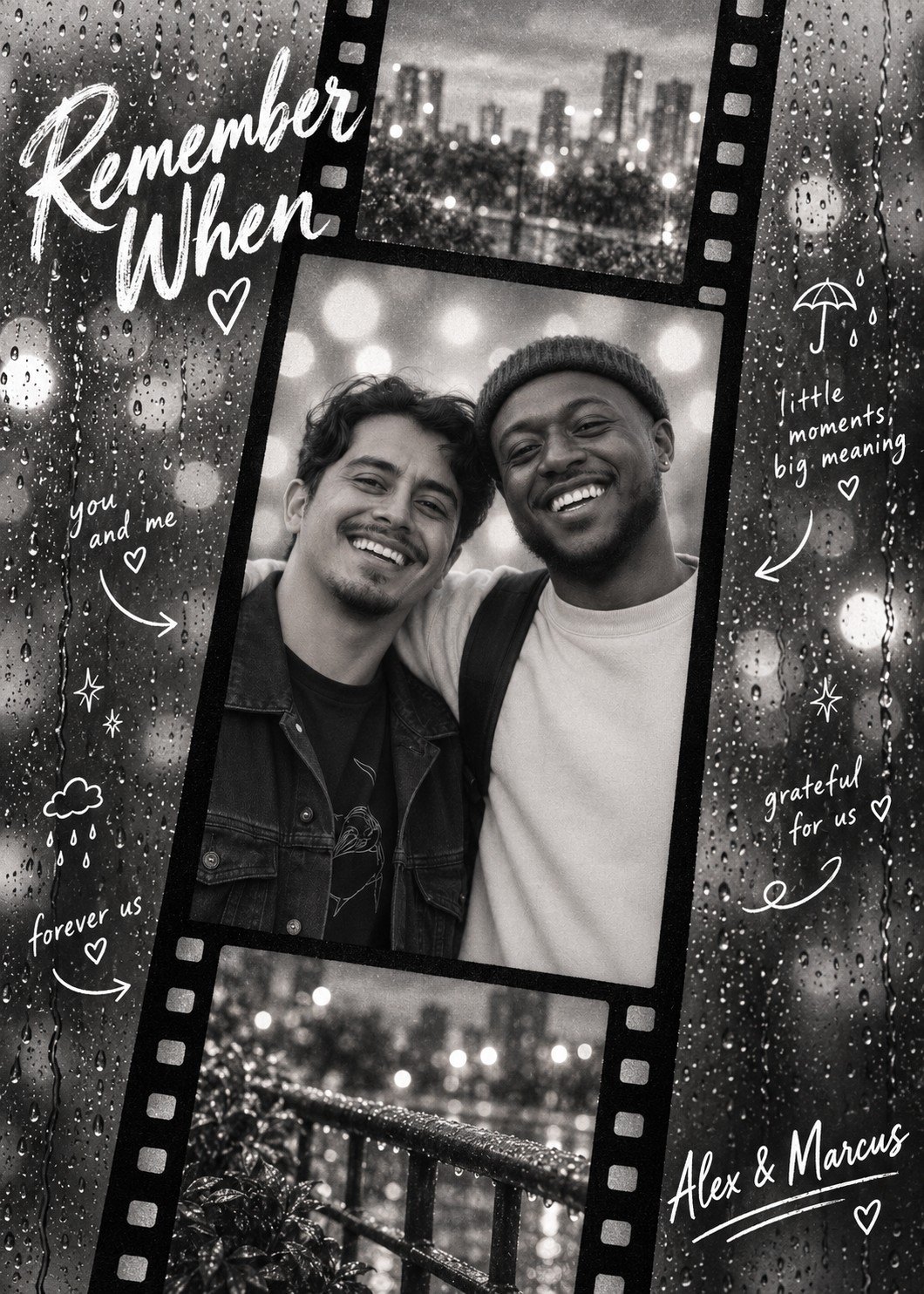
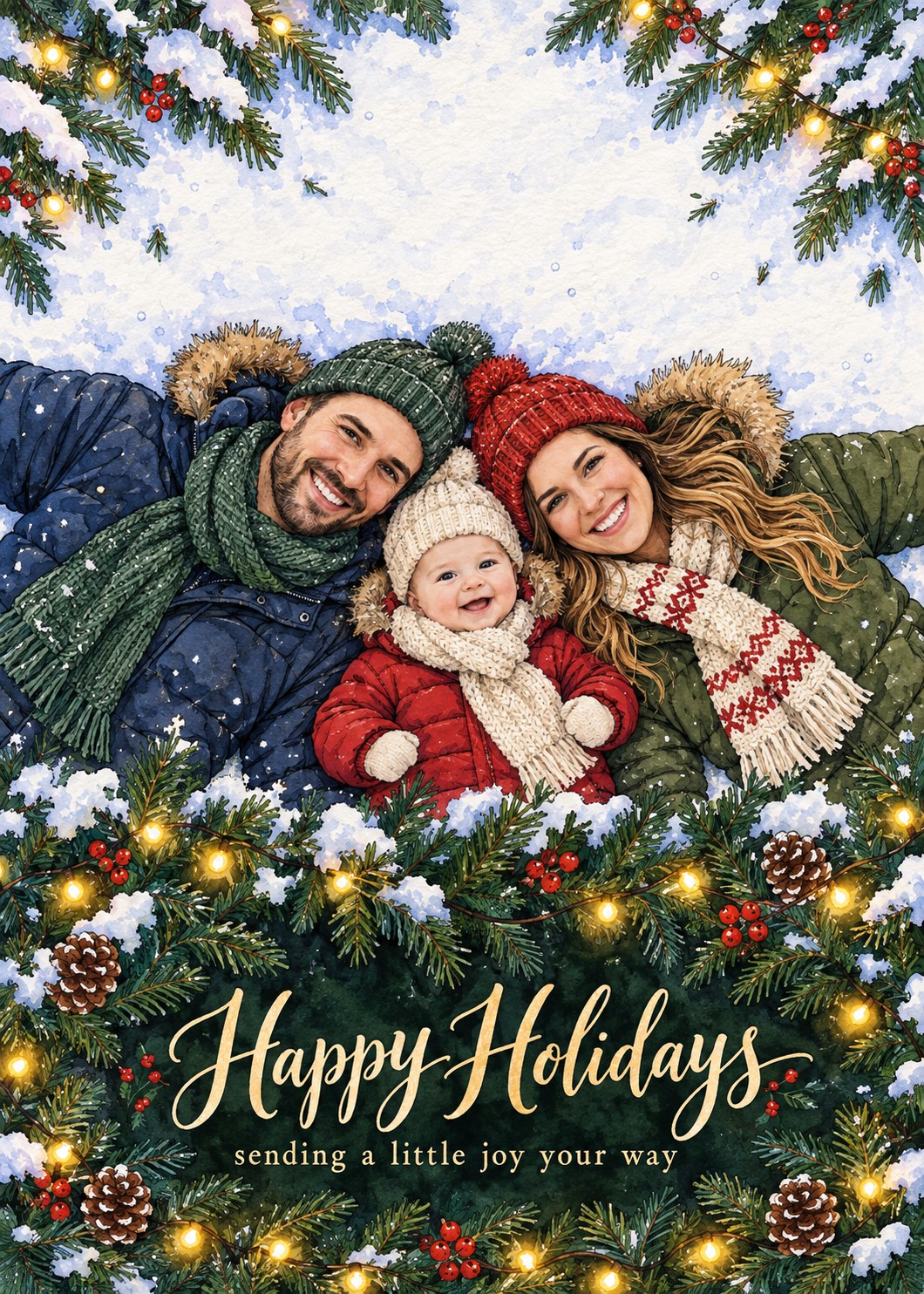
Choosing between these approaches is part of the art direction. A photo with a clear, familiar smile can be wonderful for a design that keeps lifelike facial detail. Another everyday snapshot may suit a playful storybook character better, letting the hairstyle, glasses and other personal features carry the recognition while the expression and pose are reimagined. That’s why our collection includes both highly stylized and more realistic designs: we set the degree of realism to suit the idea, and each card has its own guidance about the photos that work best with it.
An ordinary photo can now be the starting point for a completely different picture without losing the person who made it meaningful. When almost anything is possible, though, someone still has to decide what is worth making.
Beyond the five eras: from creative possibility to a finished card
Being able to generate a beautiful image is remarkable. Knowing what image you want is a different kind of work, and I learned that firsthand while developing Fond & Fold. Image tools still need direction: someone has to imagine the scene, decide how the person fits into it, choose the visual style, work out the composition and decide what the picture is trying to say.
Different cards call on different kinds of judgment. Some need a sense of humor, like The Skeleton’s Halloween Scarf, where a skeleton just wants a warm scarf. Some depend on knowing a range of art styles and finding the right one to work from, like the bold retro poster look of Dad’s Birthday on the Moon. And some must carry a real face into a painting without letting it look pasted in, as Starry Night Anniversary does in gouache.
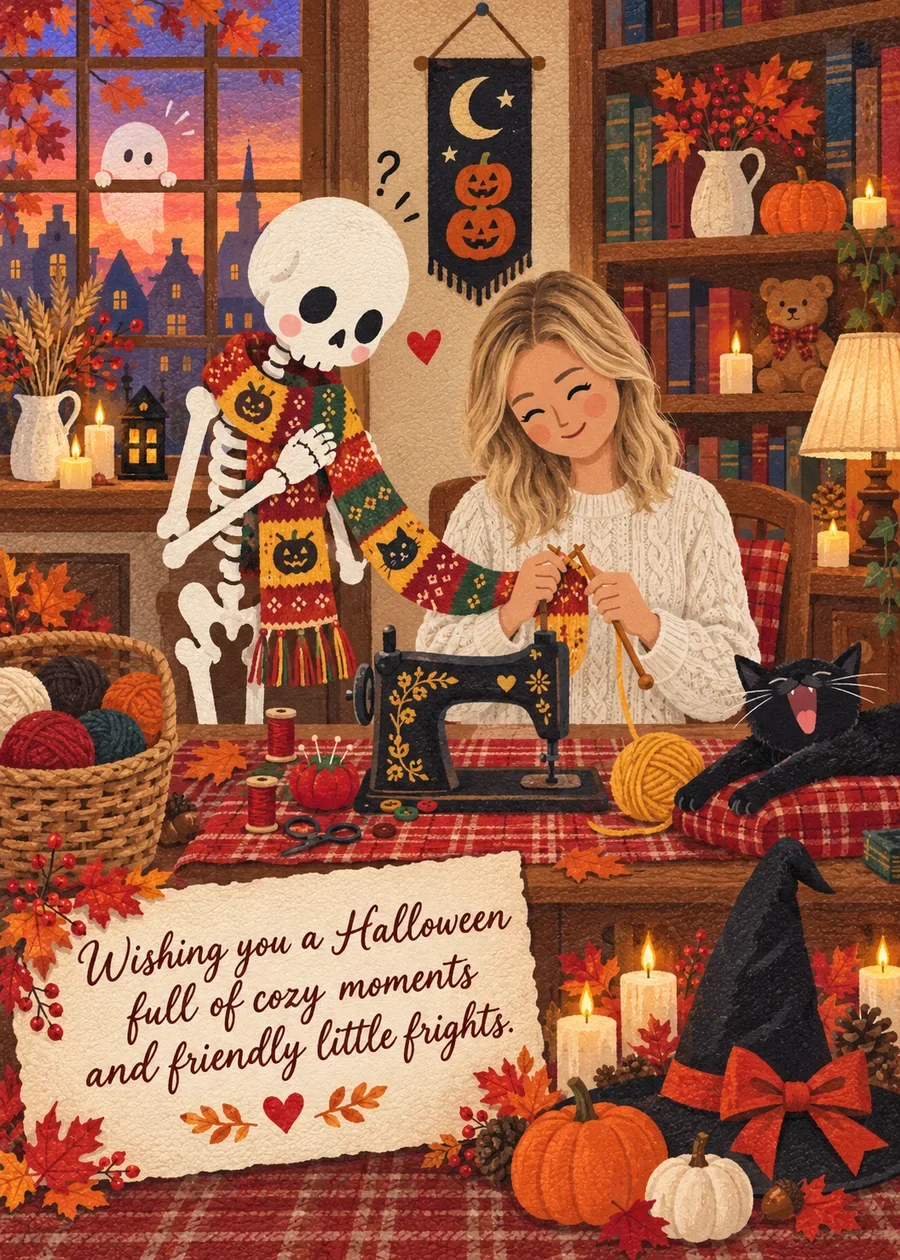
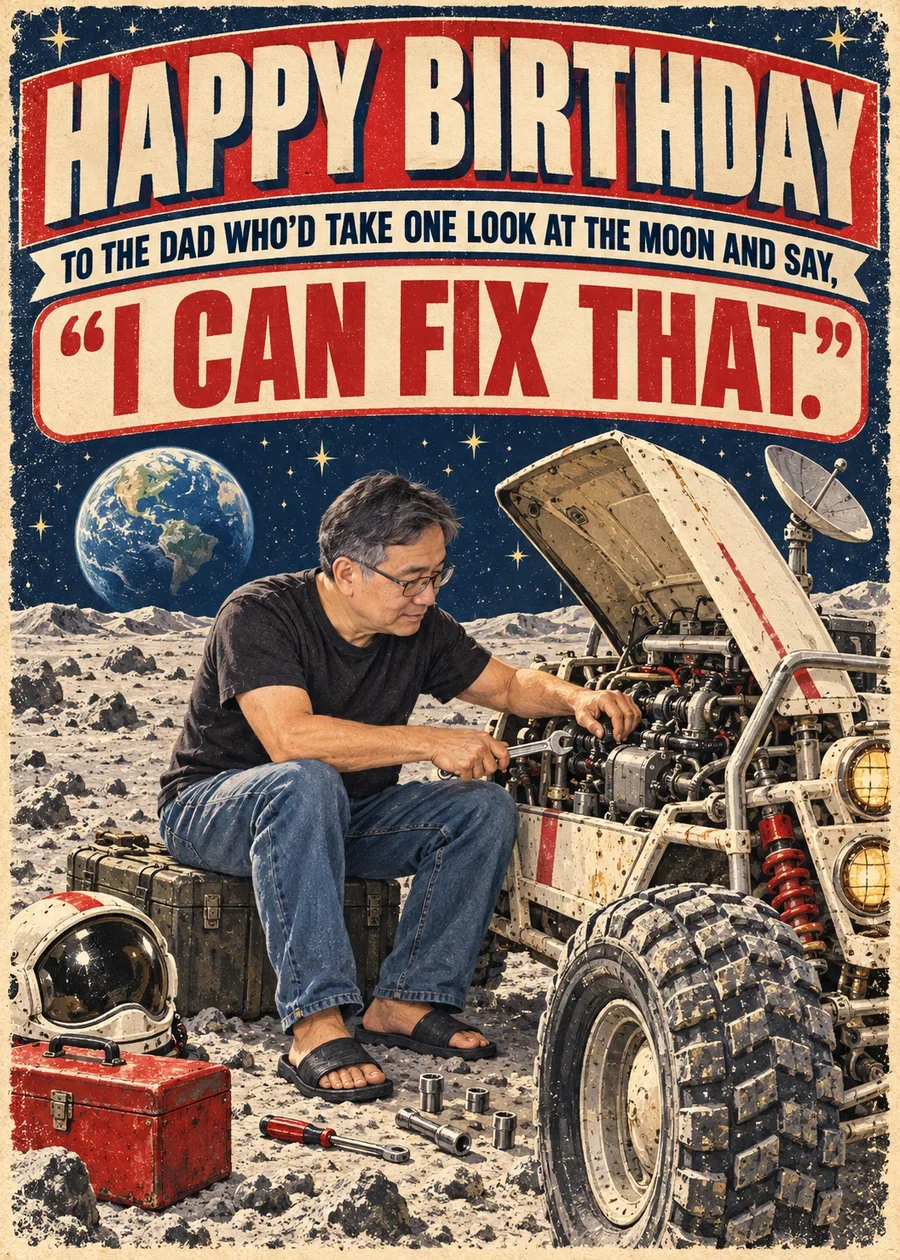
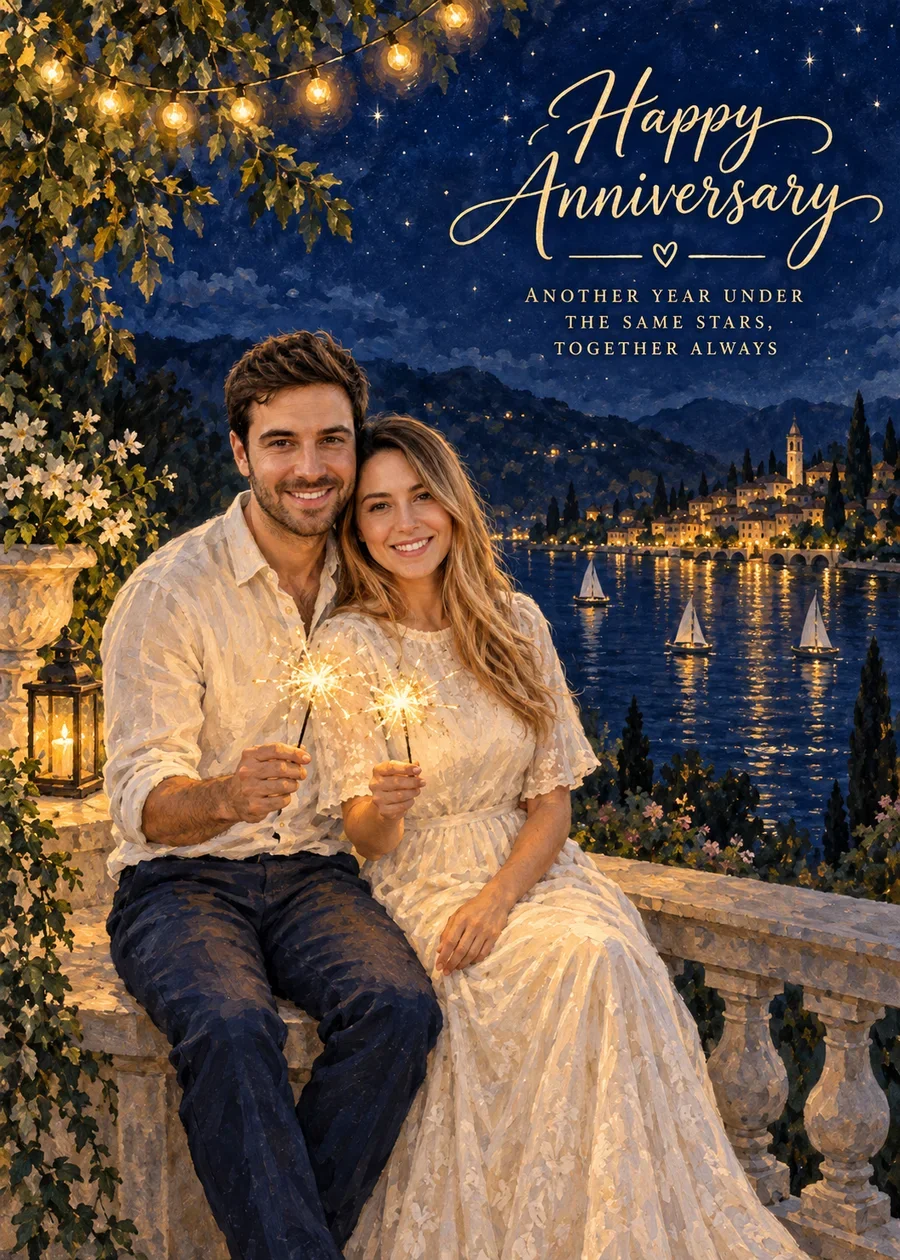
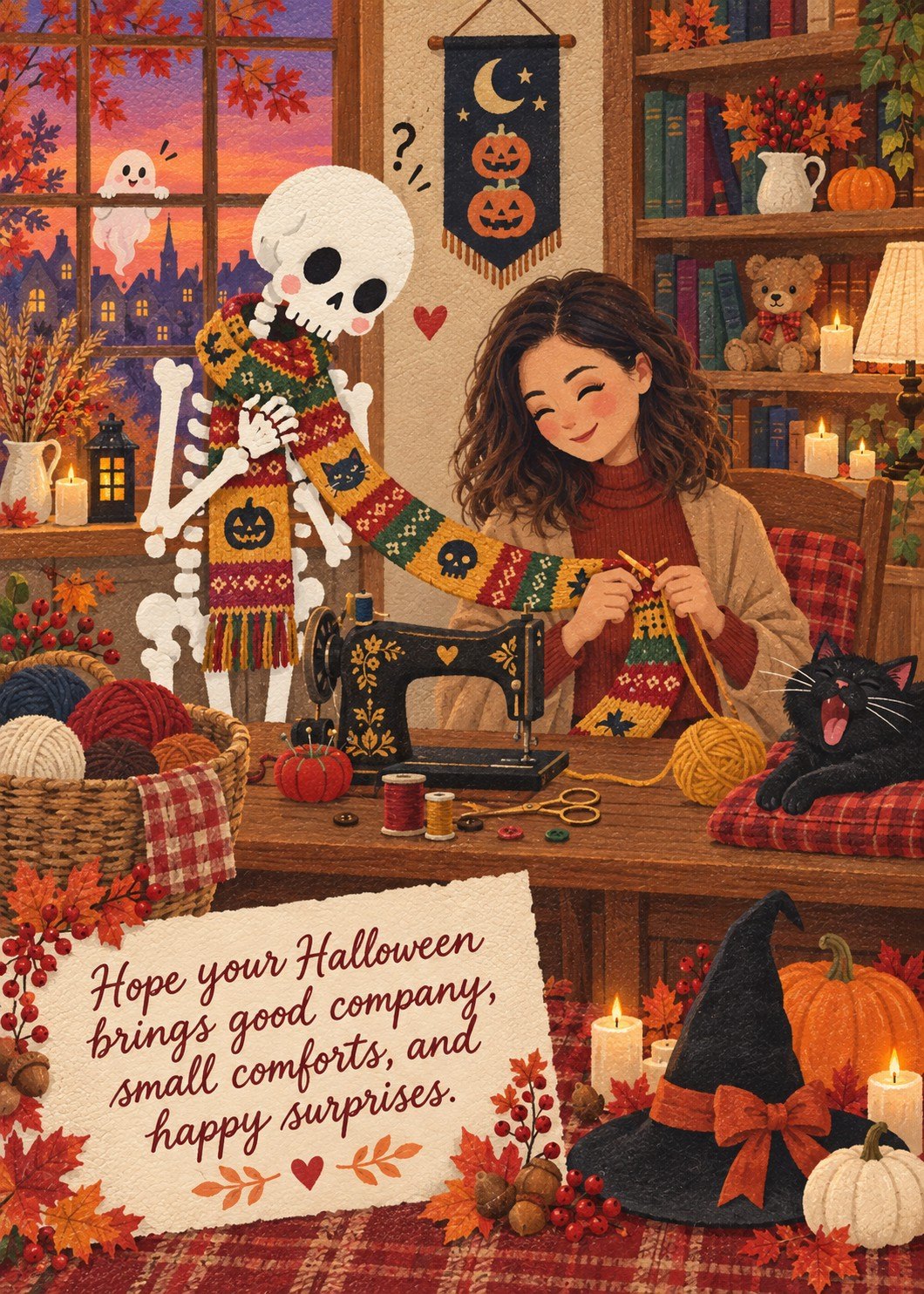
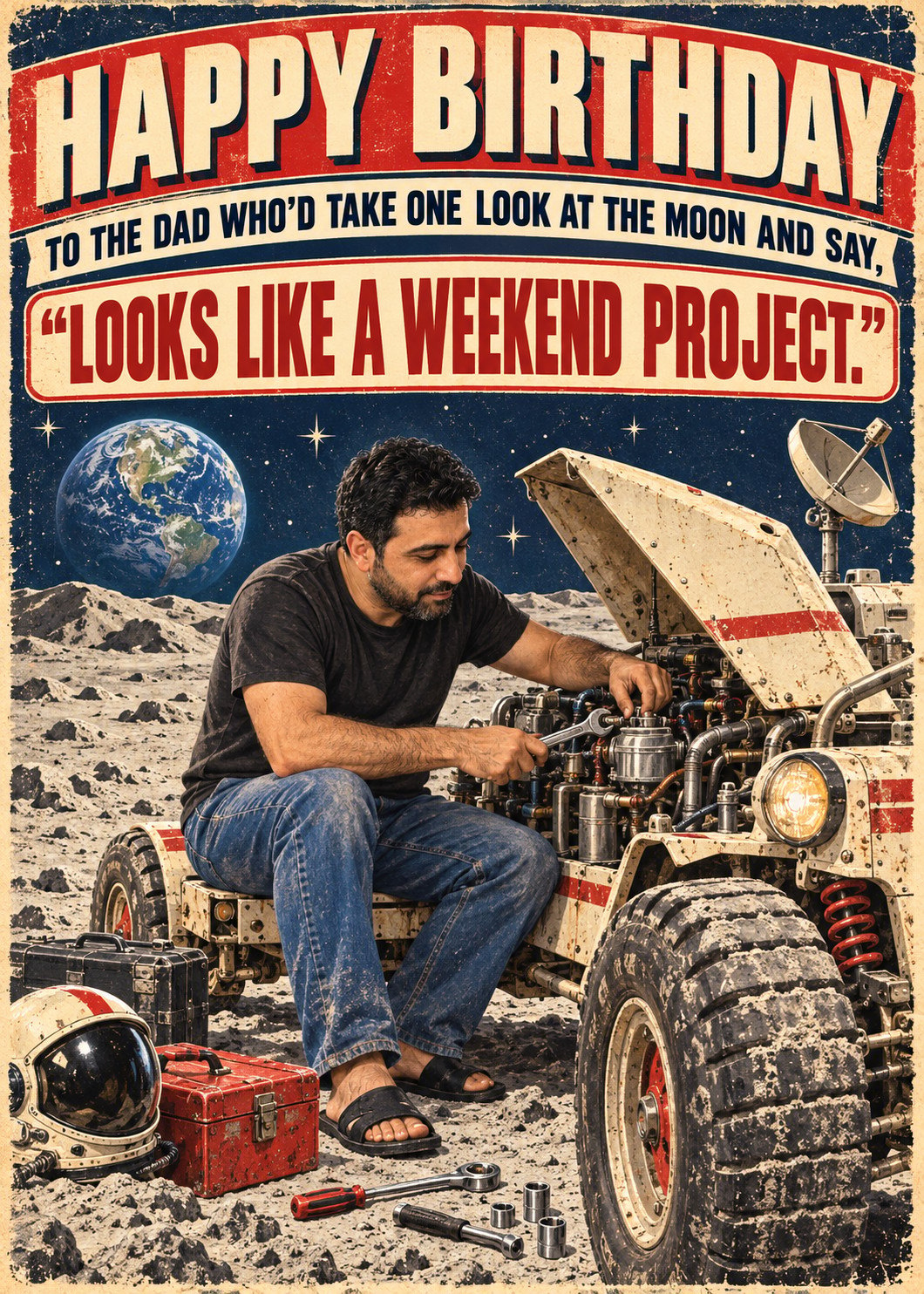
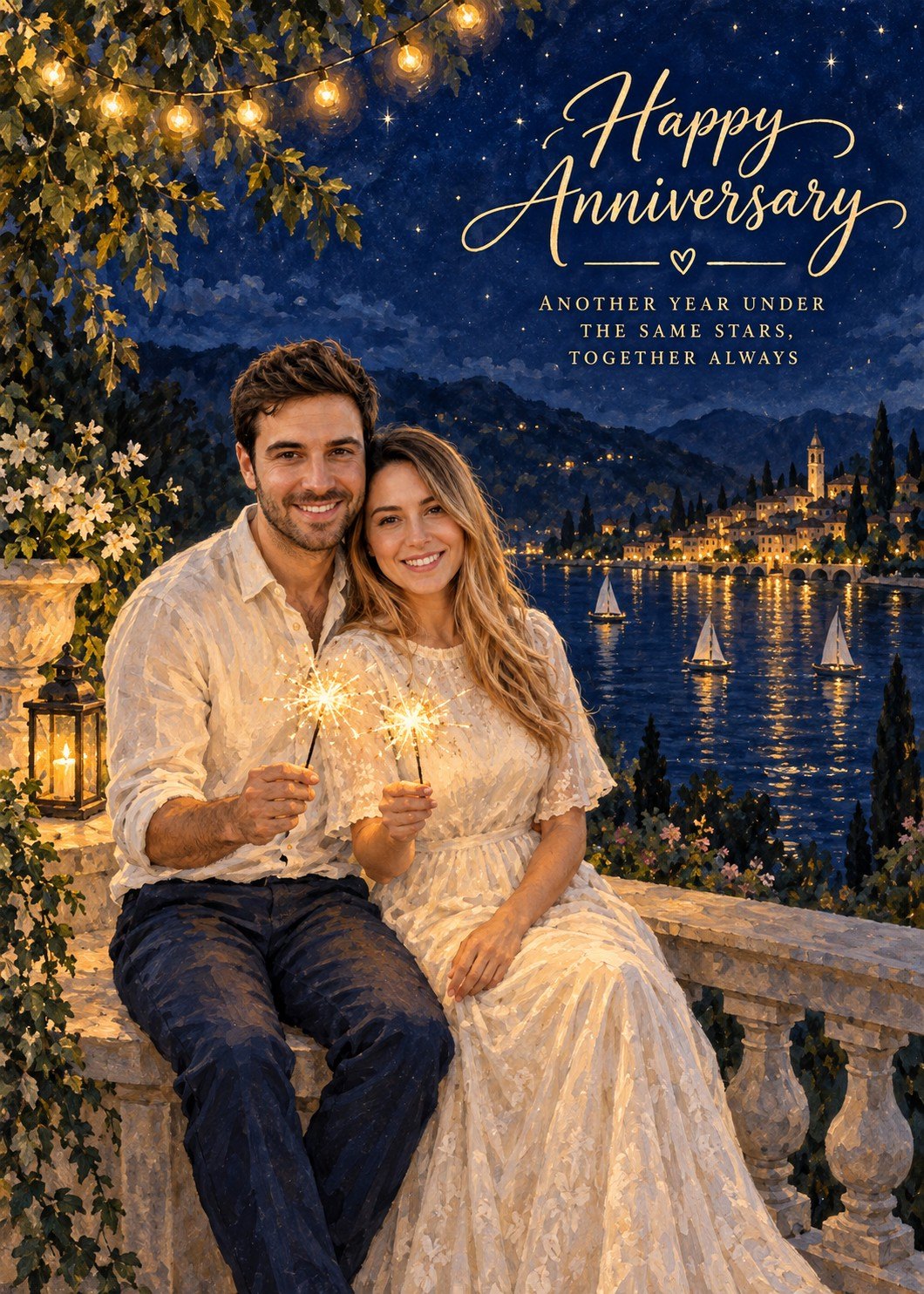
These cards ask for different skills, but they share one principle. The picture has a concept before a customer’s photo arrives, and the person then becomes part of it, drawn to match the scene’s art direction. That creative work is what makes this generation of image technology so exciting to me, and it takes decisions, experiments and refinement.
If you enjoy making images with AI, that process is part of the fun. You might spend an evening describing an elaborate scene, comparing results, adjusting the composition and trying again until it feels right. Someone who wants to make a thoughtful birthday card for a friend may have a different goal. They know who the card is for, and maybe what kind of humor or visual style that person would enjoy. They may not know how to describe a complete illustration, or how to fix a result when the face looks right but the pose, background and lettering don’t work together.
At Fond & Fold, we make those creative decisions before a card reaches the collection. Each design starts with a particular idea and a considered art direction. We develop the composition, visual style and cover wording together, then test how the design works with different people and photos, so that the finished versions feel like one artistic family even when the people, poses and smaller details vary. What you see in the gallery is a design already developed for personalization, more than an image to imitate.
You start with finished cards instead of an empty prompt box. Choose one that feels right for the person you have in mind, upload a suitable photo, pick from the offered cover wording, and see your personalized preview before deciding whether to buy. You don’t need to write a prompt, direct revisions, arrange the elements or work out how to turn an image into a greeting card. The choices left are the ones that belong to you: who the card is for, which design suits them, and what you want to say inside.
This is where I see the next meaningful step in personalized photo art. The technology has made sophisticated image-making increasingly accessible, and a thoughtfully designed service can make the finished result accessible too.
Looking back at that face-swapped selfie from 2013, I still find it funny that I could pull off such a convincing little trick on a phone more than a decade ago. Back then, changing a face was enough to make a picture surprising. Today we can change a photo’s whole artistic style, imagine places that never existed and bring recognizable people into them, and each of those advances has widened what an image can express.
For Fond & Fold, those possibilities are a starting point. We want to combine the freedom of modern image generation with original ideas and careful design, so that making something personal doesn’t have to become a complicated creative project.
And when someone opens the finished card, I hope the first thing they notice isn’t the technology. I hope they recognize a familiar face, discover the little story around it, and smile at the thought that someone chose this particular world for them.
A photograph shows a moment that happened. An illustration can imagine one that never did.