By the time you see it, the hard part is done.
What happens to a design before it becomes your card.
Published
A quiet birthday portrait and a moonlit Halloween picnic may begin in completely different places, but they eventually have to solve the same problem: can this idea become a card for someone we have never met, using a photo we have never seen? Getting there is rarely a straight line. A test can send us back to the design. A line of wording can change the balance of the page. Sometimes something looks lovely once and still is not ready for the shop. Here is what happens before we decide that it is.
Finding the direction
Every card starts with a feeling before it starts with an image.
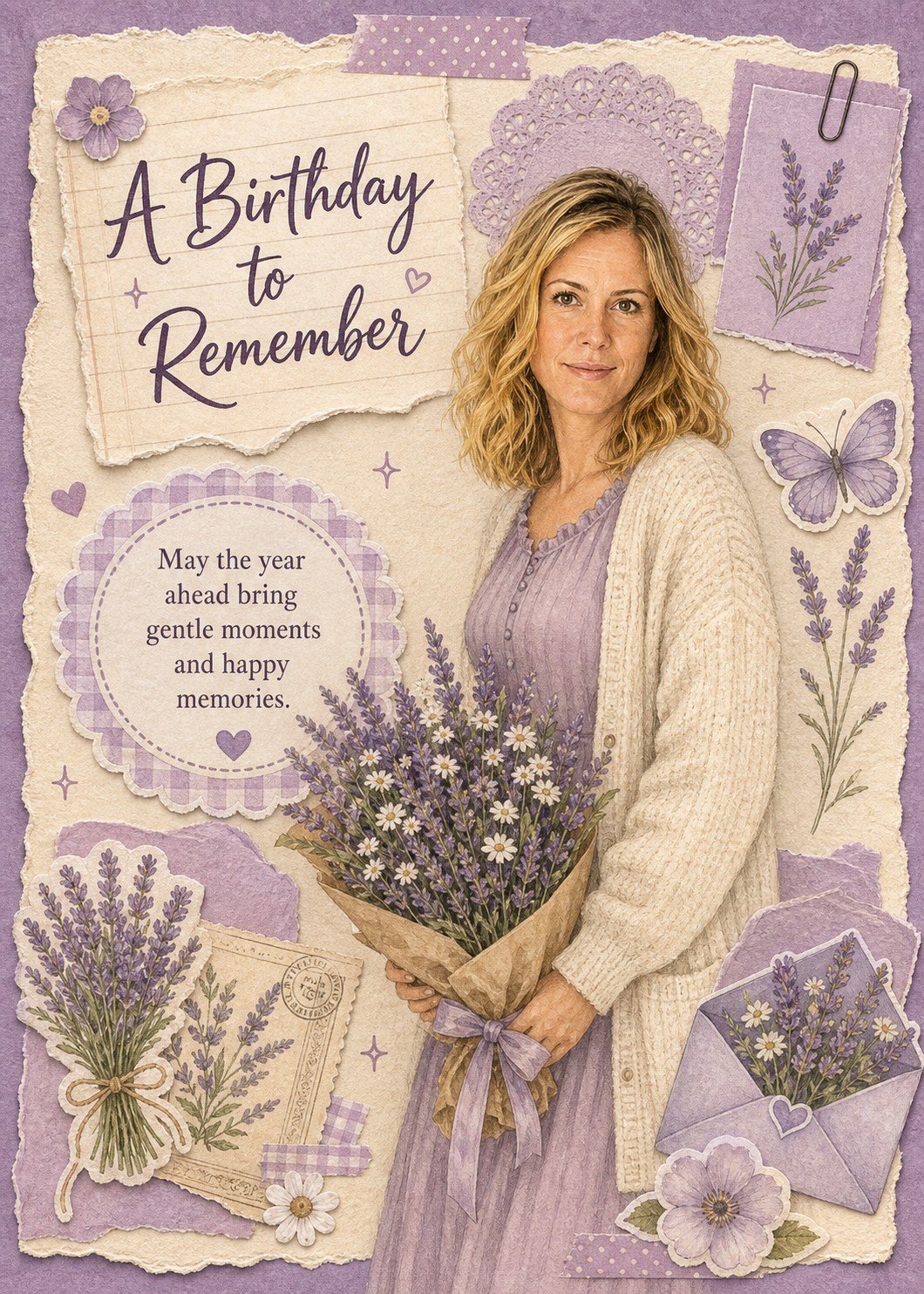
For Birthday Balloons & Confetti, we wanted something bright, clean, and airy, with the person clearly at the center. Lavender Birthday Journal took a more nostalgic direction: soft paper collage, pressed flowers, lace, and the feeling of a keepsake tucked inside an old journal. Birthday Photo Booth went the other way again—bold color, playful doodles, and eight illustrated versions of the same person packed into one lively grid.
A Christmas card might need to feel warm enough for a whole family to gather inside it. A thank-you card might call for an open field and a quieter kind of gratitude. A birthday card built around dry humor needs restraint rather than confetti.
Those decisions come before the finished artwork. We gather references, compare directions, and narrow down what belongs in this particular card: how much of the page the person should occupy, whether the setting should be minimal or immersive, how polished or playful the illustration should feel, and what should be left out.
The goal is not simply to find a style that looks good. It is to decide what this card is supposed to feel like before we start asking it to work for anyone else.
The details change the whole card
Once a direction feels right, we start making it real.
This is where AI becomes part of the development process: we generate, review, compare, and adjust. A promising image gives us something concrete to react to, but it is not automatically a finished design.
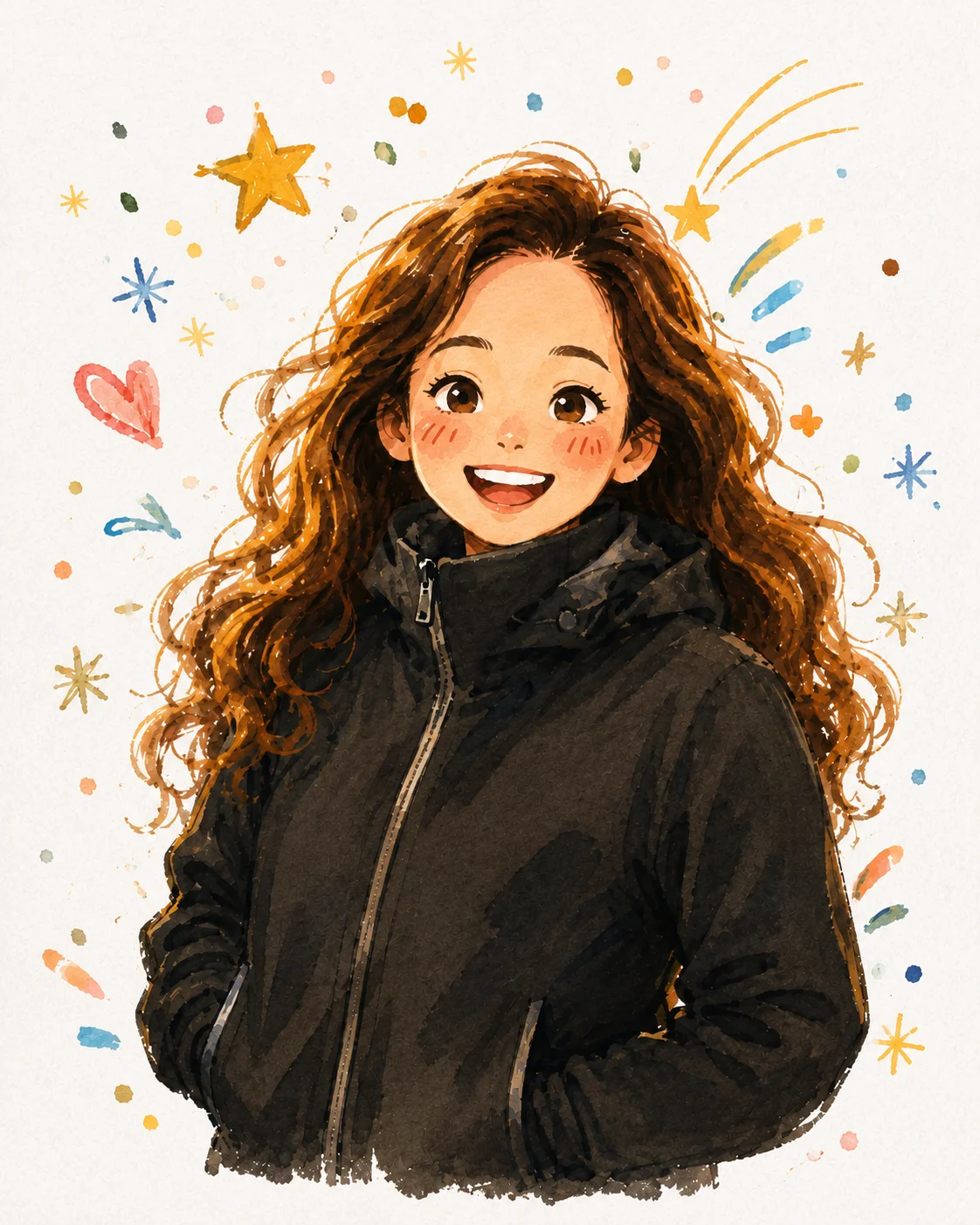
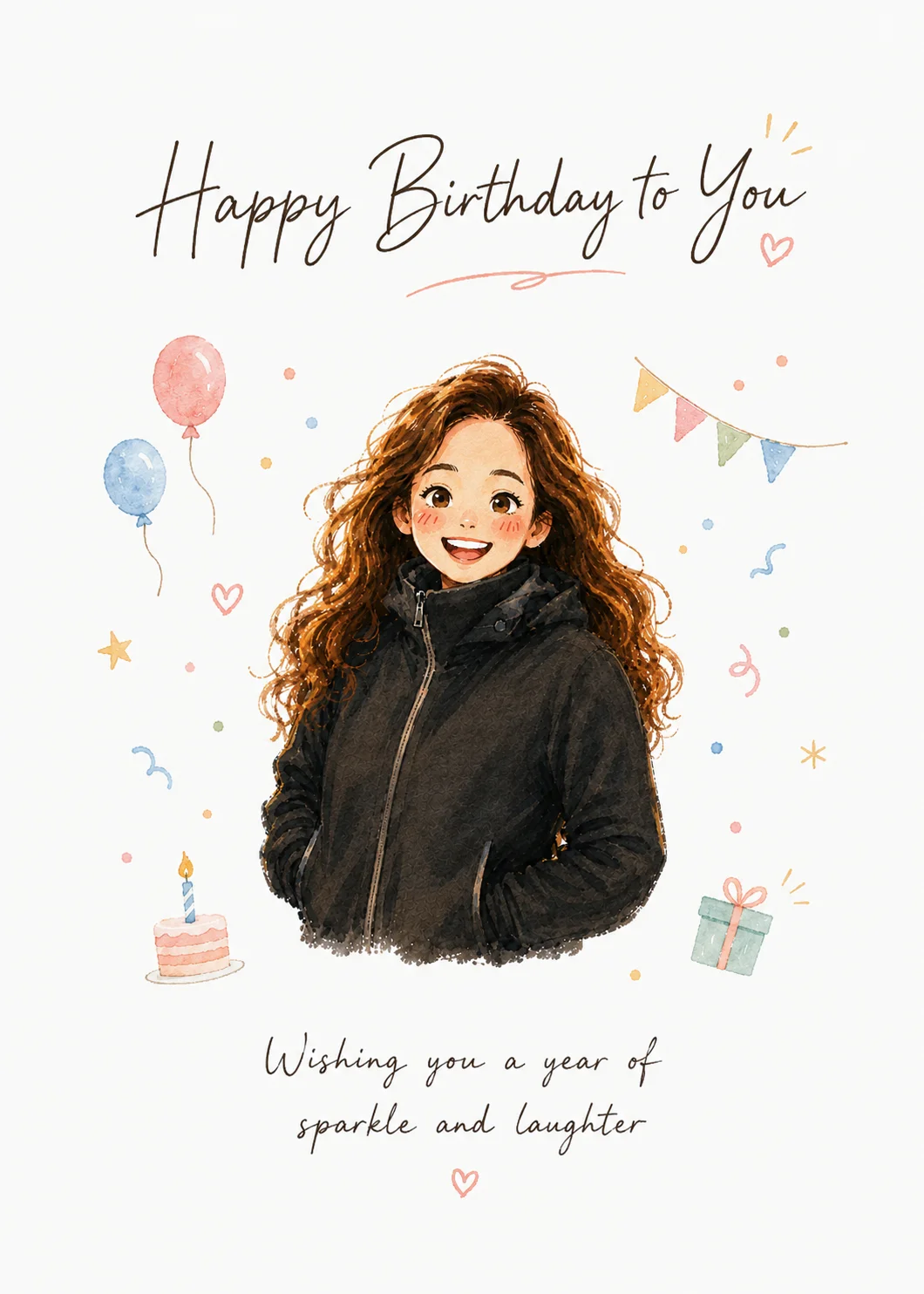
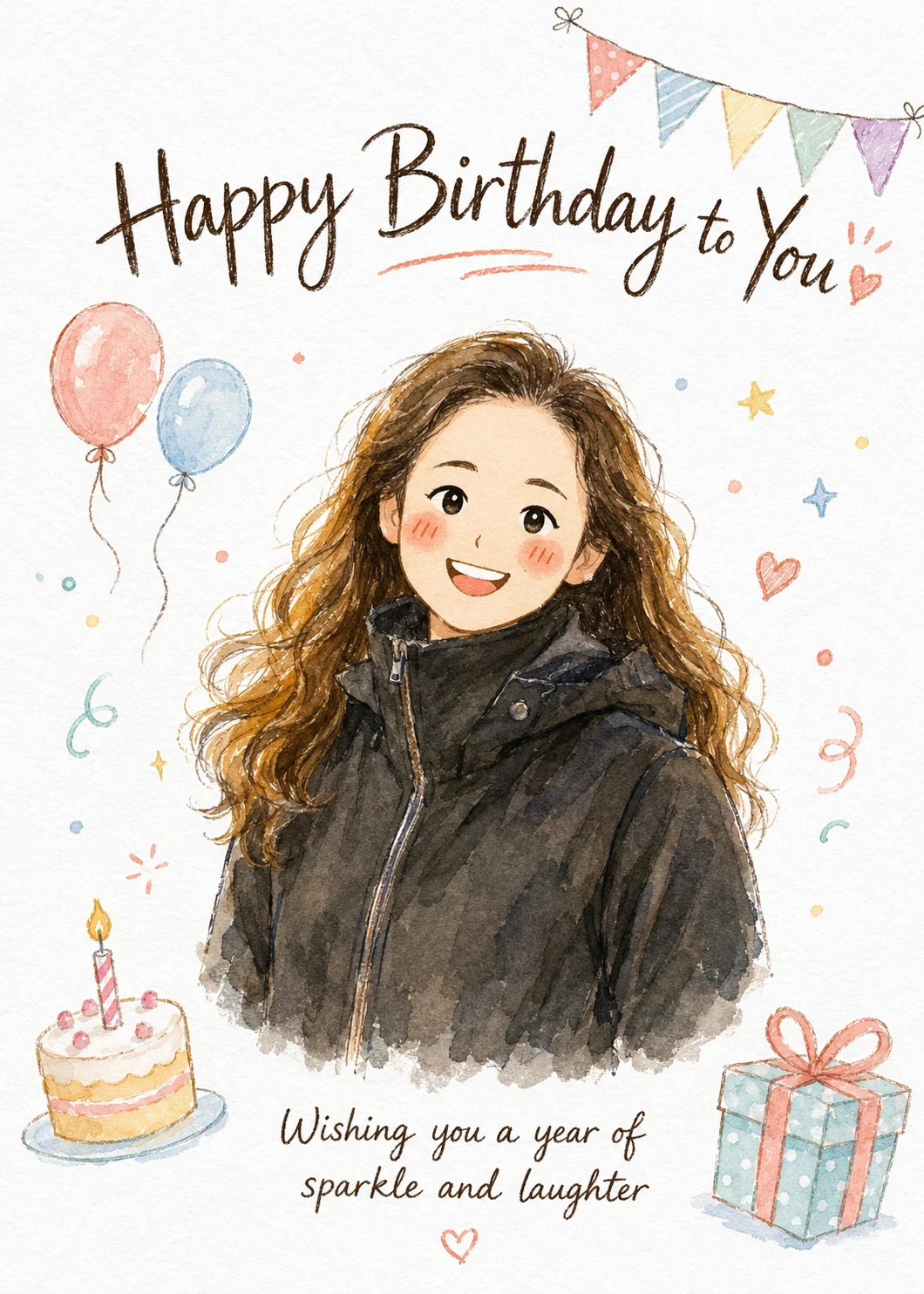
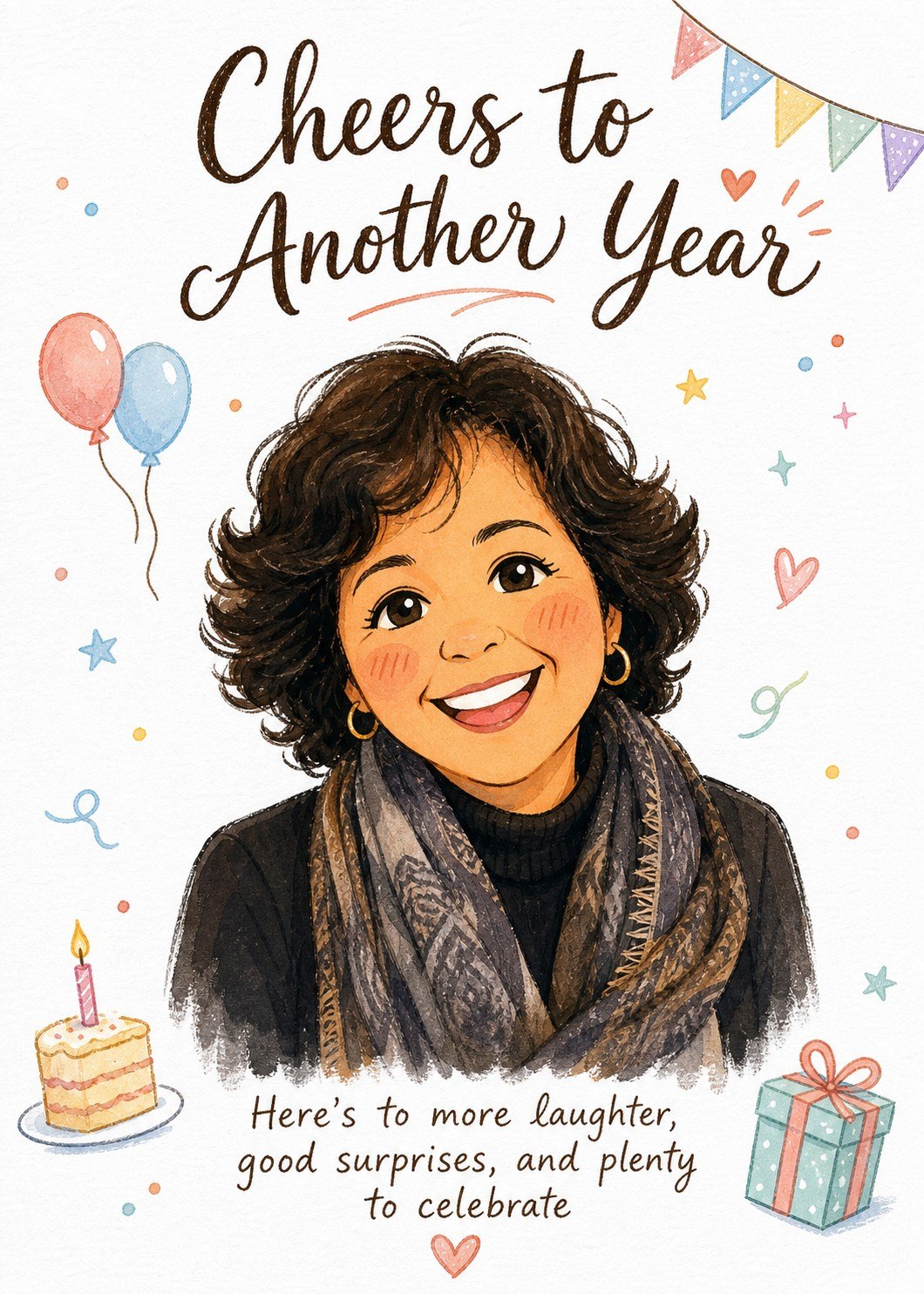
For one of our birthday cards, we first worked out how the portrait itself should be illustrated. Once the wording entered the picture, the composition changed. We added a blessing below the portrait and adjusted a yellow tone that was pulling too much attention.
Then the person still felt too small.
So we made the portrait larger and looked again at the facial treatment, especially the eyes. Each change led to another question: does the greeting still sit comfortably? Does the portrait feel like the focus? Do the decorative details support the person or compete with them?
None of those changes is dramatic on its own. Together, they are what turn an attractive generated image into a card that feels considered as a whole.
One design, no two the same
Then comes a harder question: what happens when somebody else steps into the picture?
A design is not ready just because it worked once. We try it with different people and photos, paying attention to things such as age, hair, glasses, headwear, framing, lighting, and the way the person sits inside the composition. Sometimes the design holds up immediately. Sometimes a new photo exposes something that sends us back.
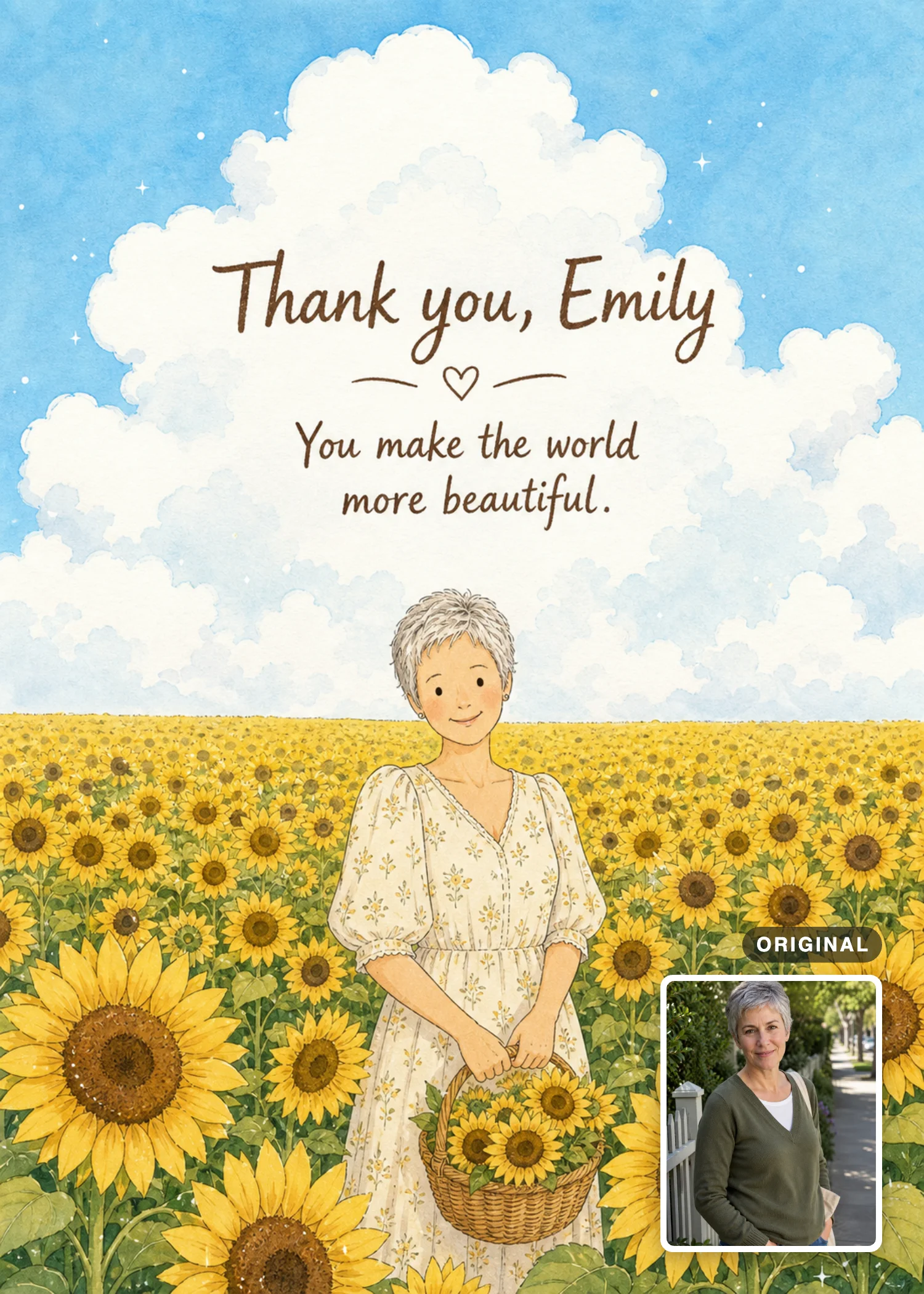
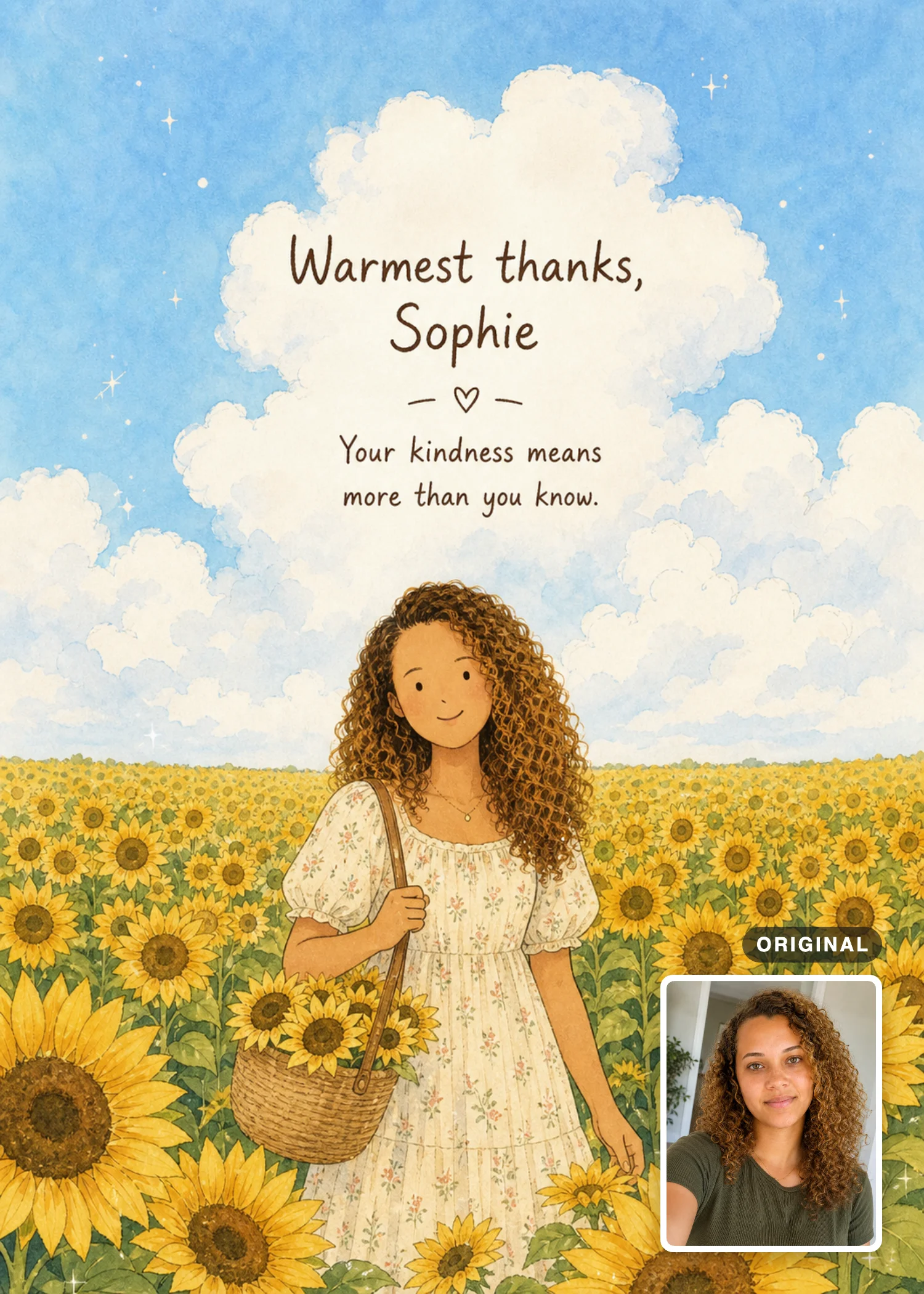
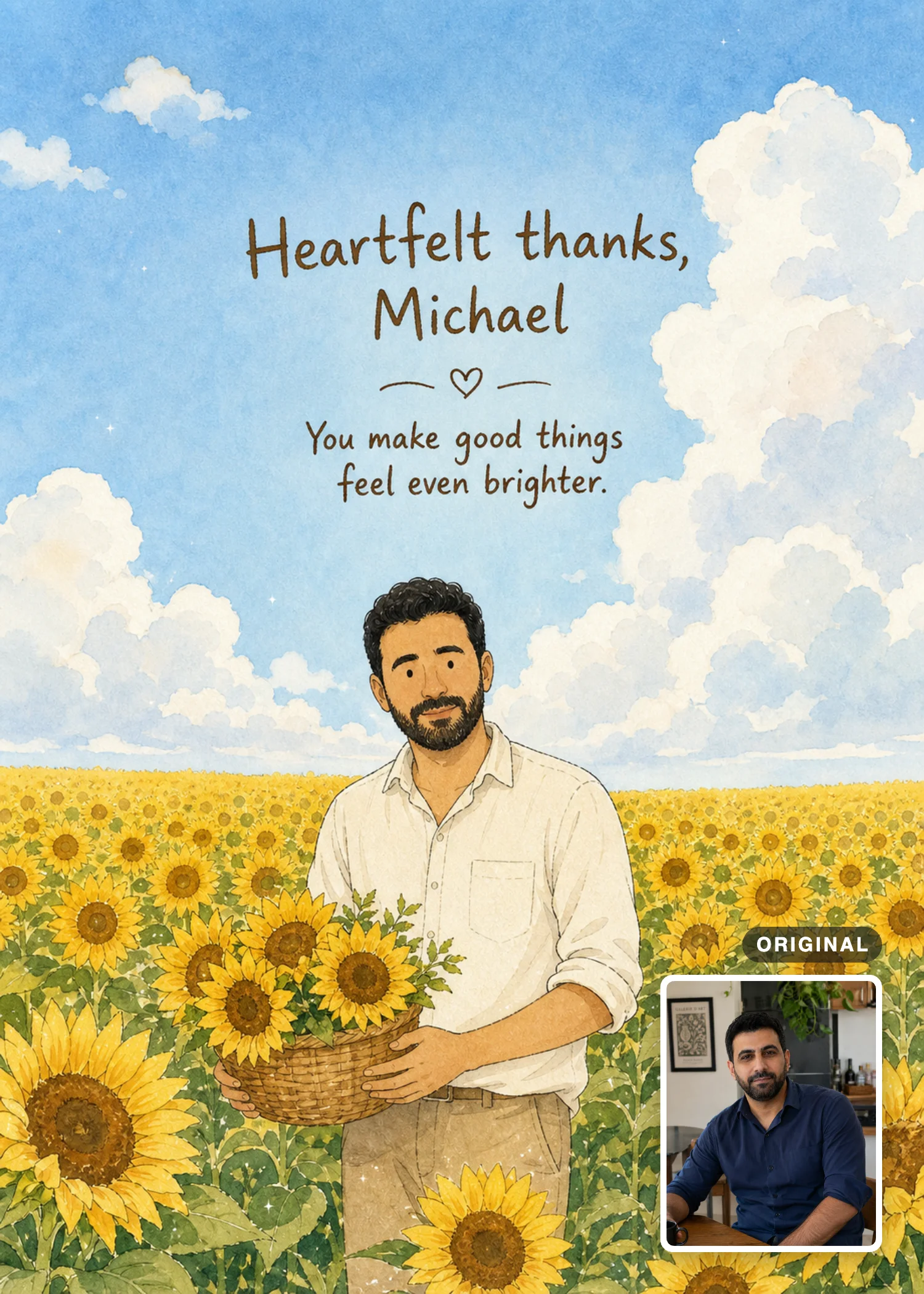
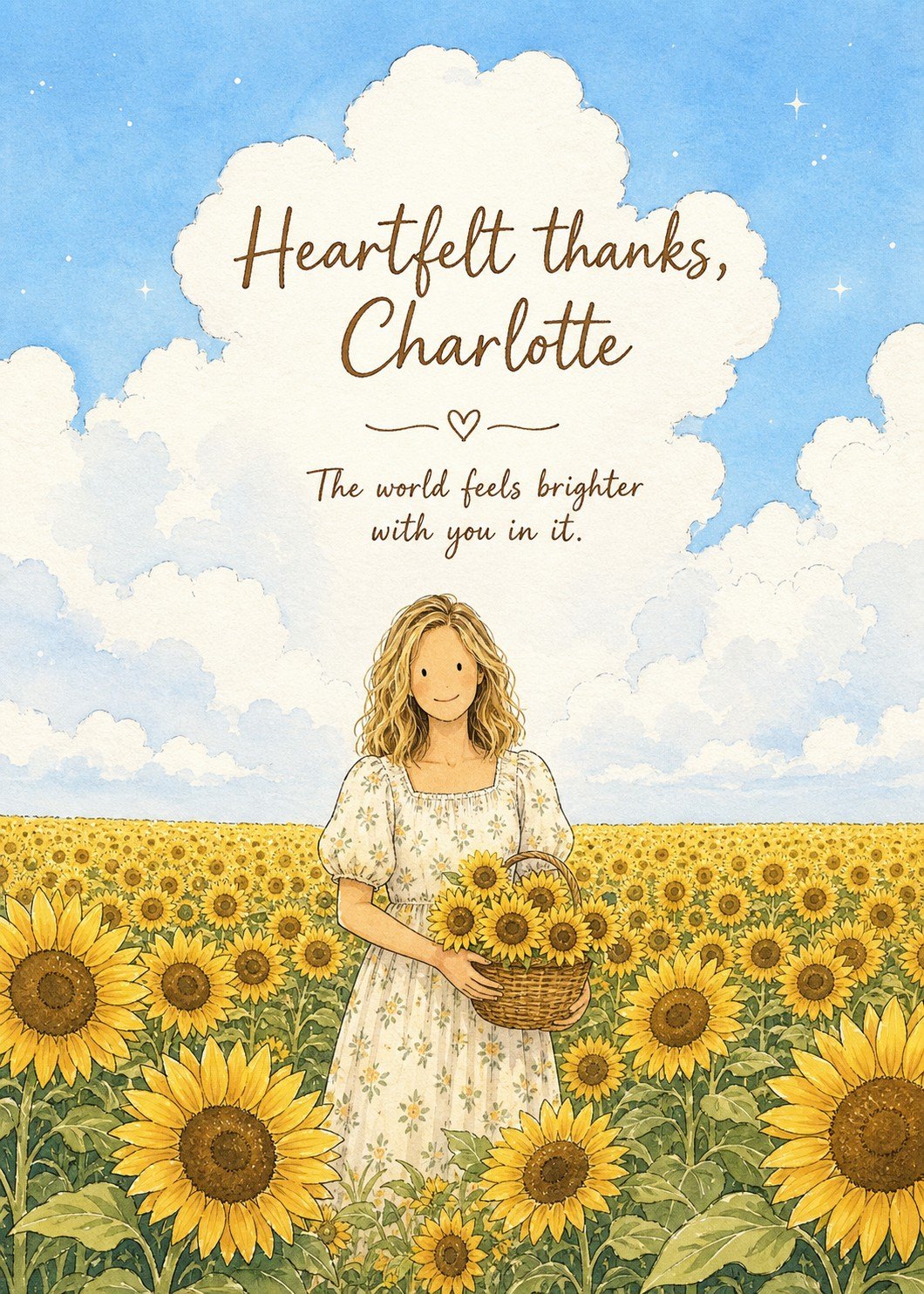
The sunflower cards show the kind of balance we are looking for. One person holds a basket in front; another carries it from a shoulder. Clothing changes. The flowers and sky rearrange themselves. The person and the landscape are composed together rather than placing a new face onto one fixed picture. Our photo greeting card guide compares this approach with photo templates, face swaps, and other ways to make a personal card.
Other cards create different problems.
With Christmas Sweater Family, the design has to hold together when two people become five, or when a pet joins the group. The people still need to feel naturally connected rather than scattered across the page.
With Birthday Photo Booth, one photo becomes eight illustrated portraits. The expressions, poses, colors, and little details can change from panel to panel, while all eight still need to read as the same person and one coherent card.
There is no single definition of “consistent.” What matters is that the design keeps its identity while making room for the person inside it.
That is also why two cards made from the same design should feel related without feeling copied.
A few words make it personal
The words may occupy only a small part of the card, but they can change its personality completely.
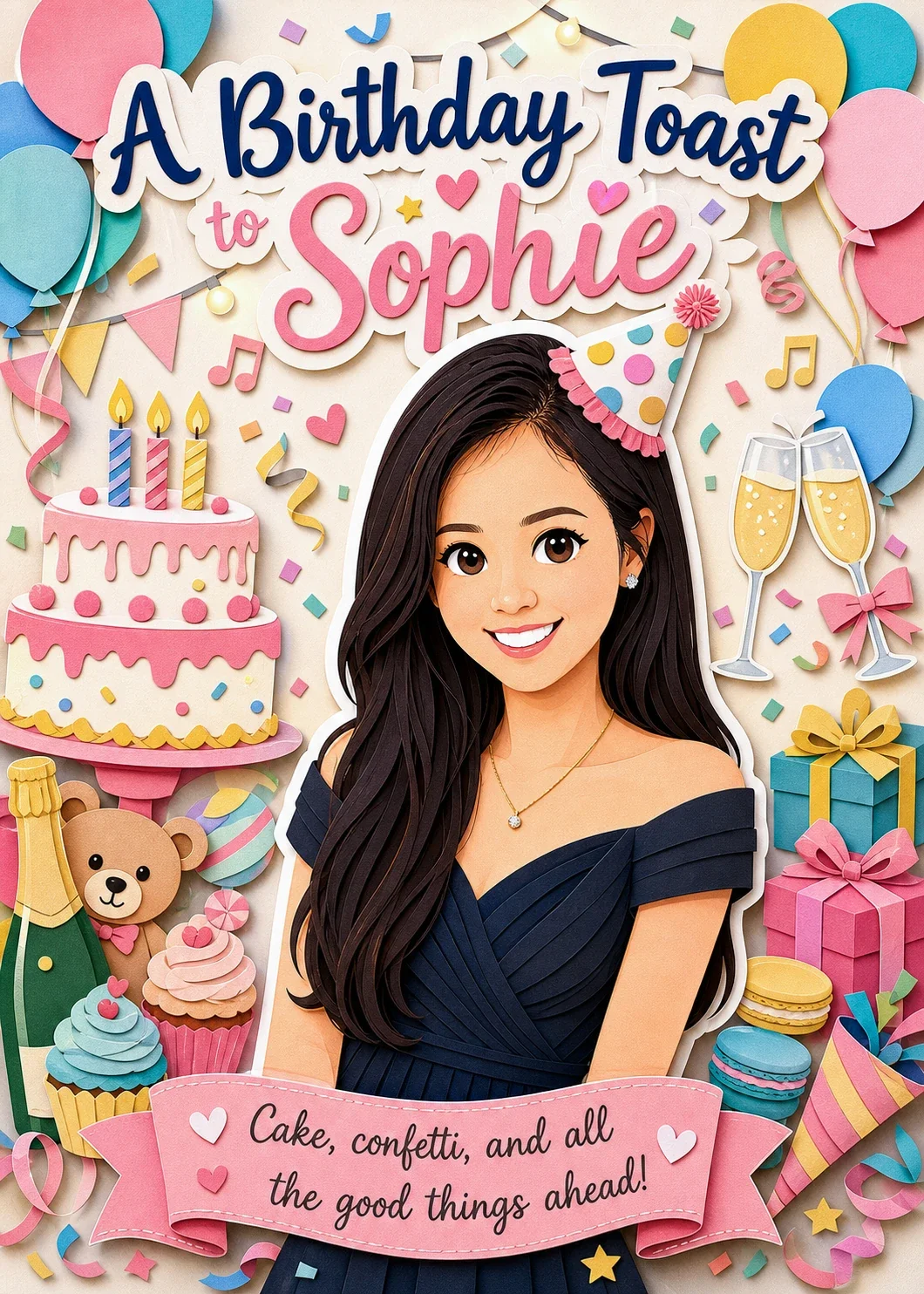
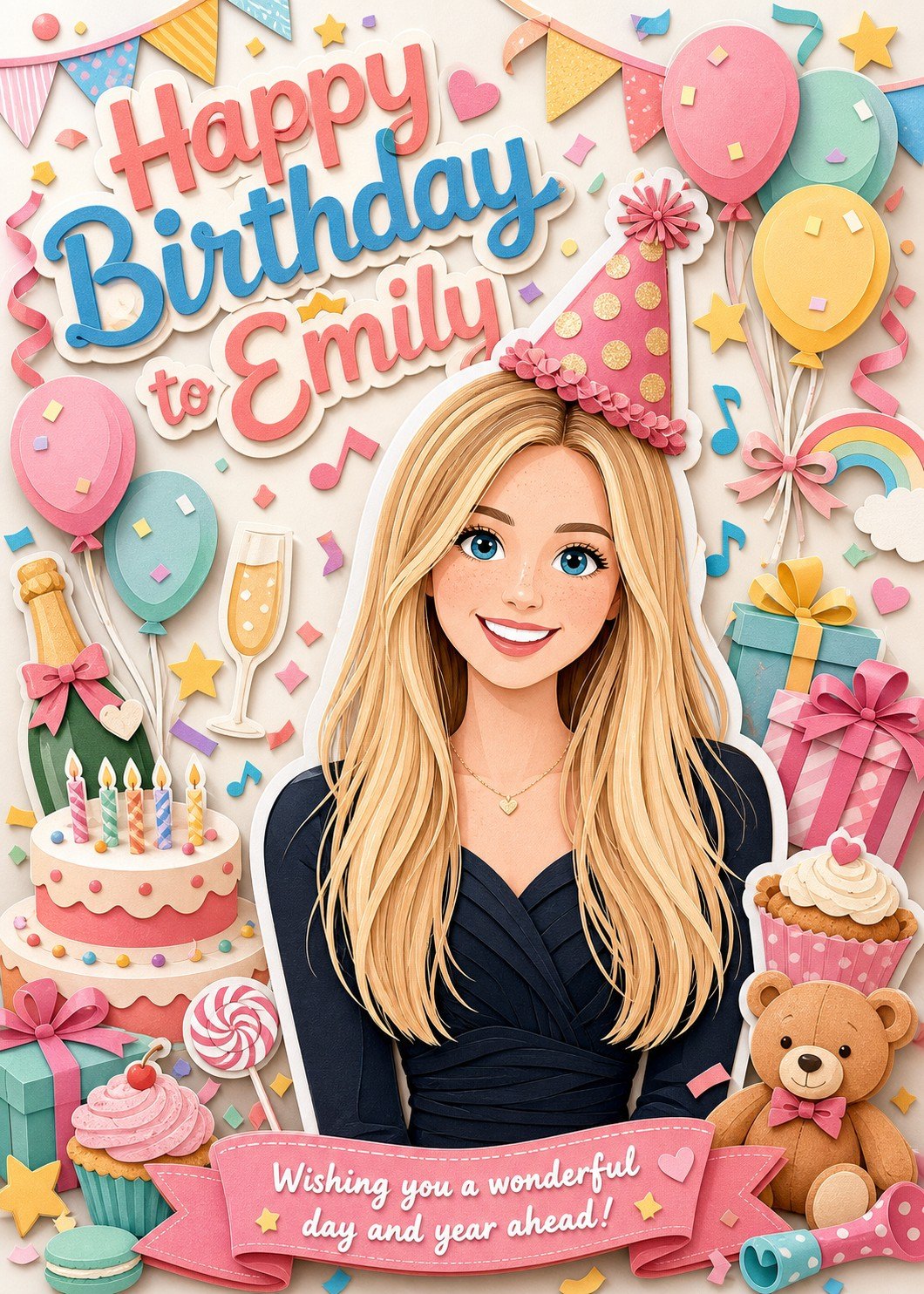
A line that belongs on Birthday on the Bench would sound strange in Paper Party Birthday. The first is deliberately understated: a title like “Another Year of Her” can sit beside the dry little observation “she is here for cake and admiration.” Paper Party is brighter and more celebratory, with choices such as “Birthday Cheers to” or “A Birthday Toast to,” followed by something like “Cake, confetti, and all the good things ahead!”


Thank-you cards need their own range.
Botanical Collage Thank You keeps things concise and mature: “WITH GRATITUDE,” paired with a simple line such as “for your kindness.”
Wildflower Meadow Thank You has more room for feeling: “Heartfelt Thanks” might lead into “for making more of a difference than you know.”
And on Halloween Picnic for Two, even the wording belongs to the little world of the card: “just us two,” “two of a kind,” “a little magic for two.”
We develop the greeting and blessing as part of the design, looking at tone, naturalness, length, visual balance, and how the available choices work together.
The point is not to make you write the cover from scratch. We offer a small set of words that already belong in the design, then you can add an optional personal note inside for the words only you could write.
Making the whole thing work
A beautiful design still is not finished if nobody knows how to use it well.
Different cards ask different things from a photo, and we learn those differences by testing them.
For Thank You in the Sunflowers, a chest-up to three-quarter portrait works best. The original clothing is replaced as the person becomes part of the illustrated sunflower field.
For Birthday on the Bench, the framing can run from upper body to full body, and understated visible clothing tends to suit the quiet line-art design.
For Christmas Sweater Family, the starting point is completely different: a natural group portrait, usually framed from half- to full-body, with two to seven people. Pets are welcome too.
Those instructions are not generic upload advice pasted onto every page. They come from what we have learned about that particular design—what gives it enough information to work with, what tends to fit its composition, and what can get in the way.
That learning becomes the framing examples and notes you see when you frame your photo. For general photo requirements, see our photo FAQ.
And the artwork is only one part of making the whole thing usable. We also look at the experience around it: whether it is clear what to upload, whether the choices make sense, whether the preview is easy to understand, whether the flow works properly on a phone, and whether the final file arrives in the form we promised.
You see your own card before paying and can add a personal note once the preview is ready. After purchase, the private delivery page lets you save the cover and any note separately, share the link for the full reveal, or print the card yourself at home or at a print shop. Fond & Fold does not print or mail physical cards.
Most of the decisions behind a card should disappear by the time it reaches you.
You should not need to think about how large the portrait ought to be, whether one of the offered cover greetings will fit, or whether the same idea will still work when the person changes. Nor should you need to work out the photo requirements from scratch.
You should be able to find a card that feels right, recognize someone you care about inside it, and make it theirs.
That simplicity is the finished product.
You bring the thought behind the card. We take care of the design.