
Christmas Card Messages: From a Short Wish to a Personal Card
Start with a short Christmas wish, add a memory or a detail just for them, and see how it comes together in a warm or playful photo card.
Published

Christmas messages often begin with the same few words: Merry Christmas, Season’s Greetings, Happy Holidays. A familiar greeting does its job quickly. What makes one card feel different from another usually comes after those first words.
You might be writing to a friend you have known for fifteen years, a coworker you enjoyed working with this year, or a relative you will not see over the holidays. You might be signing the card yourself, sending it from everyone at home, or sharing a greeting with a wider circle. Who is sending it and who will read it both shape what belongs in the message.
Let the cover set the mood, then use the inside for the part only you could write. A simple “Merry Christmas” can lead into a memory of a summer trip, thanks for someone’s support, or a thought about seeing them again.
Start with who the card is from and who it is for
Before choosing the words, think about both ends of the greeting: who is sending it, and who will read it. You might be writing personally to a friend, sending a family greeting to someone you all know, or sharing a message with a wider circle. The sender determines whether you use “I” or “we”; the audience helps you decide how personal to make it.
From you to someone in particular
When you are writing to one person, you can speak directly to them. Use “I” and draw on your own relationship, whether they are a close friend, a relative, or a coworker.
A short message might be:
For someone closer:
How affectionate, playful, or reserved you sound will depend on the person and the year they have had. The next section on choosing a Christmas card tone offers examples for those different relationships and circumstances.
From your family or team to someone in particular
A card from a couple or a family can still feel personal to the recipient. Write in a shared voice, using “we,” “our,” or “from all of us,” and choose something the senders can say together.
For example:
A memory you all share or a sentence about seeing the recipient again can make that family greeting more personal. Sign with the names of the people sending it so the reader knows who “we” means.
The same approach works for a card from a team to a client or colleague. Keep the message appropriate to that working relationship, perhaps thanking them for something you worked on together, and sign on behalf of the team.
From you or your family to a wider circle
You might share a Christmas greeting on social media, in a group chat, or in a message to friends and relatives. It can come from you alone or from your family, but it needs to make sense to people with different connections to you. Keep “I” or “we” consistent with the sender, and save private references for individual notes.
From you:
From your family:
If you later send the same greeting privately to someone close, you can add a detail just for them. The shared wish can stay the same while the personal note changes.
Choose a Christmas card tone that fits the relationship
With the sender and audience in mind, think about what tone would suit the relationship and the year the recipient has had. A friend who normally gets a joke might appreciate something gentler after a difficult few months. A cousin you rarely write to may welcome a simple warm wish. A coworker can receive a friendly note without it becoming intimate.
Choose the feeling you want the person to have when they open the card, then find words that sound natural between you.
Warm and personal
Warm Christmas card messages suit close friends, relatives you miss, partners, and people with whom you share a history. You can acknowledge that closeness in a few ordinary words.
Short Christmas card messages in this tone might say:
For a card from several people, the same warmth can shift into “we.” For example, this Christmas in the Snow cover pairs:
Merry & Bright
with love from all of us
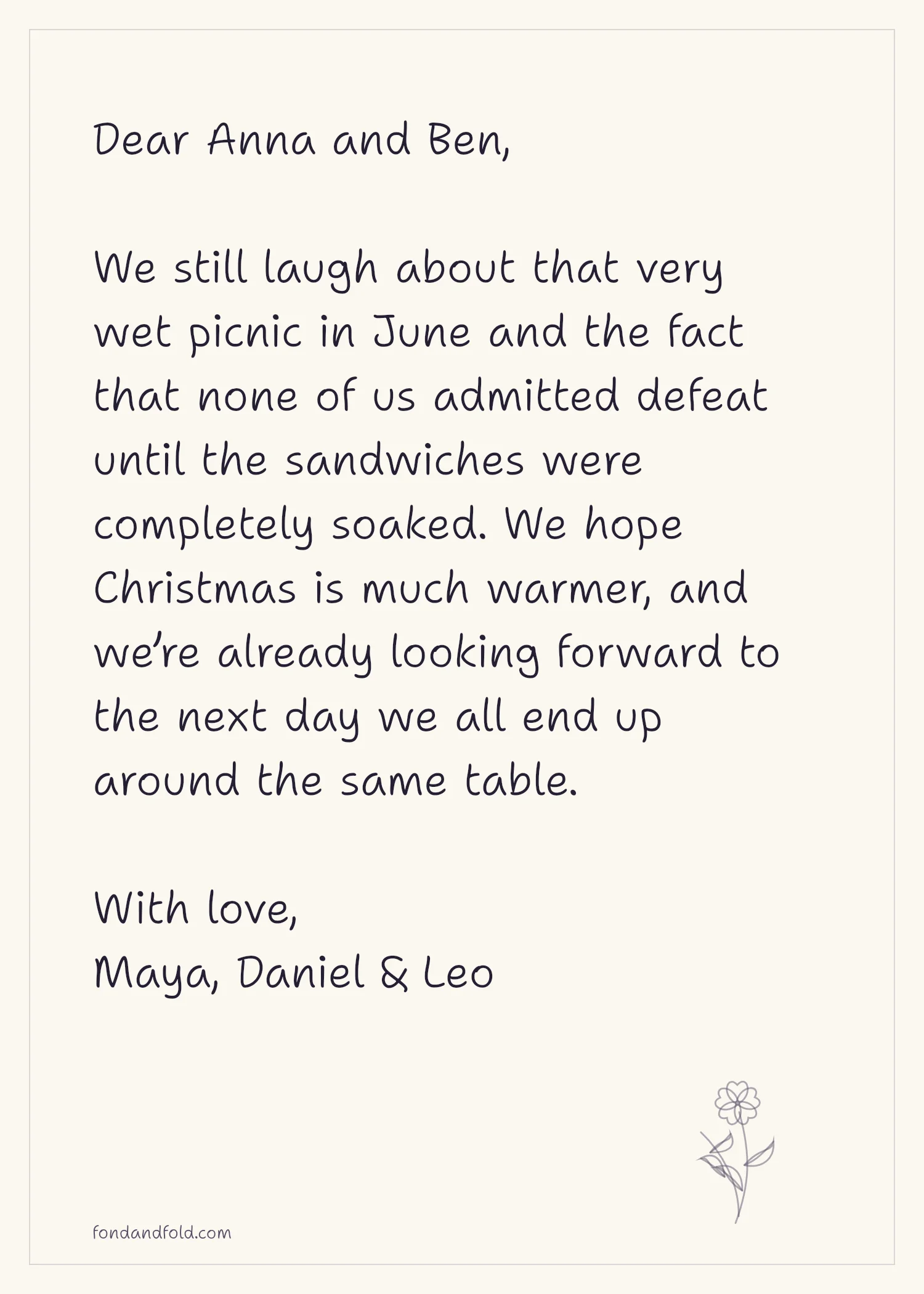
The cover establishes a shared voice and a warm mood. Inside, an example note could add a memory:
The note recalls one afternoon together. That detail gives the recipients something to smile about without having to explain the whole friendship.


Gentle and considerate
A warm wish may need a quieter tone when someone has had a difficult year, is spending the holiday differently, or simply prefers understated words. You can show care without asking them to feel festive.
For example:
In this situation, phrases such as “best Christmas ever” or “the happiest year yet” may feel like too much. A modest wish leaves more room for how the person is actually feeling.
This Cozy Christmas Night In cover pairs:
Merry Christmas
sending a little extra peace your way.
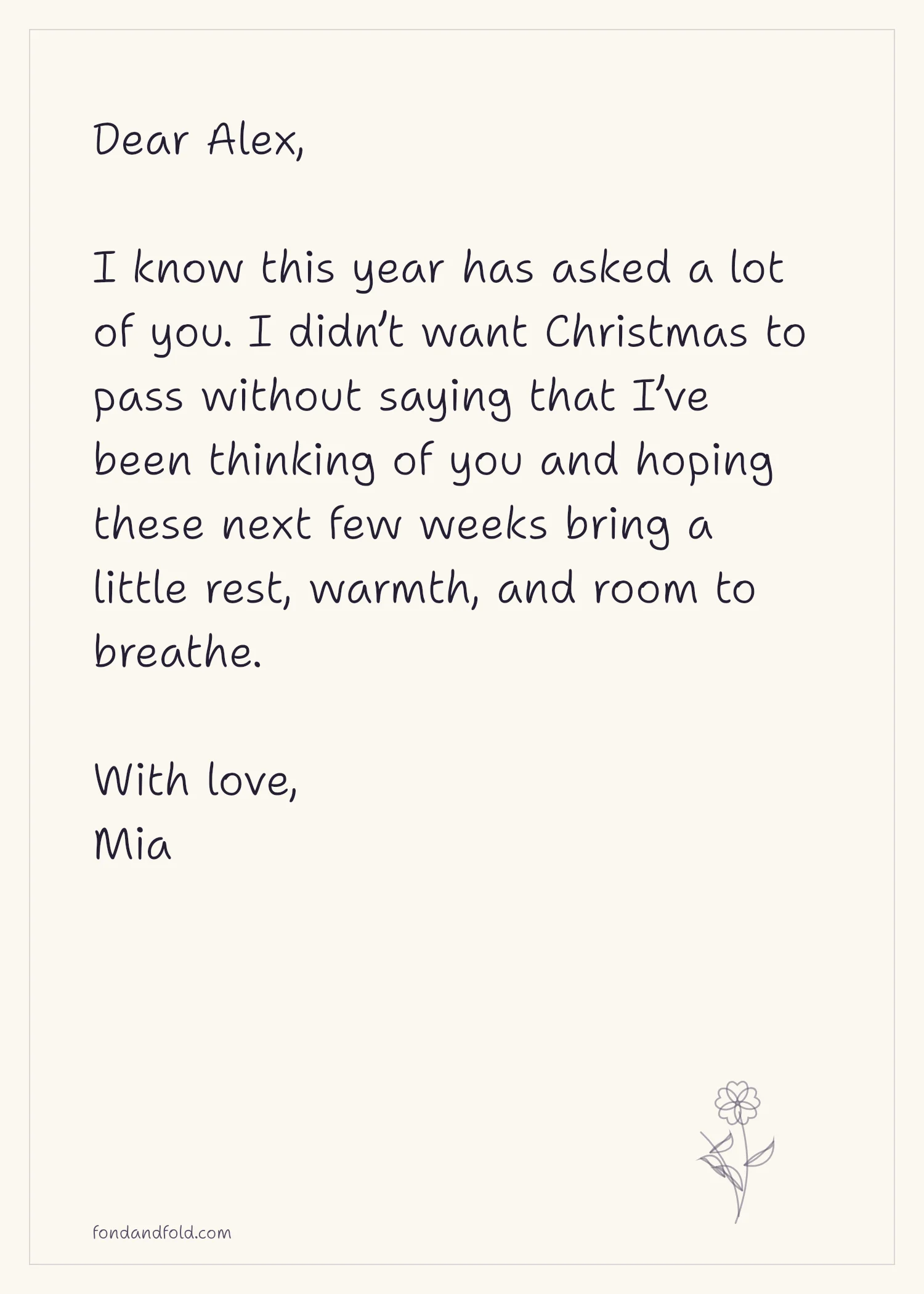
The note inside can acknowledge the year more personally:
It tells Alex they are being thought of without trying to solve what they have been through.


Friendly and polished
Christmas card messages for coworkers, neighbors, and newer friends usually work best with a little warmth and a clear sense of the relationship. A brief reference to the year can make the message personal without making it intimate.
For a coworker:
For a colleague you know less well:
For a neighbor:
For a friend you are still getting to know:
A complete coworker note could read:
The detail about November names something Jordan did that mattered to you. The rest can stay brief.
Celebratory and lively
For someone who starts the music, organizes the group chat, or turns an ordinary evening into a gathering, a Christmas message can carry more energy. Think of a close friend, sibling, or cousin who enjoys being celebrated.
Try:
Retro Christmas Concert puts the recipient onstage as the lead singer. Its cover titles include Christmas Beats, Christmas Swing, Jingle Bell Jam, Rockin’ Christmas, and Holiday Revue. The illustration supplies plenty of celebration, leaving the inside free for a note about the person.
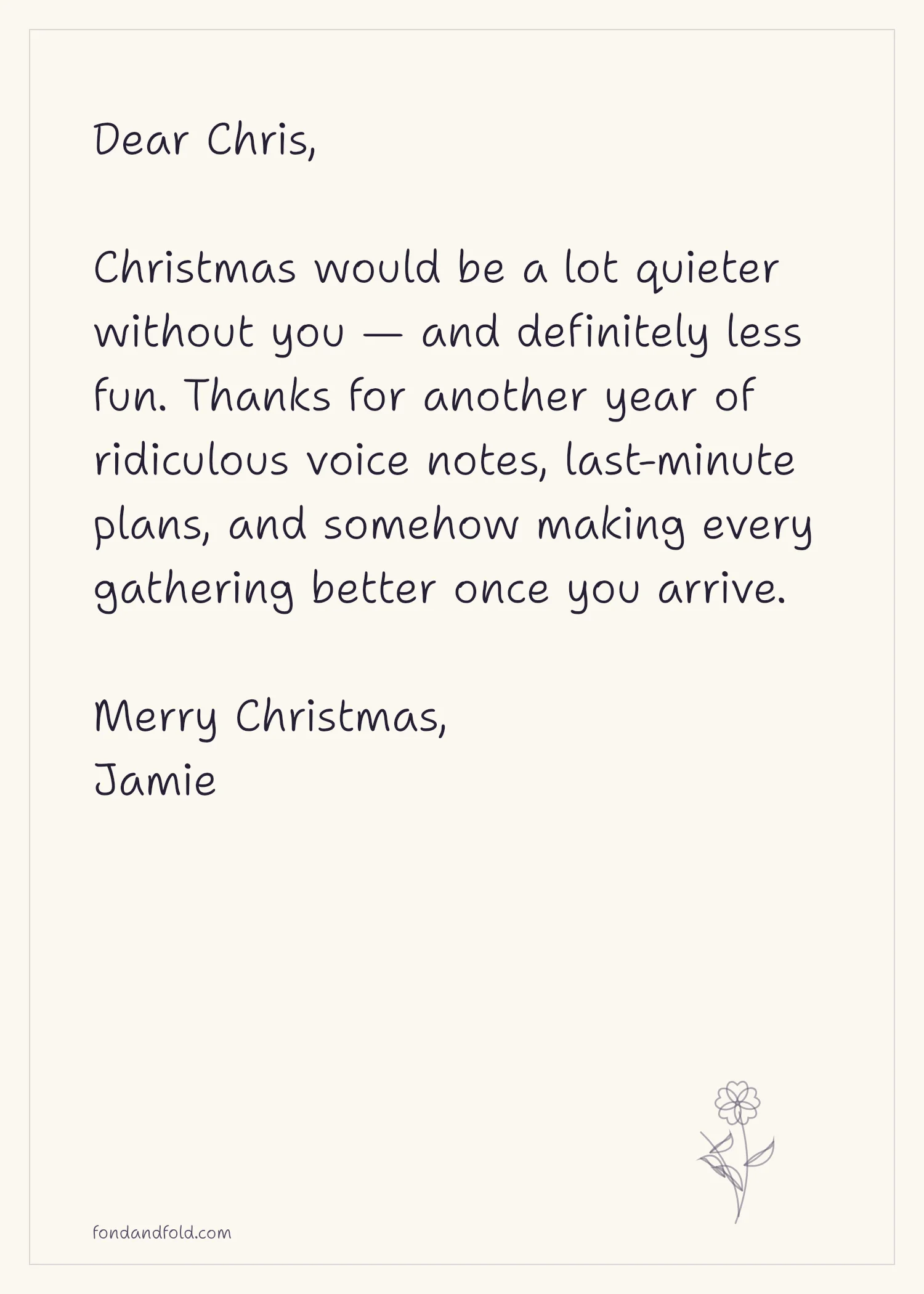
For example, a Jingle Bell Jam cover could open to:
The voice notes and last-minute plans give Chris something specific to recognize. Choose details from your own friendship to make this kind of lively message feel right.


Open and inclusive
For a greeting from you or your family to a wider circle, keep the message warm enough to welcome everyone reading it. Whether it goes into a public post or a group message, it should make sense to people you know in different ways.
You might write:
Cozy Christmas Night In can place you in the Christmas scene, making it a natural fit for a greeting from you to a wider circle. Another available cover combination is:
Christmas Wishes
may the days ahead be gentle, bright, and happy.
That can stand on its own in a public post. An accompanying message can add a little context:
Phrases such as “you mean the world to me” can feel out of place when addressed to everyone at once. A broad greeting feels more natural when it openly speaks to a broad audience.
Let the cover and inside do different jobs
Once you have a voice and tone in mind, decide how much belongs on the front. The cover gives the card a short emotional starting point: “Merry Christmas,” “Warm wishes,” or “Sending love.” The inside has room for a detail that needs more than a few words.
One of these questions can help you find it:
What happened between us this year?
Think of a weekend away, a long phone call, or an ordinary ritual you kept coming back to. A small moment is often easier to write about than the whole year.
What do I appreciate about you right now?
You might write, “I’m glad you’re the person I can call when I need to think out loud.” Name something you value about the person or the way they have been there for you.
What am I looking forward to with you?
A thought about the future can help when you have not seen each other recently: “I’m hoping next year finally gets us in the same room again.”
You can choose just one of these starting points. A complete note might read:
The cover could still say “Merry Christmas.” The note gives that familiar wish a memory and something to look forward to.
Put the message together
Before you send the card, read the cover and inside together. If the cover is emotional, the note may only need one specific memory. A loud, playful design can work with simple words inside. For a household greeting sent to someone in particular, use the note to make that person feel remembered. For a message to a wider circle, check that the words suit everyone who will read them.
Fond & Fold’s digital Christmas cards follow that division. The cover wording comes from a small set of options chosen for each design, while the inside is yours to write. Some designs make the recipient the subject of the picture; others use a shared family or group photo, or put you in the scene as the sender. The examples above show how those different perspectives can work with a personal note.
You can share the finished digital card by text or email, or use its cover image in a holiday post. Choose the delivery and the amount of detail to suit the person or audience you have in mind.
If you are still deciding what to write, come back to the person who will read it and the relationship the card comes from. A familiar Christmas wish, followed by one thing you would like to say to them, is a good place to begin.
A Christmas message can begin with words everyone knows and end with something only you would have thought to say.