
How to Choose a Personalized Illustrated Card: What to Look For
Four things worth checking before turning someone’s photo into a personalized greeting card.
Published
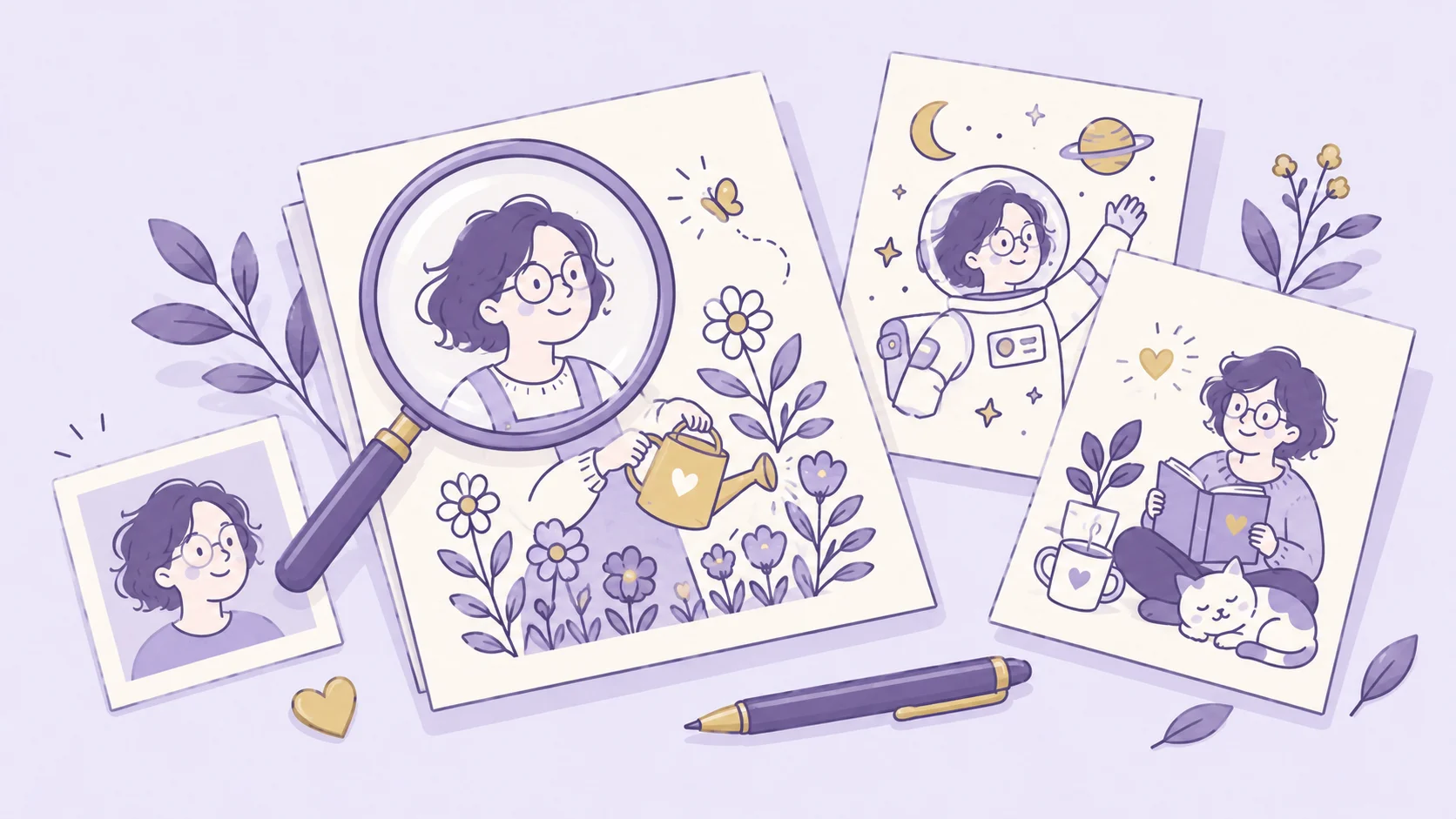
You find a lovely personalized birthday card online. Someone stands in a garden, surrounded by flowers and soft watercolor details. Another design puts a familiar face into a royal portrait. A third turns two friends into illustrated characters on an impossible adventure.
They all look personal, and they all start with a photograph, but what happens when you upload your own picture can be very different. Some services replace a face in an existing scene. Others change the artistic style of a photo while keeping most of its original composition. Newer AI tools can create entirely new scenes, though you may need to describe what you want and refine the results yourself.
If the card is for someone you care about, those differences matter. They affect how recognizable the person will be, how naturally they fit into the artwork, how much creative thought the card contains and how much work is left to you. These are the four things I would look for.
1. Do you still recognize the person?
The point of using someone’s photo is to make the card feel like theirs, so this question sounds obvious. Recognizability comes in different forms, though.
A traditional face-swap card may keep the person’s real facial features almost exactly. That makes the result instantly recognizable, especially when the joke depends on seeing a familiar face on an unexpected body, but the costume, pose and scene around it usually come from an existing image. A photo-to-cartoon transformation works the other way. It redraws the whole person in one artistic style, which looks more cohesive, but heavy stylization can erase the details that make one person different from another. When everyone gets the same large eyes, small nose and rounded smile, some of that individuality disappears.
Newer identity-preserving image generation is more flexible. It can keep natural facial proportions while changing the person’s surroundings, clothing and pose, or deliberately simplify a face into a cartoon without losing every recognizable feature. These approaches come from different stages in the history of personalized photo art, which we trace in From Face Swaps to New Worlds: Five Eras of Personalized Photo Art.
For choosing a card today, the useful distinction is between photographic likeness and personal recognition. A realistic portrait should resemble the person closely enough that their features and expression feel right. A playful cartoon can lean on hairstyle, glasses, clothing and coloring instead. Either can feel personal when the treatment suits the artwork.
At Fond & Fold, the design decides. Peekaboo Thinking of You uses a deliberately simplified cartoon character, while Lavender Birthday Journal places a more natural portrait inside a scrapbook collage. The level of detail differs because the artistic intention differs, and each design is tested with many different faces so that even the cartoon still looks like someone in particular.
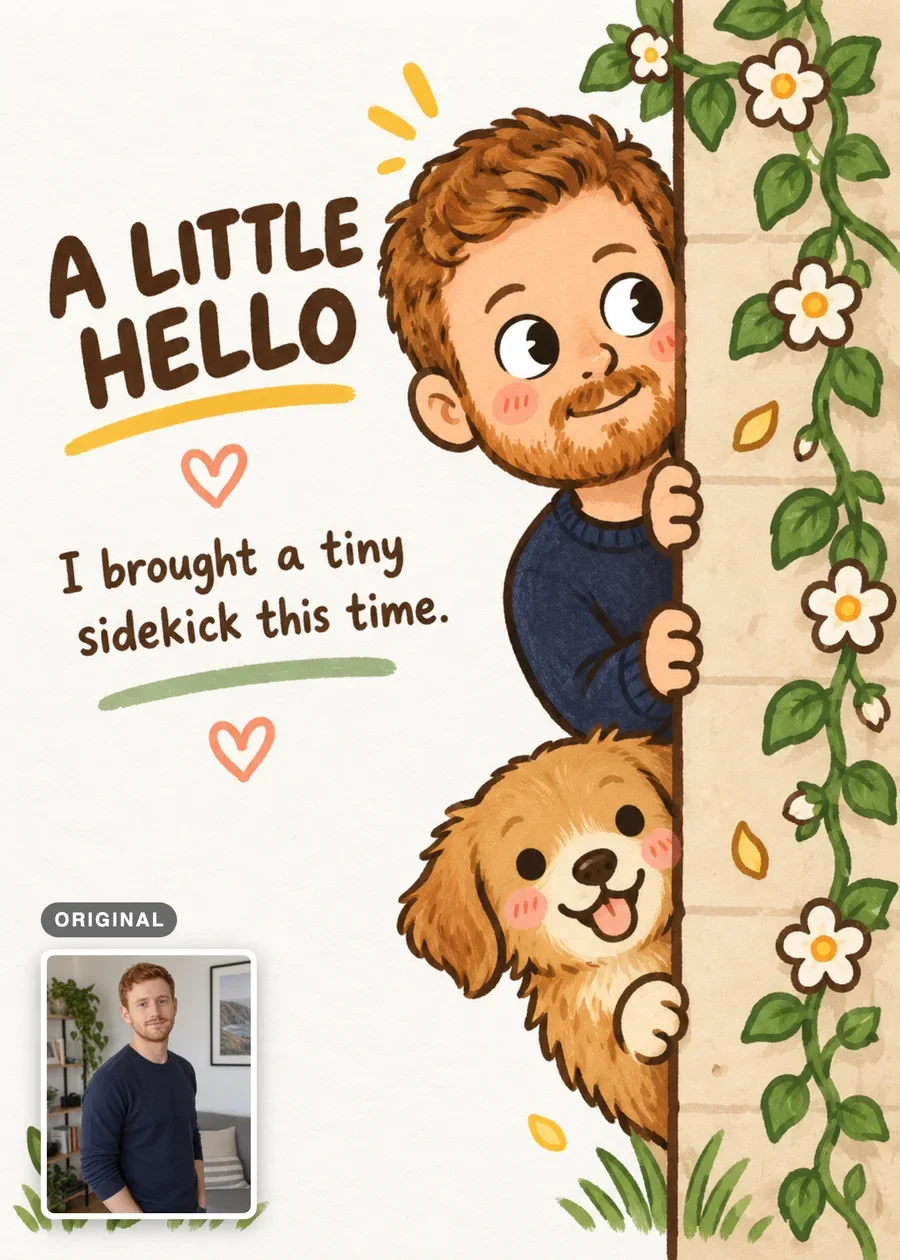
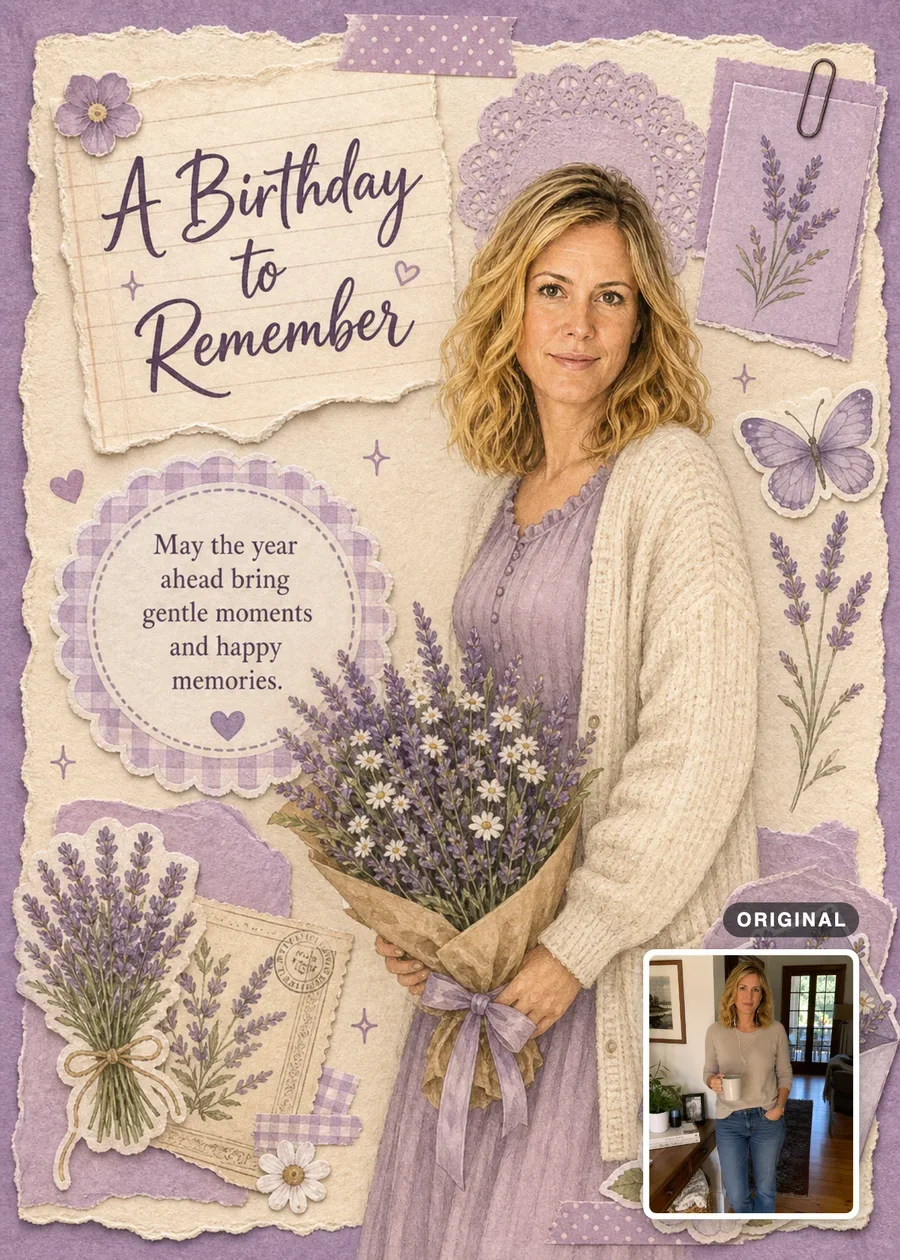
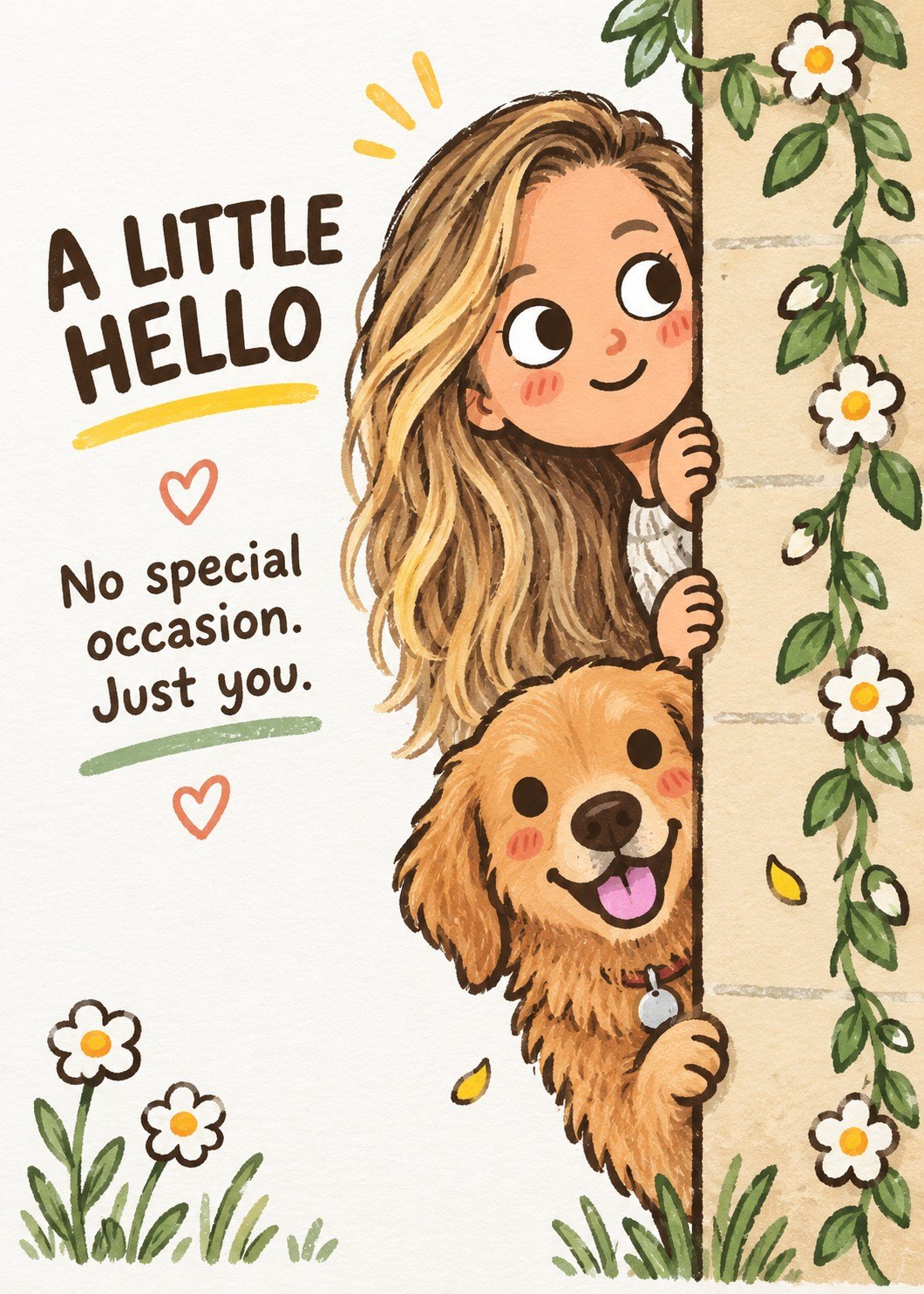
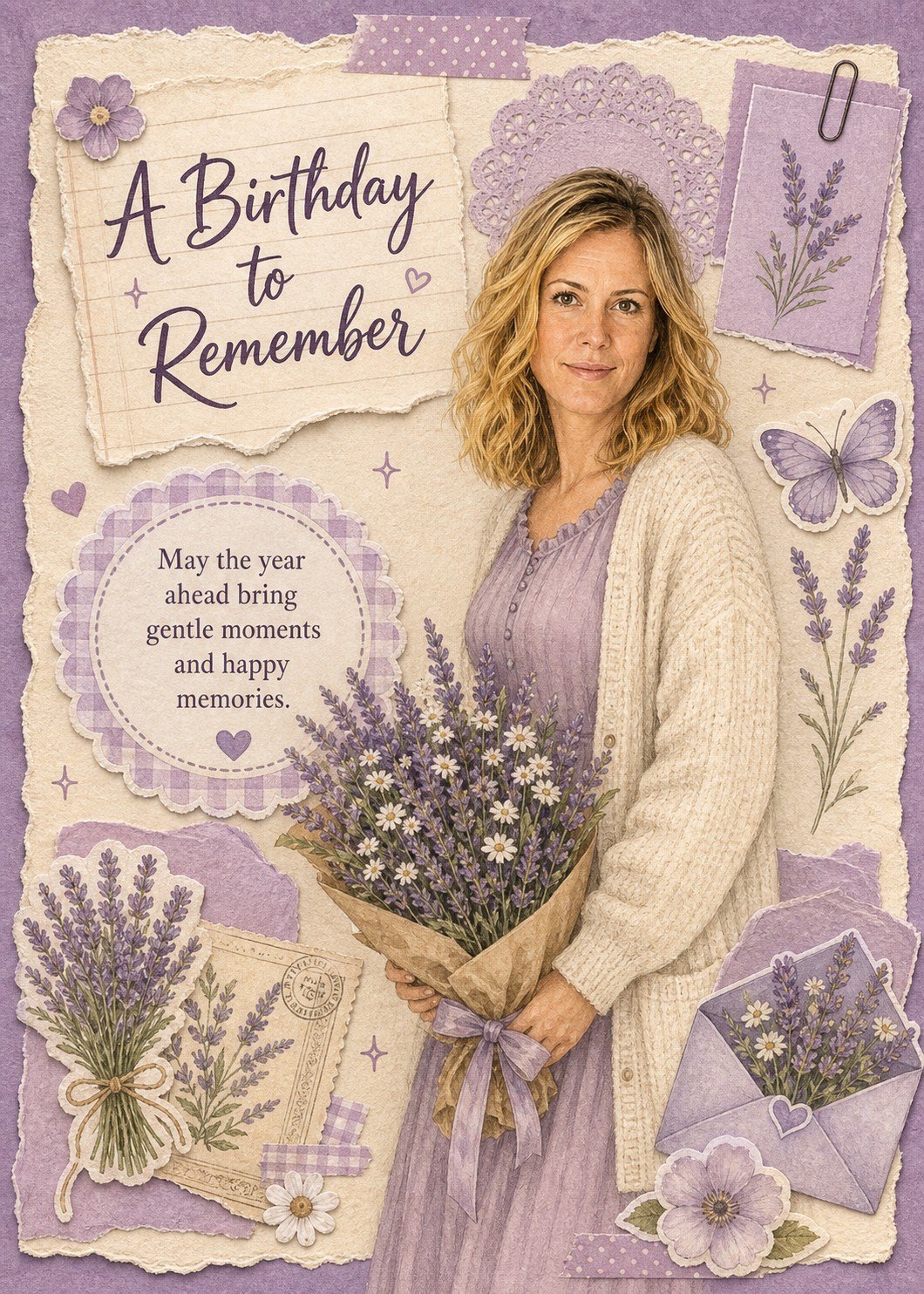
When you compare cards, look closely at the faces. Does the result keep something distinctive about the actual person, or could almost anyone’s photo produce a very similar character? Think about the recipient too. Some people would love to see themselves as an exaggerated, funny character; others would rather have a faithful illustrated portrait. The best choice is the one that would make that particular person smile.
2. Does the person belong in the scene?
One of the easiest ways to judge a personalized image is to look beyond the face and ask whether the person seems to belong in the world around them.
Imagine a photo taken in a dim bar, with strong red light on the face and shadows across one side, used for a card that shows someone standing in a bright, sunny garden. A basic face swap moves the face from one picture into another. Unless the lighting, colors, shadows and facial contours are adjusted to match, the face looks out of place, and even when it is recognizable, the mismatch gives the composite away. That is why the quality and lighting of the source photo matter so much for this kind of edit.
An artistic style transformation has a different limit. A filter that turns a photo into a watercolor can make the whole image look consistent, but it usually keeps the original composition. If the person was standing in a cluttered kitchen, the illustrated version may still show that kitchen, and if the pose was awkward for a greeting card, a new style won’t fix it.
Generative illustration makes another approach possible. The photo supplies the person’s identity, and the artwork supplies its own setting, composition, clothing and artistic treatment. This is central to how we develop cards at Fond & Fold. The person’s features need to be clear enough for the chosen design, but the original background and lighting generally don’t decide the final scene.
Christmas in the Snow, for example, brings people into a winter scene, drawing their clothing, faces and surroundings together in ink and watercolor, and the source photo doesn’t need to have been taken in winter, let alone in snow. Valentine in Paris places a couple in a romantic watercolor cityscape: the artwork sets the place and the atmosphere, and the photo supplies the people who make it personal.

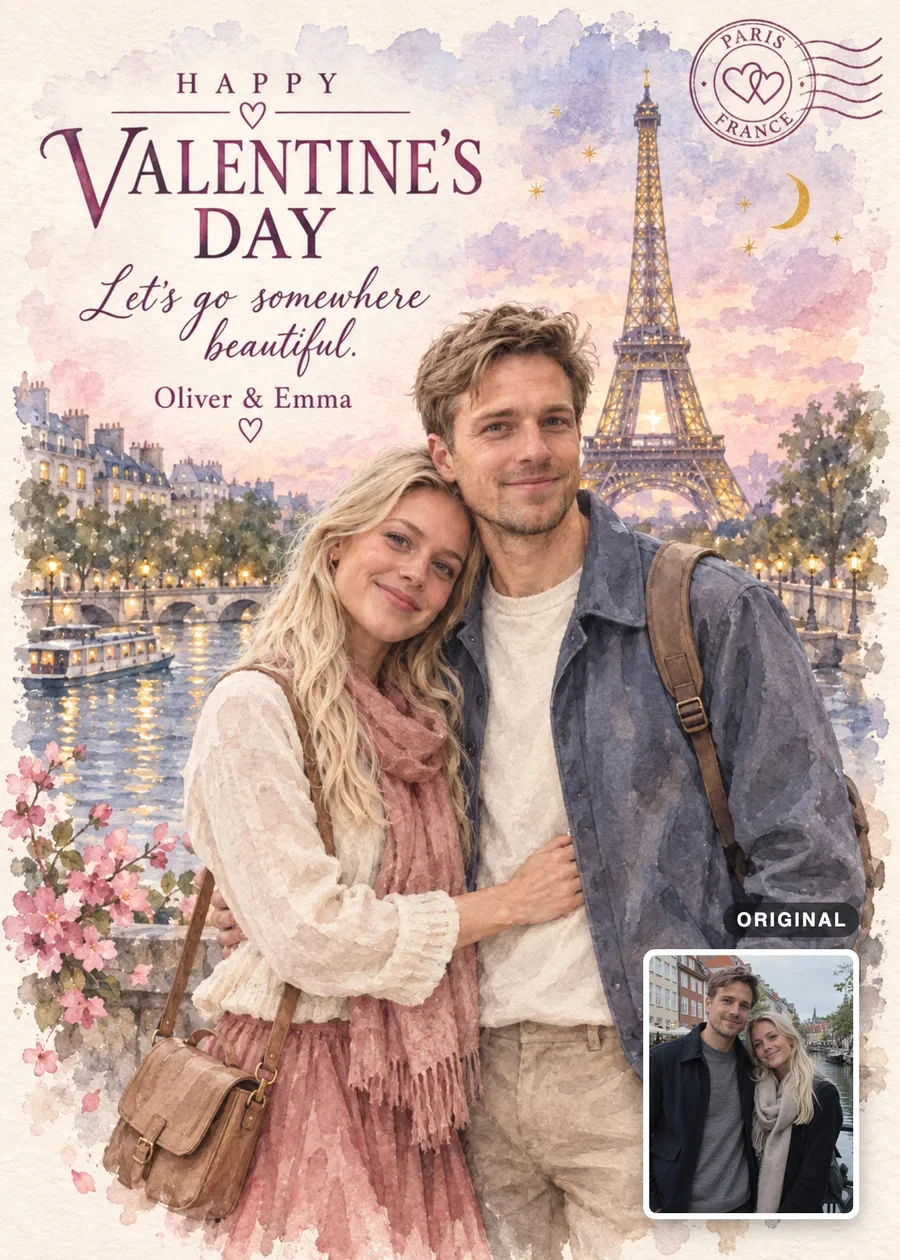

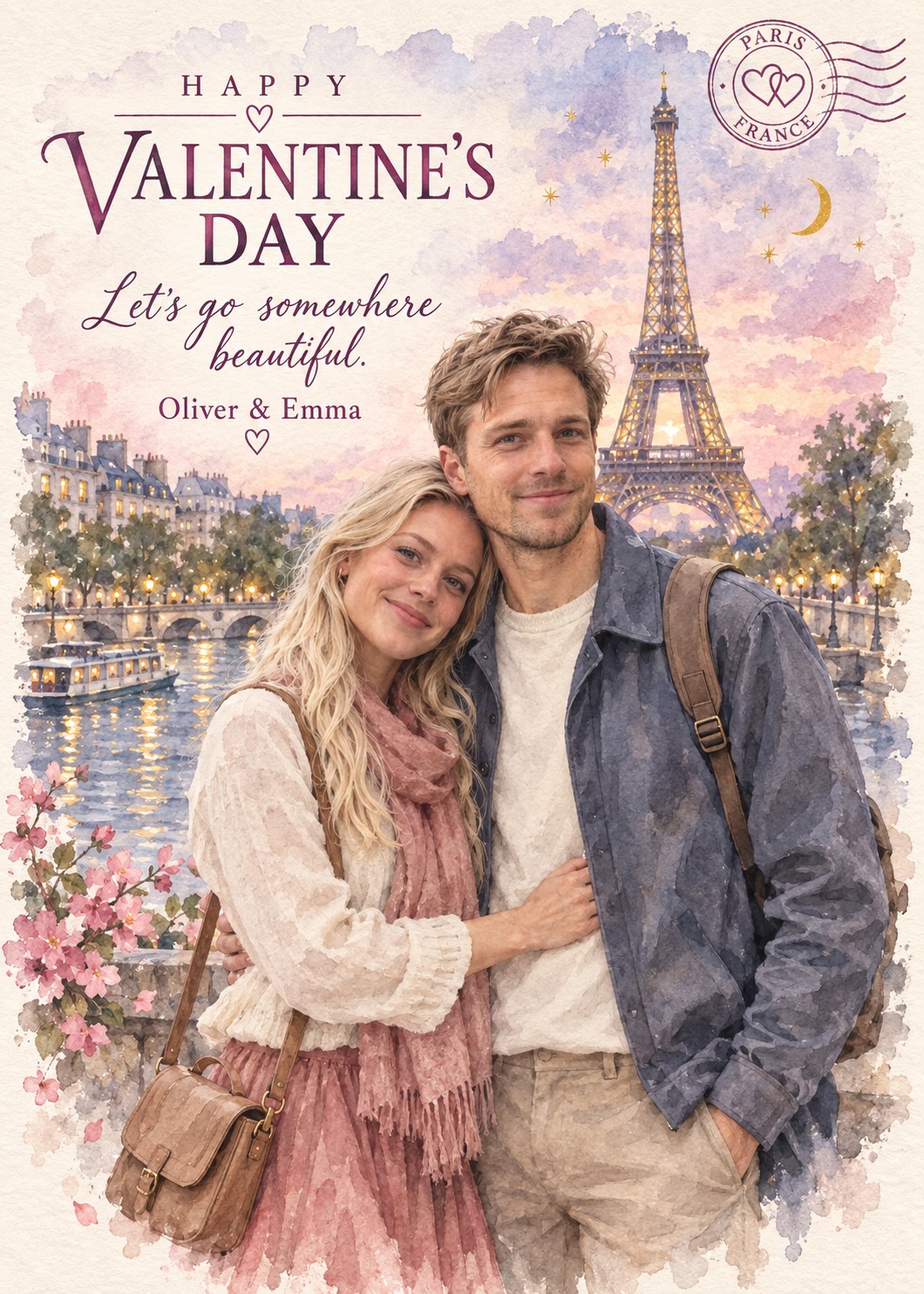
The result should look as though the person and the setting were imagined as one piece. When you evaluate a card, look at the face and body together. Do the proportions make sense? Is the pose natural? Do the skin, clothing and background share the same visual treatment, and does the light feel consistent? These details are easy to miss when a sample is colorful and eye-catching, yet they are often what separates an illustration that feels complete from one that still looks assembled from unrelated pieces.
3. Does the illustration have an idea?
A technically impressive picture can still feel generic. A beautiful background, attractive colors, elegant lettering and plenty of decorative details all help make a lovely card, but they don’t necessarily add up to a creative idea.
A face-swap design might put someone in a royal costume or a movie-style scene, where the humor comes from seeing an unexpected person in a familiar role. An artistic filter can make an ordinary photo beautiful without adding a new story. Generative AI opens up far more possibilities, from characters and places to actions and visual jokes that never existed before, and the challenge shifts from producing the image to deciding what it should contain.
Some AI card-making tools give you a blank prompt box. Others make the process friendlier by splitting the creative brief into smaller questions: what the person likes, what scene to create, which style to choose, what details to include. That can suit someone who enjoys directing the creative process, but it still asks the customer to supply most of the concept. Breaking one large prompt into smaller decisions makes an idea easier to express; it doesn’t provide the idea.
I think a well-designed illustrated card has a concept you can recognize before you start examining the details, with the characters, setting, props and words all contributing to it. At Fond & Fold, that concept is the part we take on: every card in the collection starts as an idea before anyone’s photo is added. Three of them show what I mean.
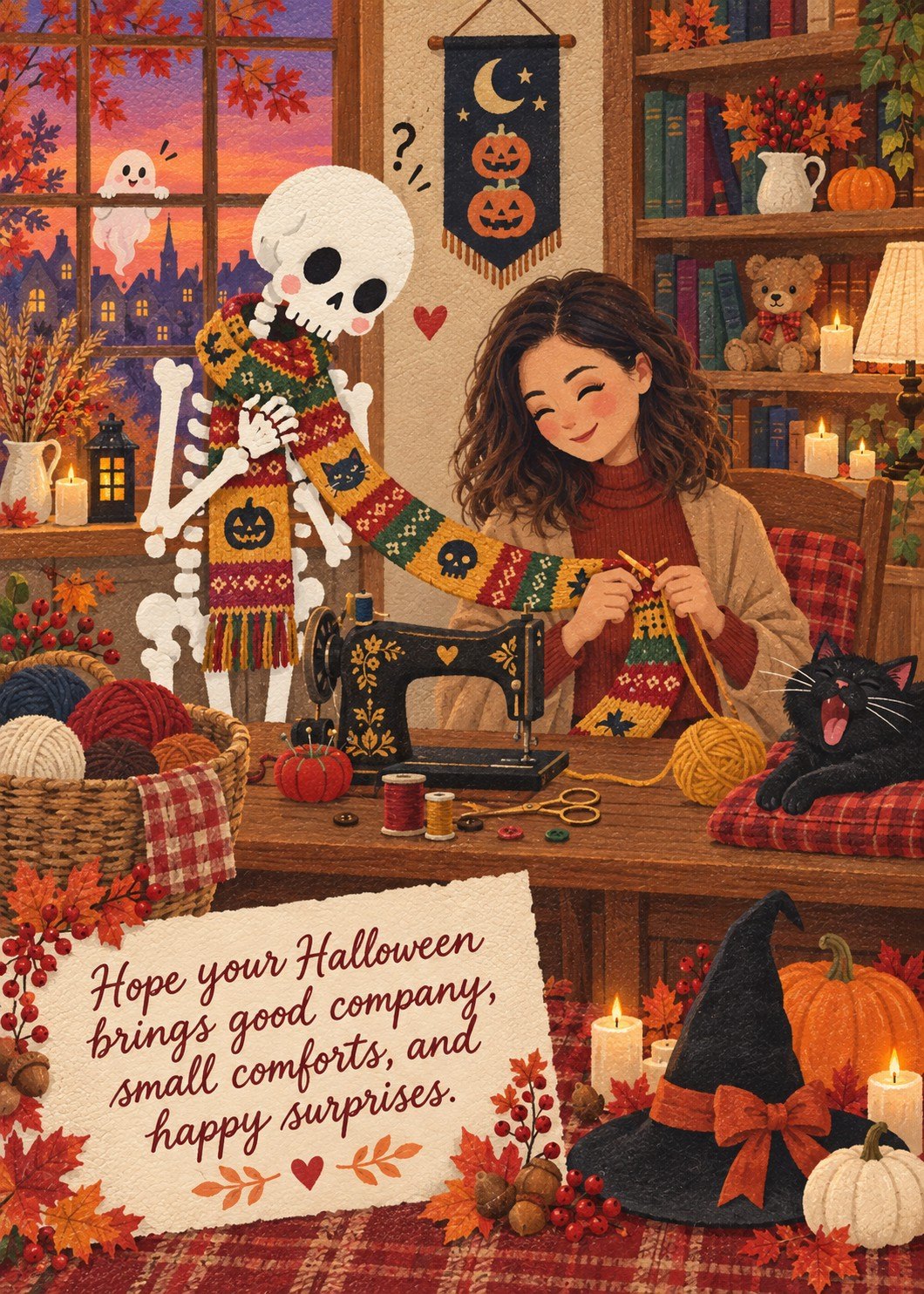
In The Skeleton’s Halloween Scarf, a person is knitting a scarf for a friendly skeleton, who has already wrapped the unfinished scarf around its neck and looks down at it, puzzled. A black cat yawns nearby, as though the knitting session has been going on for a while, and a tiny ghost peeks in through the window. The scarf connects the two main characters, and the smaller details build a scene of companionship and gentle Halloween humor.
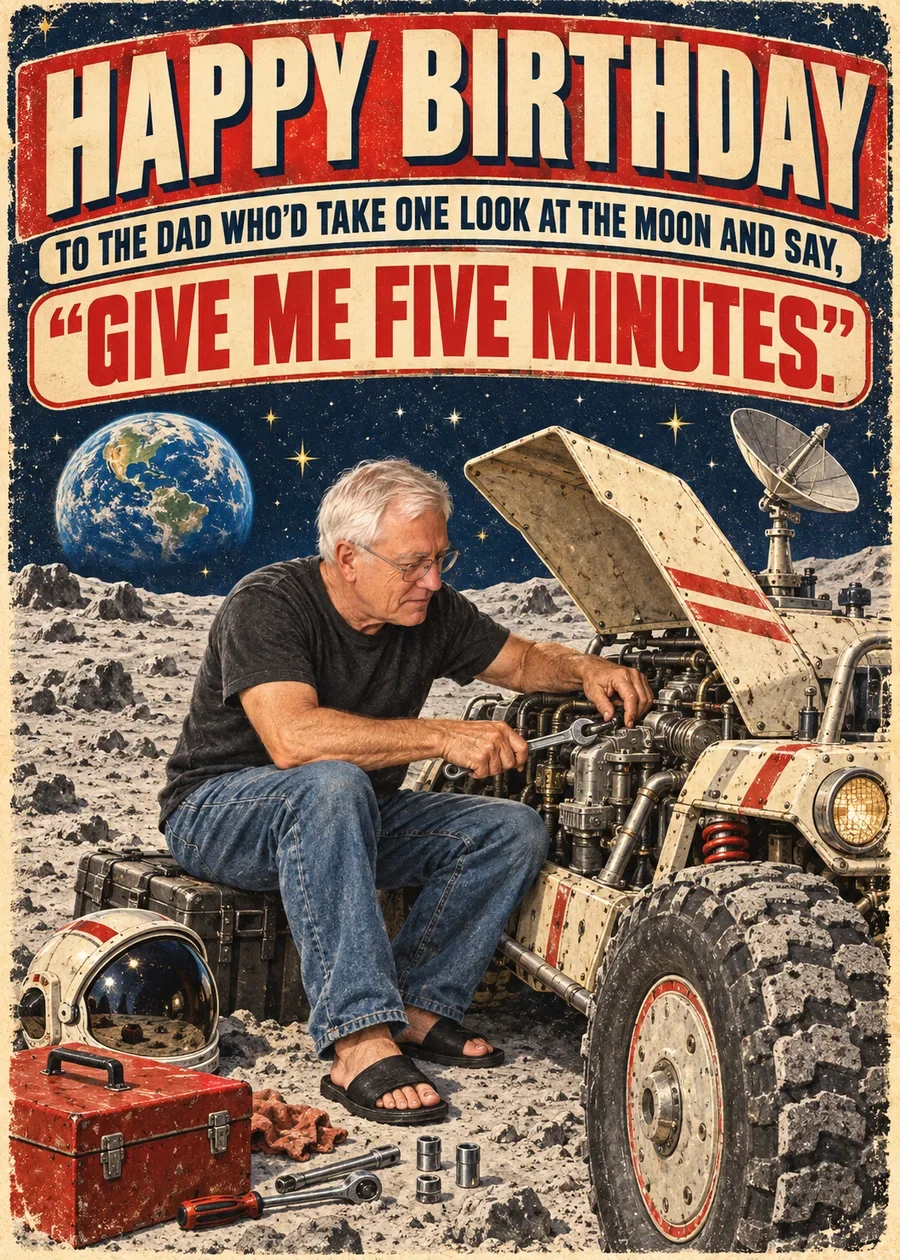
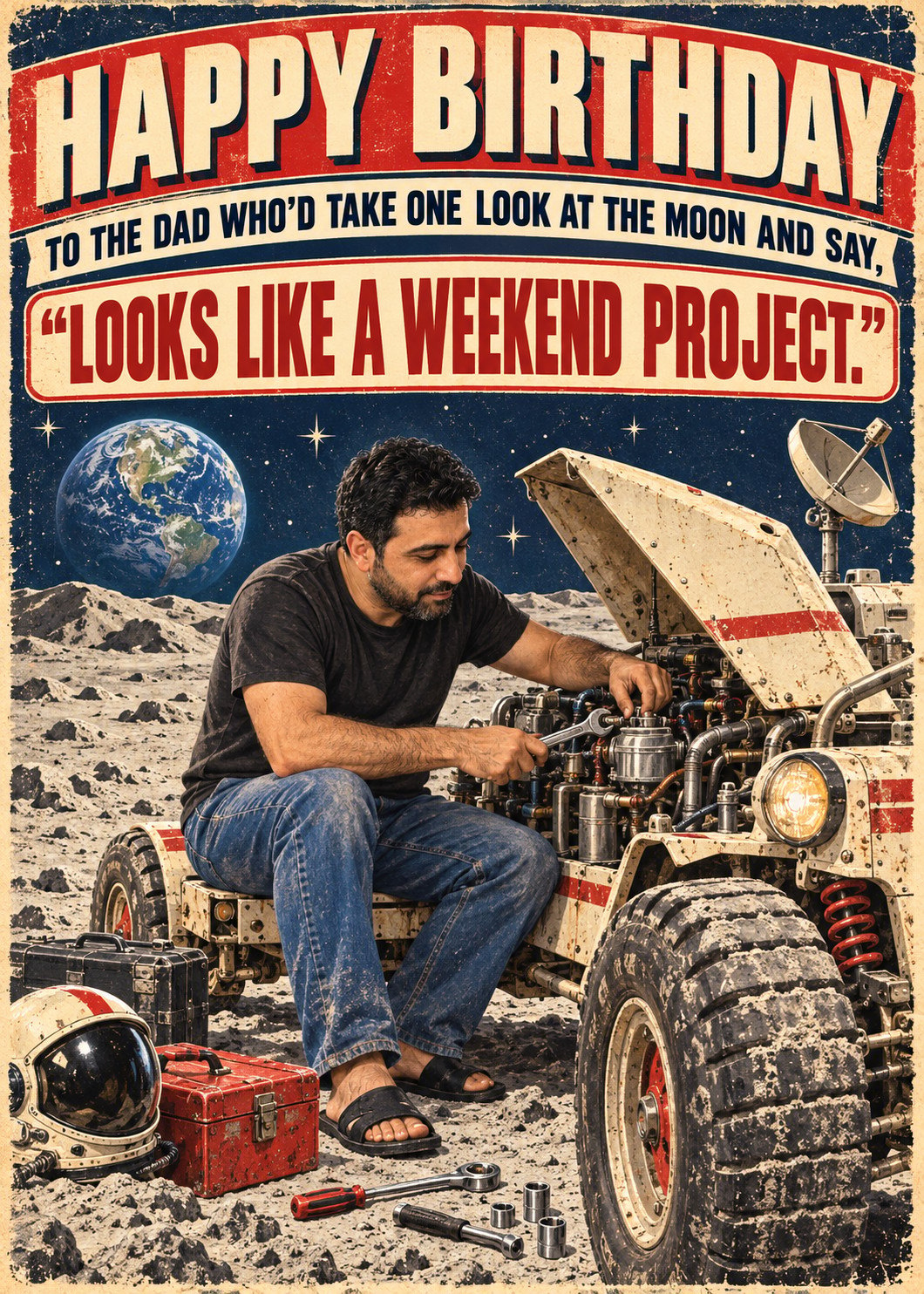
Dad’s Birthday on the Moon starts from a familiar family observation: some dads seem able to fix anything. Here Dad sits on the moon in an ordinary T-shirt, jeans and sandals, working on a broken lunar rover. The setting makes it absurd, but his casual clothes and practical attitude make it feel like one more weekend repair job, and the joke stays affectionate because it comes from something recognizable about him.
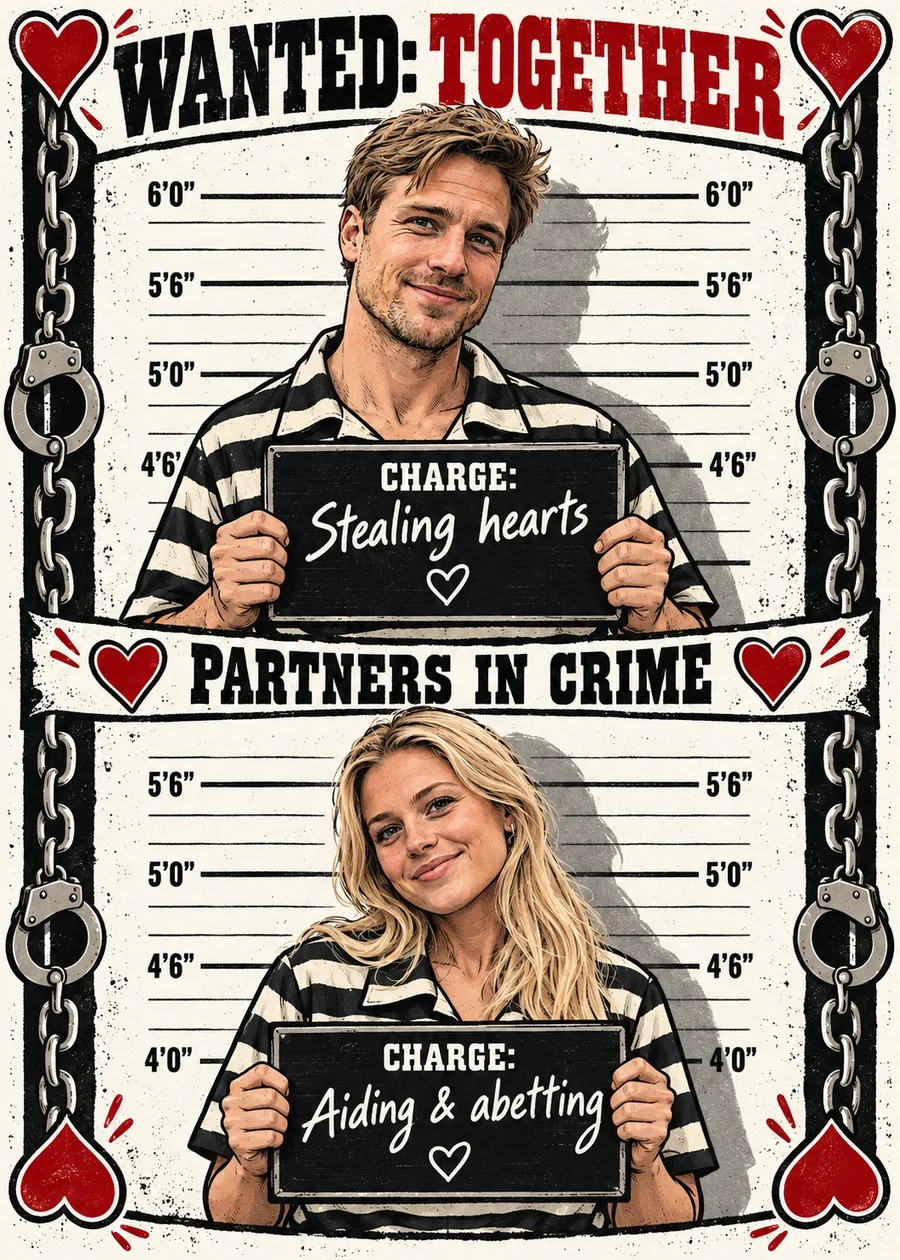
For Partners in Crime, we turned the idea of an inseparable couple into a comic-style wanted poster. Both people wear striped outfits and hold boards with paired romantic charges, such as stealing hearts and aiding and abetting. The look of a wanted poster and the affectionate wordplay together make a shared joke about the relationship.
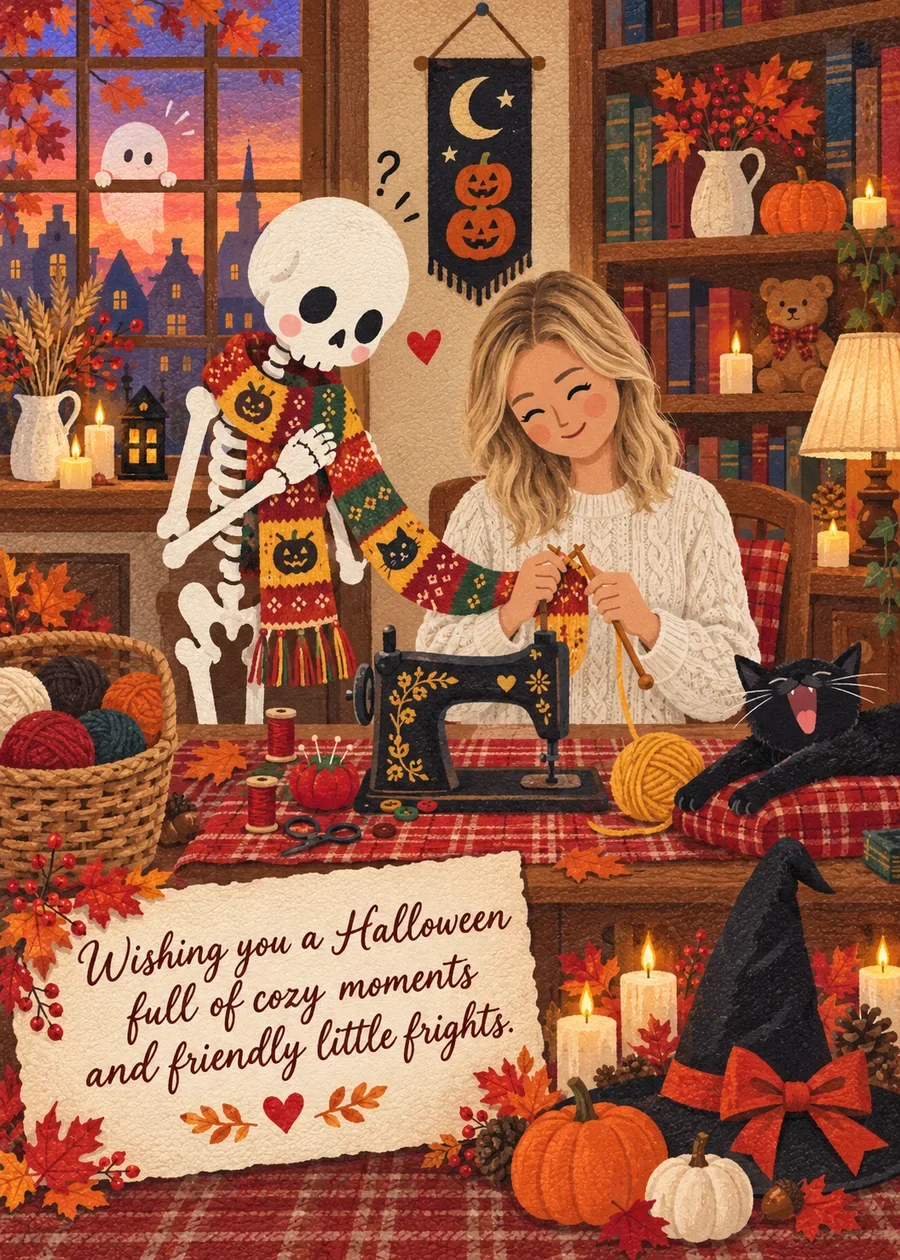
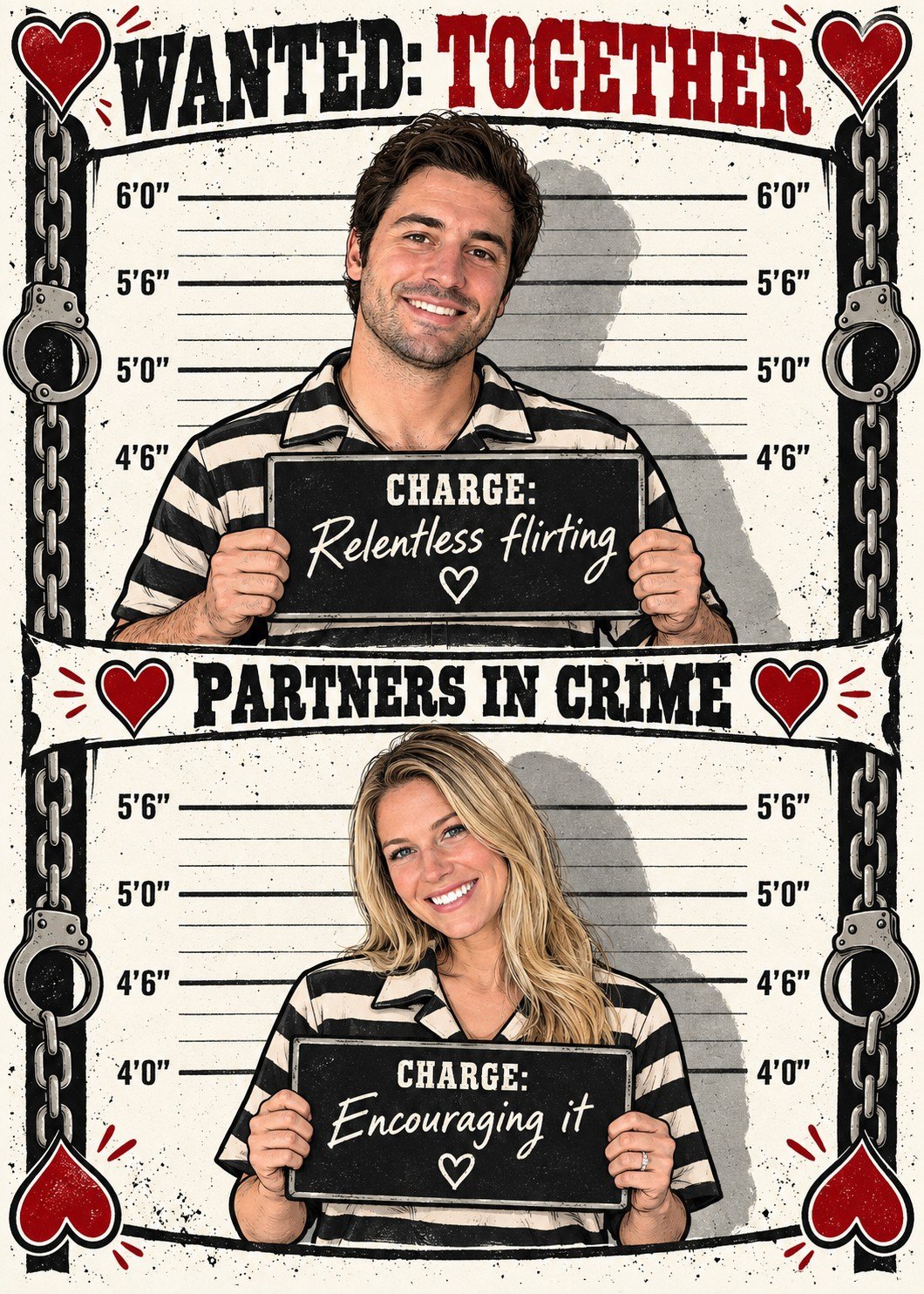
A card doesn’t need an elaborate story to have a good idea. A simple portrait, an unexpected line of text or one well-chosen detail can say more than an illustration crowded with objects. What matters is whether the elements feel intentional. What is the person doing in the picture? Why does that setting fit? Does the wording add to the visual idea? Would removing a detail weaken it? When those decisions support one another, the card feels considered, and when the idea reflects the recipient’s personality, interests or relationship with the sender, personalization goes beyond simply including their photo.
4. Will the design work with your photo?
This is the question I would pay the most attention to before buying. It’s easy to make a design look wonderful with one carefully chosen sample photo, where the person has a clear face, a flattering expression, ideal framing and the perfect pose. Your photo may be very different. Perhaps it’s a casual family snapshot, two friends are standing at different distances from the camera, someone wears glasses or a distinctive head covering, a pet has joined the picture, or the only photo you have is a close-up while the sample shows someone from head to toe.
Each method handles this differently. A face-swap design depends on whether the face can be lined up convincingly with the existing character. A style transformation that keeps the original composition depends heavily on the photo’s framing, pose and background. An open-ended AI generator can create new poses and settings, but you may have to refine your instructions and compare several results to get the composition and likeness you want.
Making one beautiful example is different from developing a design that works for many different people. When we test a new card at Fond & Fold, other photos often reveal what the first sample hid: a composition that feels crowded with someone else, or a detail that becomes distracting once the person changes. We’ve written more about that testing in How We Make Cards. The fix depends on what the design is meant to keep and what it is free to reinterpret.
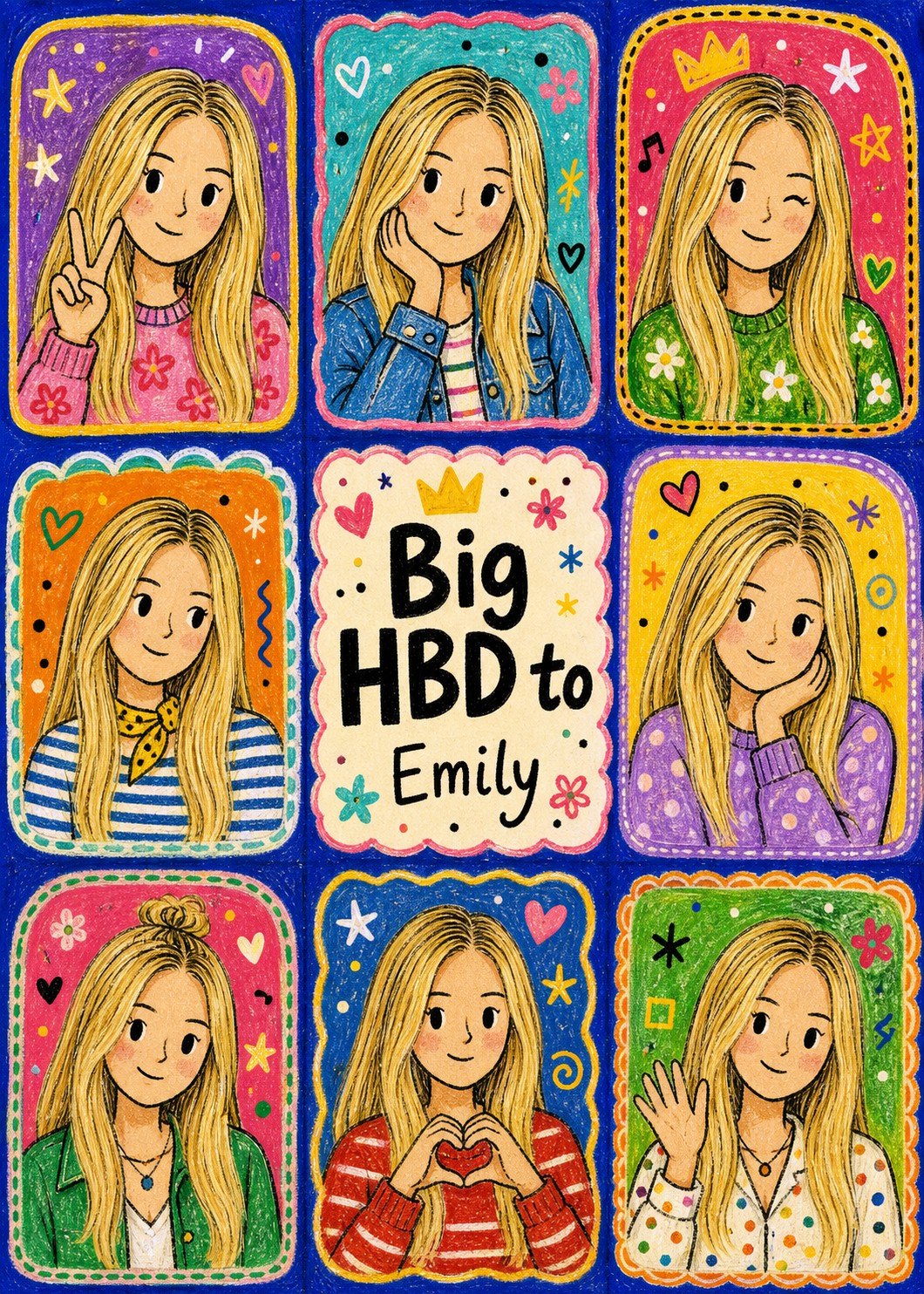
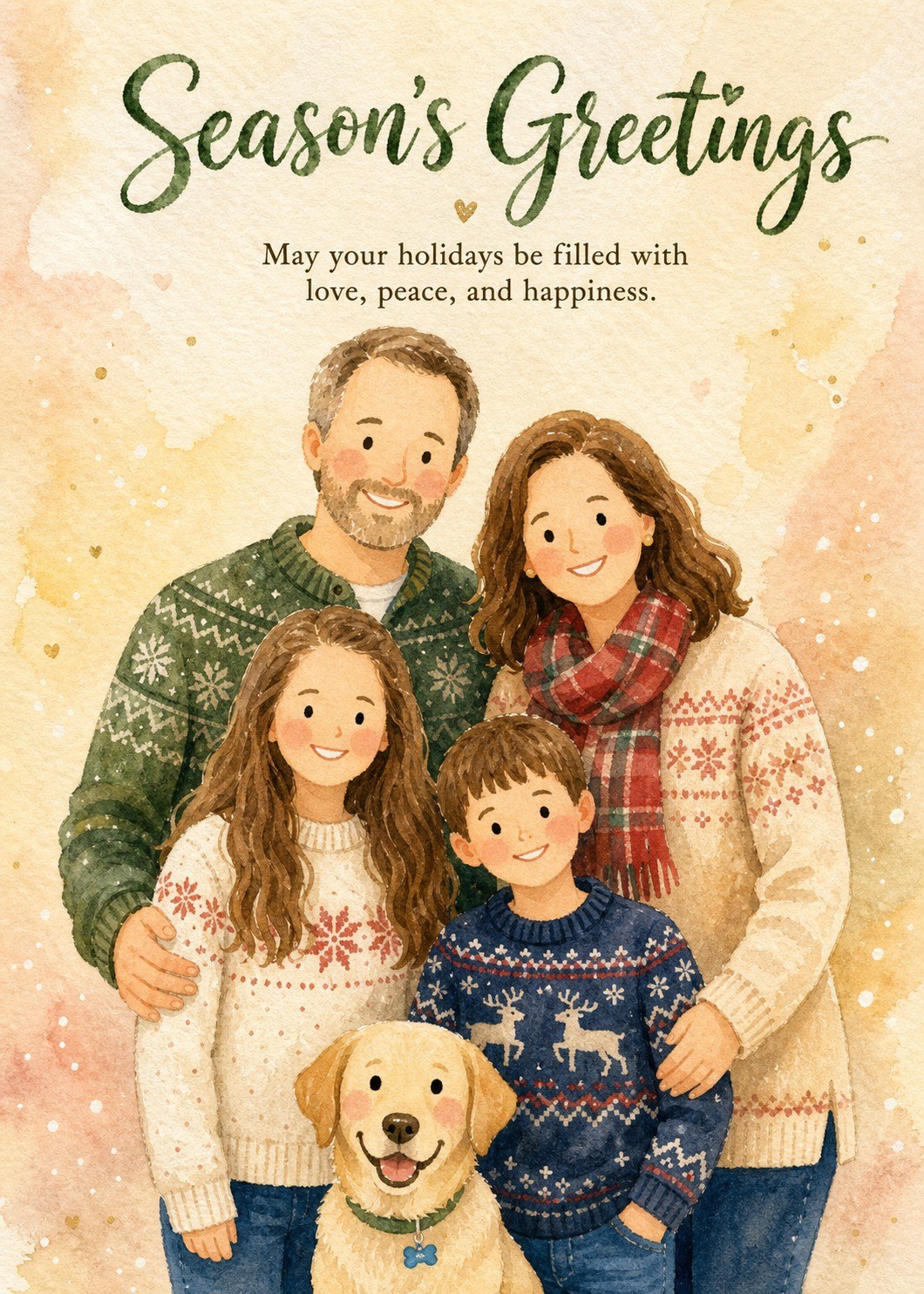
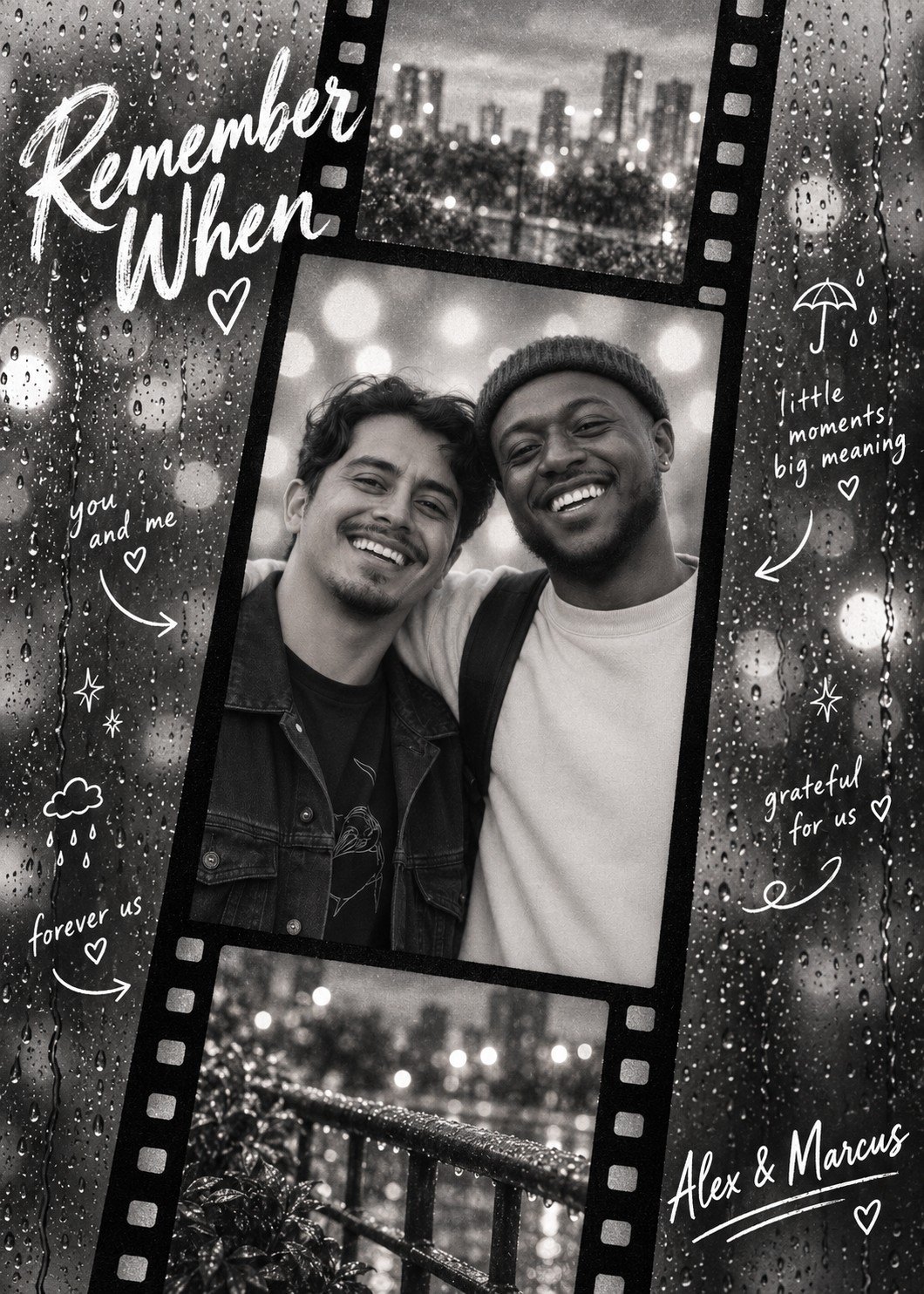
Birthday Photo Booth turns one person into eight playful illustrated portraits with different outfits, poses and expressions, so the photo doesn’t need to show any of those looks; the design supplies the variety, and the person’s recognizable features connect the panels. Christmas Sweater Family has a different challenge: several family members, and sometimes a pet, have to appear together in one watercolor group portrait, so the photo needs to show everyone clearly while the design dresses them in coordinated festive sweaters. Rainy Filmstrip Memories keeps a more photographic look of two people along with details of a place they remember together, so a photo that shows both the people and their surroundings is especially valuable.
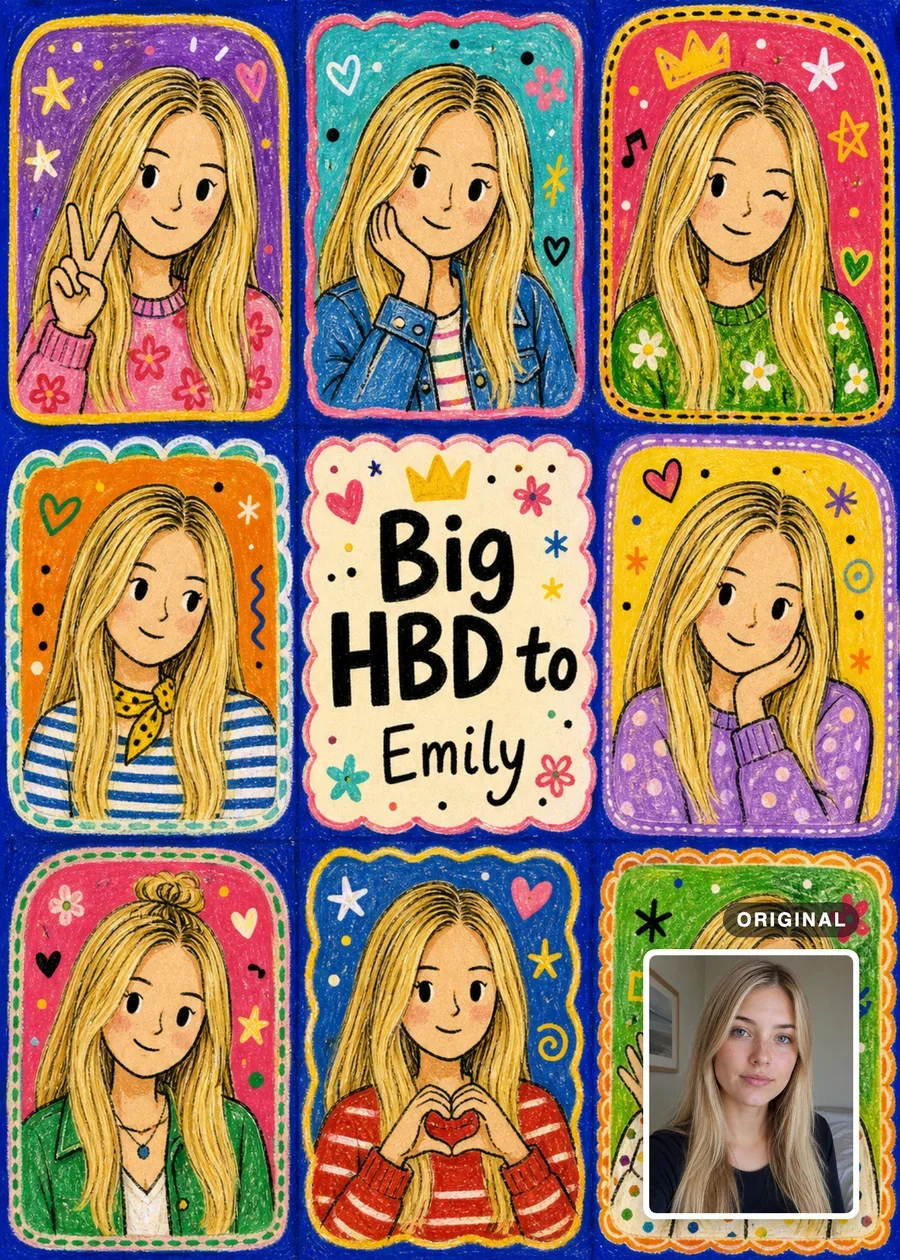
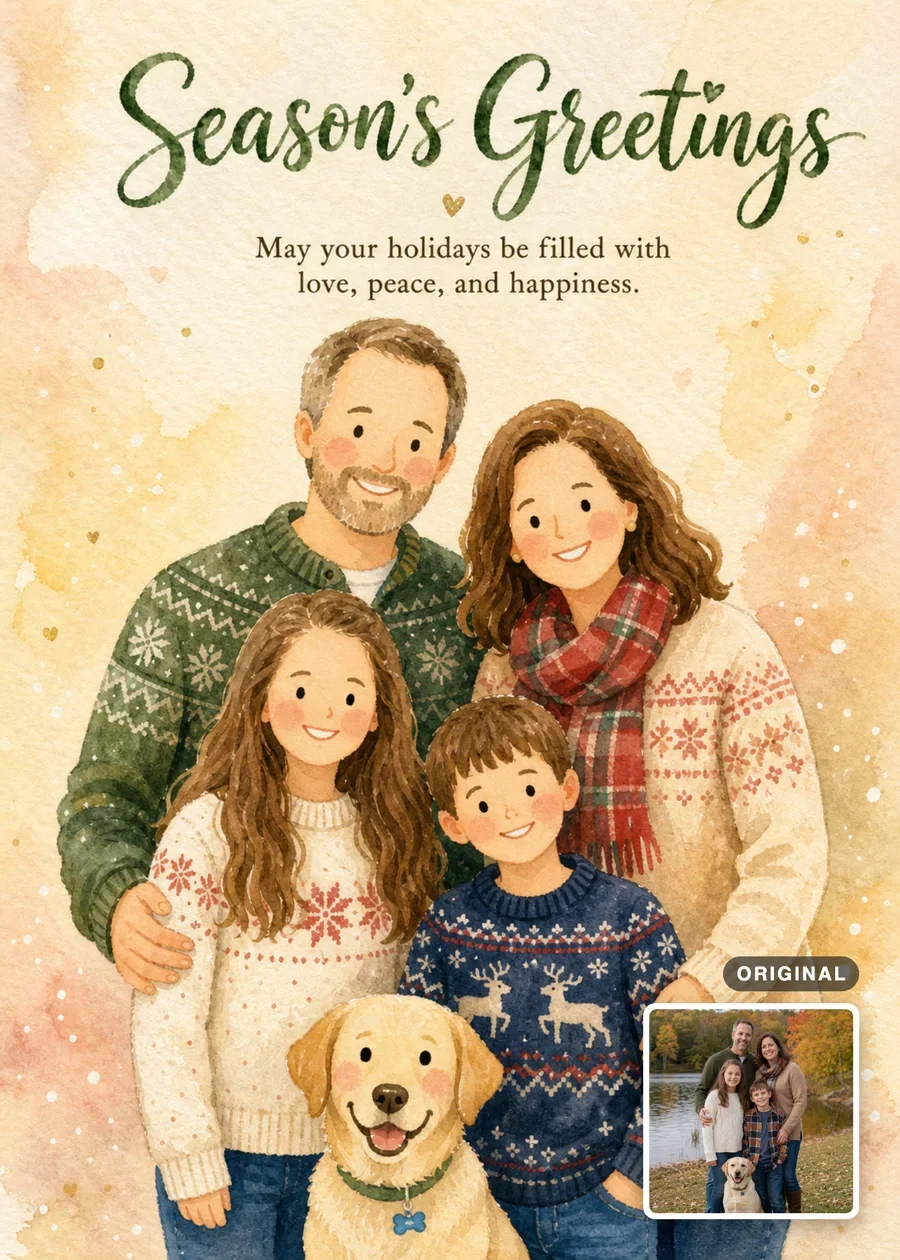
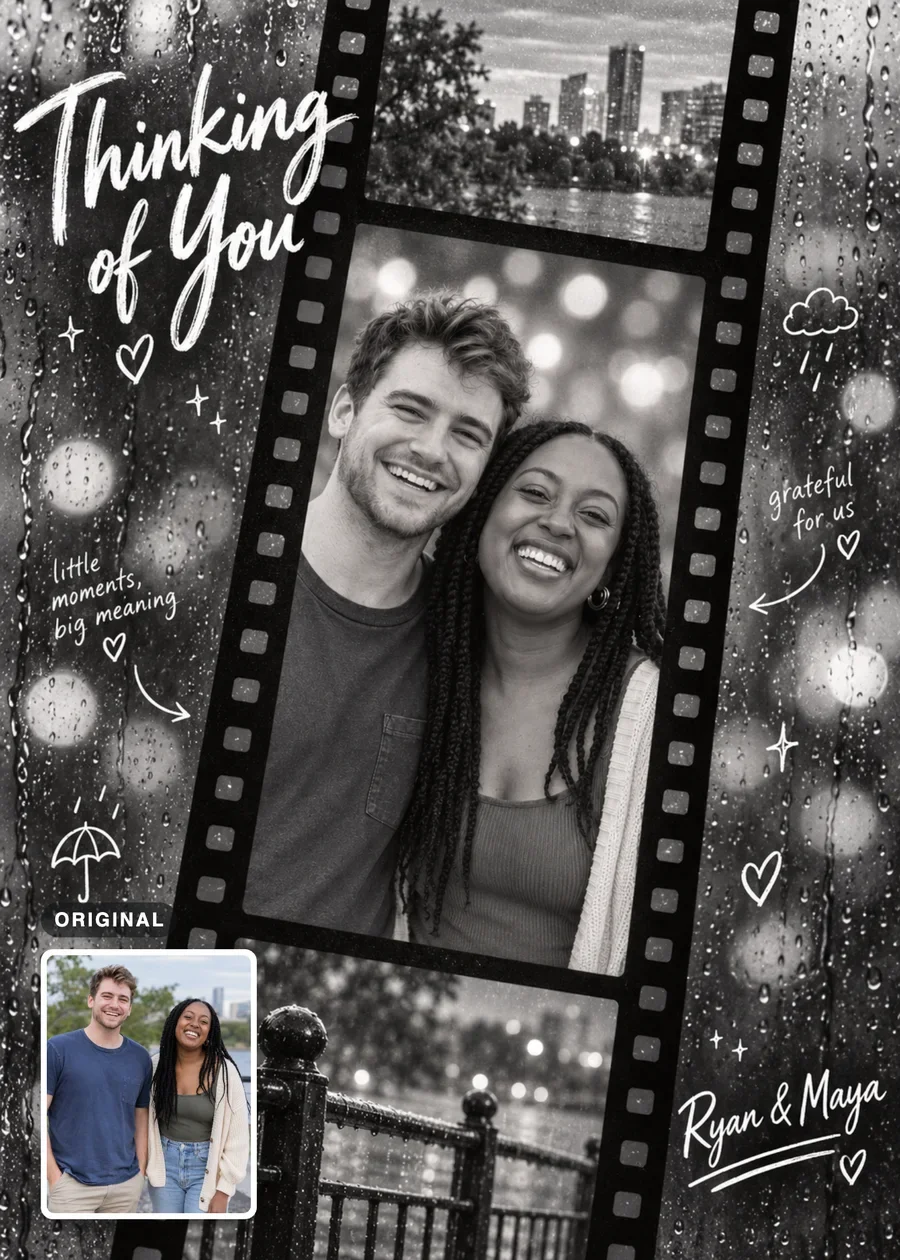
That is why a useful photo guide is specific to the design. A headshot may suit one card, while another needs more of the body or a visible background. A highly stylized illustration can freely reinterpret the original expression, while a more realistic portrait benefits from a smile and facial angle the person already likes. Our guide to choosing a reference photo goes into these choices in detail.
As a buyer, look for evidence that the design works for people beyond the one in the main sample. Are there examples with different faces or groups? Does the service explain what kind of photo works best, and are important restrictions clear before you upload? If the result doesn’t match the sample, will you have to keep editing it yourself? Most important of all, can you see your own personalized result before paying?
At Fond & Fold, each design has its own photo guidance. You upload a suitable picture, choose from the available cover wording, and preview your own personalized card for free before deciding to buy. If you buy, that exact card is the one you receive. That preview answers what no sample can: whether the person looks right, whether they fit naturally into the artwork, and whether the card feels like something you’d be happy to send.
Once you’ve found a design you love, a few practical details are worth checking. Does the cover wording fit the occasion and your relationship with the recipient? Can you add a personal message inside? Are you buying a digital card to share, a printable file or a physical card that will be delivered? The answers help you choose something that suits both the person and the way you plan to give it.
The most meaningful personalized cards bring several things together. You recognize the person in the artwork, the style feels cohesive, the picture has an idea that suits them, and the design works with the photo you actually have instead of a perfectly staged portrait.
Each approach covers part of that. A face swap keeps the face but borrows someone else’s scene. A filter changes the look but keeps the photo’s composition. An open AI tool can make almost anything, as long as you bring the idea and the patience to refine it. Fond & Fold starts from the other end. We develop each card’s concept and art direction before it reaches the shop, then test how it works with different people and photos, so the gallery gives you finished ideas to choose from and a free preview of your own card before you pay. You bring the person and the thought behind the gift, and we turn them into a complete illustrated card, without asking you to write prompts or direct rounds of revisions.
What matters most is the moment the recipient opens it. They see something familiar about themselves, discover the world you chose for them, and recognize a little of your shared humor, affection or history in the picture.
The best personalized card shows someone how well you know them.